
Pulp Fiction, 1916 · page 198 of 204
The Argosy, Vol. 83 No. 1 — page 198: what you’re looking at
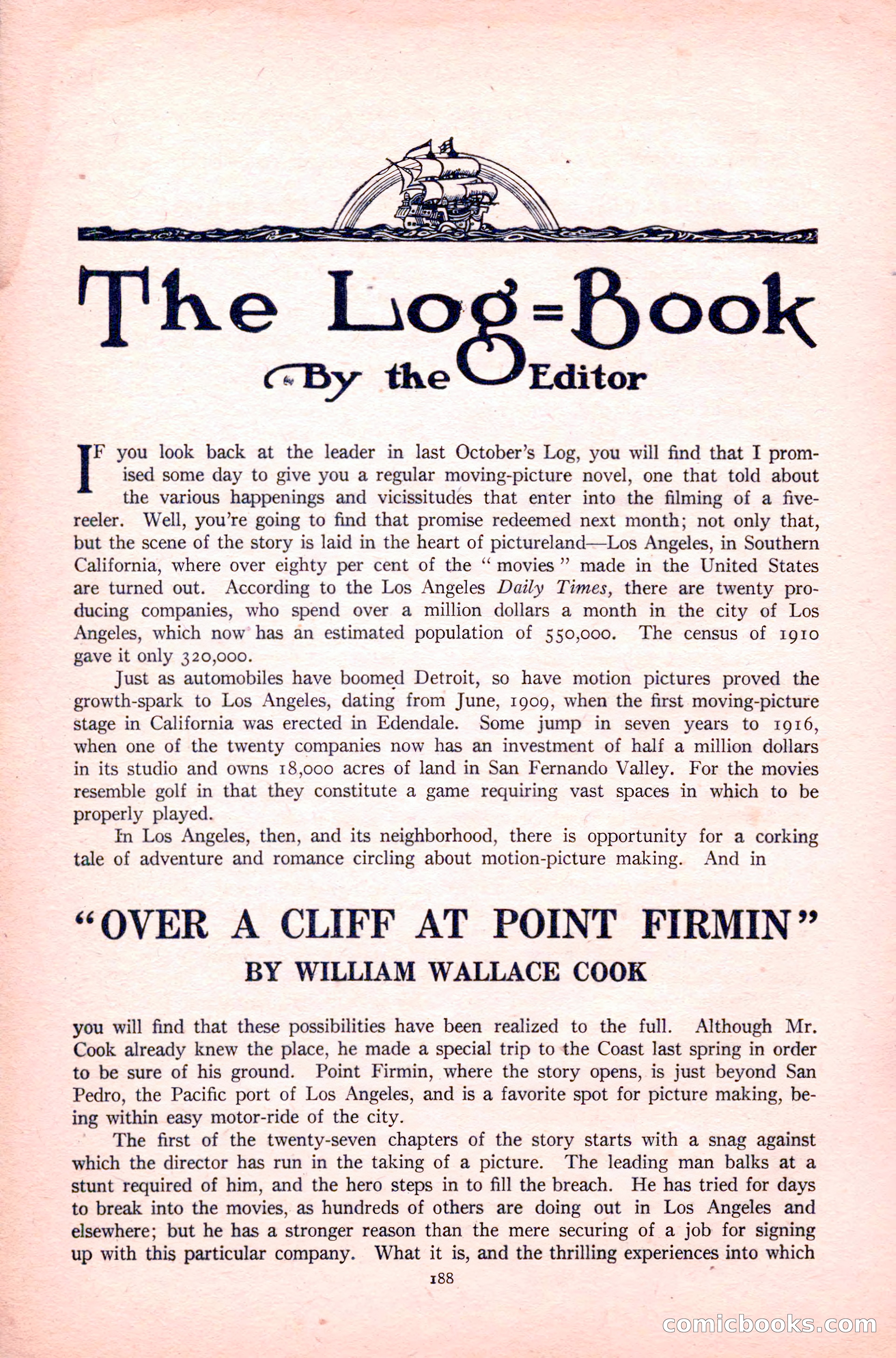
A restored page from Pulp Fiction, 1916. Page through the whole issue in the reader above.
📄 Transcribed text from this page (OCR, searchable)
Machine-transcribed from the original scan — historical spelling and the odd misread are preserved.
By the \/ Editor ised some day to give you a regular moving-picture novel, one that told about the various happenings and vicissitudes that enter into the filming of a five- reeler. Well, you’re going to find that promise redeemed next month; not only that, but the scene of the story is laid in the heart of pictureland—Los Angeles, in Southern California, where over eighty per cent of the ‘‘ movies’ made in the United States are turned out. According to the Los Angeles Daily Times, there are twenty pro- ducing companies, who spend over a million dollars a month in the city of Los Angeles, which now has an estimated population of 550,000. The census of i1gto gave it only 320,000. Just as automobiles have boomed Detroit, so have motion pictures proved the growth-spark to Los Angeles, dating from June, 1909, when the first moving-picture stage in California was erected in Edendale. Some jump in seven years to 1916, when one of the twenty companies now has an investment of half a million dollars in its studio and owns 18,000 acres of land in San Fernando Valley. For the movies resemble golf in that they constitute a game requiring vast spaces in which to be properly played. In Los Angeles, then, and its neighborhood, there is opportunity for a corking tale of adventure and romance circling about motion-picture making. And in “OVER A CLIFF AT POINT FIRMIN” BY WILLIAM WALLACE COOK I you look back at the leader in last October’s Log, you will find that I prom- you will find that these possibilities have been realized to the full. Although Mr. Cook already knew the place, he made a special trip to the Coast last spring in order to be sure of his ground. Point Firmin, where the story opens, is just beyond San Pedro, the Pacific port of Los Angeles, and is a favorite spot for picture making, be- ing within easy motor-ride of the city. The first of the twenty-seven chapters of the story starts with a snag against which the director has run in the taking of a picture. The leading man balks at a stunt required of him, and the hero steps in to fill the breach. He has tried for days to break into the movies, as hundreds of others are doing out in Los Angeles and elsewhere; but he has a stronger reason than the mere securing of a job for signing up with this particular company. What it is, and the thrilling experiences into which 188 CORMMICLOOOKS (C@