
Pulp Fiction, 1916 · page 194 of 204
The Argosy, Vol. 83 No. 1 — page 194: what you’re looking at
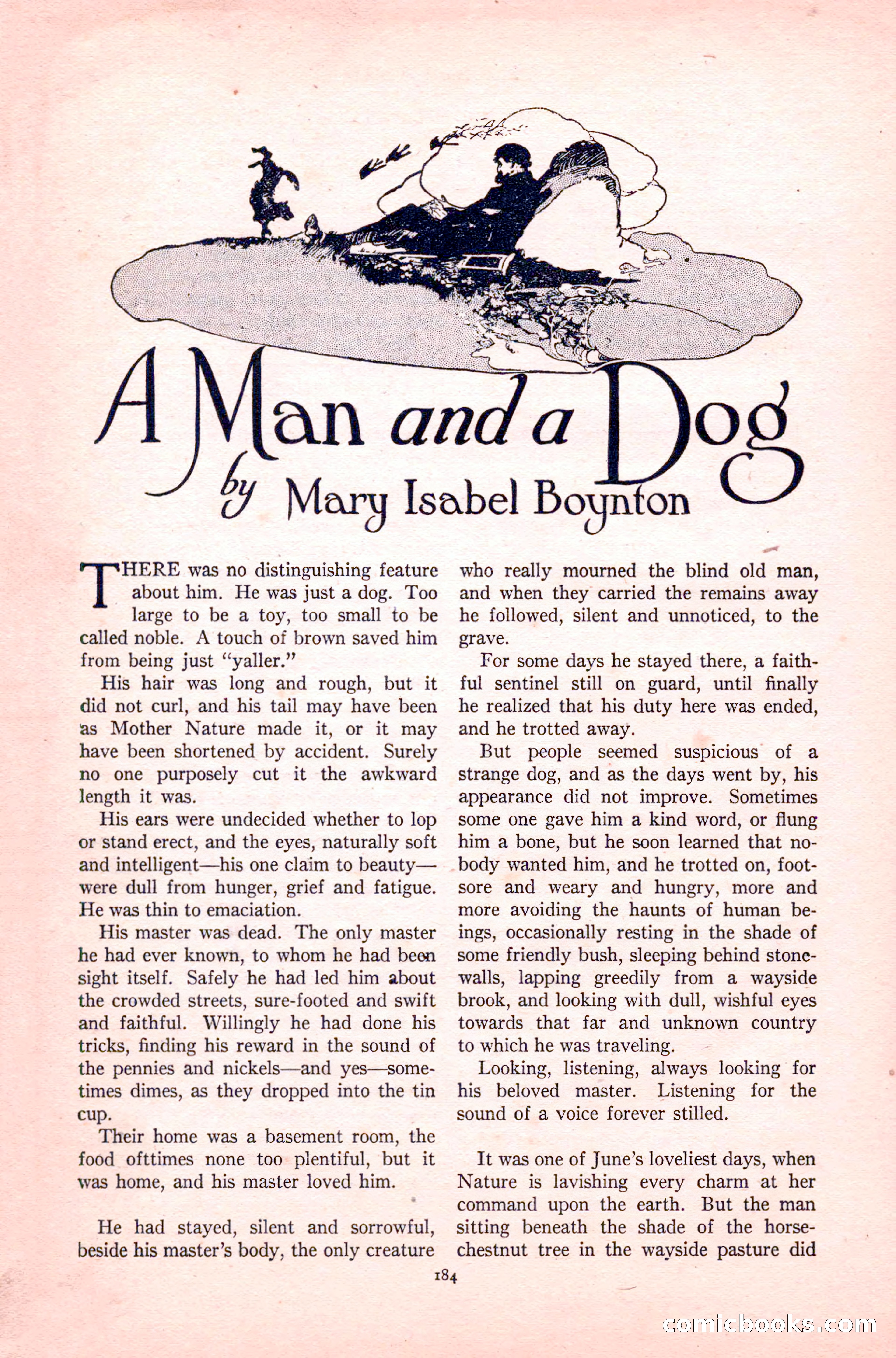
A restored page from Pulp Fiction, 1916. Page through the whole issue in the reader above.
📄 Transcribed text from this page (OCR, searchable)
Machine-transcribed from the original scan — historical spelling and the odd misread are preserved.
8 by Mary Isabel Boynton HERE was no distinguishing feature about him. He was just a dog. Too large to be a toy, too small to be called noble. A touch of brown saved him from being just “‘yaller.”’ His hair was long and rough, but it did not curl, and his tail may have been as Mother Nature made it, or it may have been shortened by accident. Surely no one purposely cut it the awkward length it was. His ears were undecided whether to lop or stand erect, and the eyes, naturally soft and intelligent—his one claim to beauty— were dull from hunger, grief and fatigue. He was thin to emaciation. His master was dead. The only master he had ever known, to whom he had been sight itself. Safely he had led him about the crowded streets, sure-footed and swift and faithful. Willingly he had done his tricks, finding his reward in the sound of the pennies and nickels—and yes—some- times dimes, as they dropped into the tin cup. Their home was a basement room, the food ofttimes none too plentiful, but it was home, and his master loved him. He had stayed, silent and sorrowful, beside his master’s body, the only creature ~ who really mourned the blind old man, and when they carried the remains away he followed, silent and unnoticed, to the grave. For some days he stayed there, a faith- ful sentinel still on guard, until finally he realized that his duty here was ended, and he trotted away. But people seemed suspicious of a strange dog, and as the days went by, his appearance did not improve. Sometimes some one gave him a kind word, or flung him a bone, but he soon learned that no- body wanted him, and he trotted on, foot- sore and weary and hungry, more and more avoiding the haunts of human be- ings, occasionally resting in the shade of some friendly bush, sleeping behind stone- walls, lapping greedily from a wayside brook, and looking with dull, wishful eyes towards that far and unknown country to which he was traveling. Looking, listening, always looking for his beloved master. Listening for the sound of a voice forever stilled. It was one of June’s loveliest days, when Nature is lavishing every charm at her command upon the earth. But the man sitting beneath the shade of the horse- chestnut tree in the wayside pasture did 184 Gomichbook (C@