
Pulp Fiction, 1916 · page 195 of 208
The Argosy, Vol. 82 No. 4 — page 195: what you’re looking at
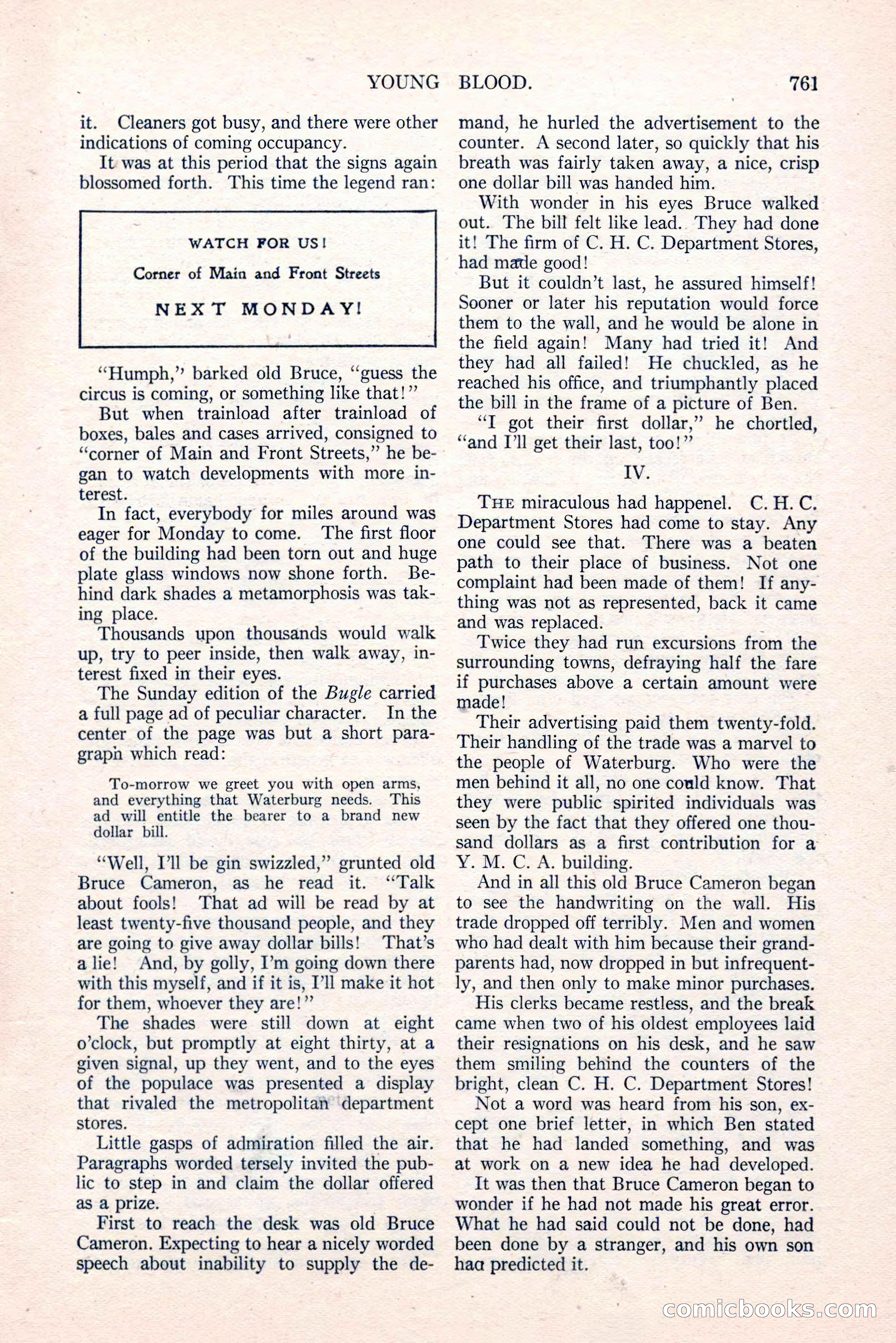
A restored page from Pulp Fiction, 1916. Page through the whole issue in the reader above.
📄 Transcribed text from this page (OCR, searchable)
Machine-transcribed from the original scan — historical spelling and the odd misread are preserved.
YOUNG it. Cleaners got busy, and there were other indications of coming occupancy. It was at this period that the signs again blossomed forth. This time the legend ran: WATCH FOR US! Corner of Main and Front Streets NEXT MONDAY! “Humph,” barked old Bruce, “guess the circus is coming, or something like that!” But when trainload after trainload of boxes, bales and cases arrived, consigned to “corner of Main and Front Streets,” he be- gan to watch developments with more in- terest. In fact, everybody for miles around was eager for Monday to come. The first floor of the building had been torn out and huge plate glass windows now shone forth. Be- hind dark shades a metamorphosis was tak- ing place. Thousands upon thousands would walk up, try to peer inside, then walk away, in- terest fixed in their eyes. The Sunday edition of the Bugle carried a full page ad of peculiar character. In the center of the page was but a short para- graph which read: To-morrow we greet you with open arms, and everything that Waterburg needs. ‘This ad will entitle the bearer to a brand new dollar bill. “Well, I'll be gin swizzled,” grunted old Bruce Cameron, as he read it. ‘Talk about fools! ‘That ad will be read by at least twenty-five thousand people, and they are going to give away dollar bills! That’s alie! And, by golly, I’m going down there with this myself, and if it is, ’ll make it hot for them, whoever they are!” The shades were still down at eight o’clock, but promptly at eight thirty, at a given signal, up they went, and to the eyes of the populace was presented a display that rivaled the metropolitan department stores. Little gasps of admiration filled the air. Paragraphs worded tersely invited the pub- lic to step in and claim the dollar offered as a prize. First to reach the desk was old Bruce Cameron. Expecting to hear a nicely worded speech about inability to supply the de- BLOOD. 761 mand, he hurled the advertisement to the counter. A second later, so quickly that his breath was fairly taken away, a nice, crisp one dollar bill was handed him. With wonder in his eyes Bruce walked out. The bill felt like lead.. They had done it! The firm of C. H. C. Department Stores, had made good! But it couldn’t last, he assured himself! Sooner or later his reputation would force them to the wall, and he would be alone in the field again! Many had tried it! And they had all failed! He chuckled, as he reached his office, and triumphantly placed the bill in the frame of a picture of Ben. “TI got their first dollar,” he chortled, “and I'll get their last, too!” IV. THE miraculous had happenel. C. H.C. Department Stores had come to stay. Any one could see that. There was a beaten path to their place of business. Not one complaint had been made of them! If any- thing was not as represented, back it came and was replaced. Twice they had run excursions from the surrounding towns, defraying half the fare if purchases above a certain amount were made! Their advertising paid them twenty-fold. Their handling of the trade was a marvel to the people of Waterburg. Who were the men behind it all, no one could know. That they were public spirited individuals was seen by the fact that they offered one thou- sand dollars as a first contribution for a Y. M. C. A. building. And in all this old Bruce Cameron began to see the handwriting on the wall. His trade dropped off terribly. Men and women who had dealt with him because their grand- parents had, now dropped in but infrequent- ly, and then only to make minor purchases. His clerks became restless, and the break came when two of his oldest employees laid their resignations on his desk, and he saw them smiling behind the counters of the bright, clean C. H. C. Department Stores! Not a word was heard from his son, ex- cept one brief letter, in which Ben stated that he had landed something, and was at work on a new idea he had developed. It was then that Bruce Cameron began to wonder if he had not made his great error. What he had said could not be done, had been done by a stranger, and his own son haa predicted it. ECOMMICLOOOKS (C©@