
Pulp Fiction, 1916 · page 128 of 216
The Argosy, Vol. 82 No. 2 — page 128: what you’re looking at
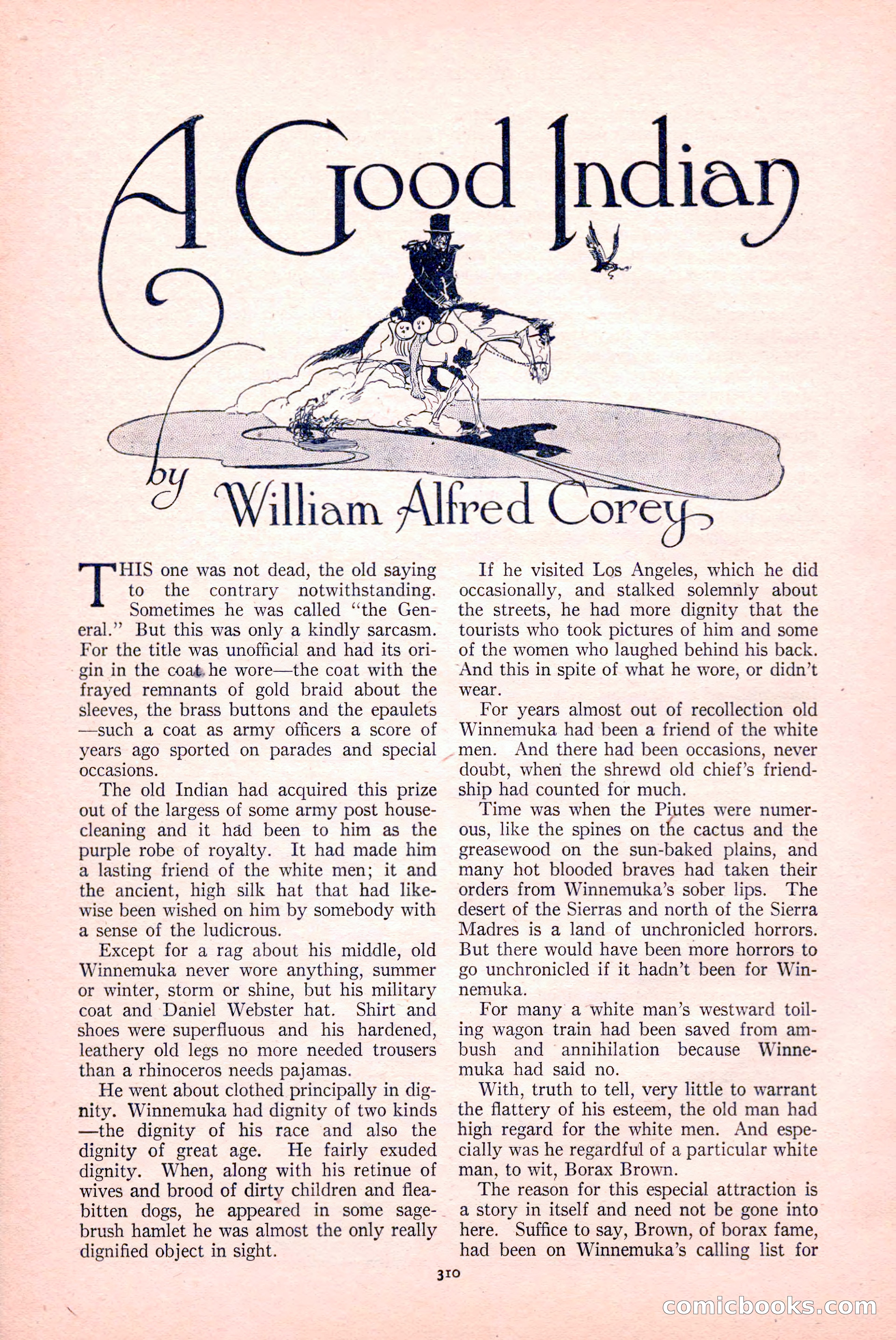
A restored page from Pulp Fiction, 1916. Page through the whole issue in the reader above.
📄 Transcribed text from this page (OCR, searchable)
Machine-transcribed from the original scan — historical spelling and the odd misread are preserved.
ane | I William 2 aS one was not dead, the old saying to the contrary notwithstanding. Sometimes he was called ‘‘the Gen- eral.”’ But this was only a kindly sarcasm. For the title was unofficial and had its ori- gin in the coat, he wore—the coat with the frayed remnants of gold braid about the sleeves, the brass buttons and the epaulets —such a coat as army officers a score of years ago sported on parades and special occasions. The old Indian had acquired this prize out of the largess of some army post house- cleaning and it had been to him as the purple robe of royalty. It had made him a lasting friend of the white men; it and the ancient, high silk hat that had like- wise been wished on him by somebody with a sense of the ludicrous. Except for a rag about his middle, old Winnemuka never wore anything, summer or winter, storm or shine, but his military coat and Daniel Webster hat. Shirt and shoes were superfluous and his hardened, leathery old legs no more needed trousers than a rhinoceros needs pajamas. He went about clothed principally in dig- nity. Winnemuka had dignity of two kinds —the dignity of his race and also the dignity of great age. He fairly exuded dignity. When, along with his retinue of wives and brood of dirty children and flea- bitten dogs, he appeared in some sage- brush hamlet he was almost the only really dignified object in sight. If he visited Los Angeles, which he did occasionally, and stalked solemnly about the streets, he had more dignity that the tourists who took pictures of him and some of the women who laughed behind his back. And this in spite of what he wore, or didn’t wear. For years almost out of recollection old Winnemuka had been a friend of the white men. And there had been occasions, never doubt, when the shrewd old chief’s friend- ship had counted for much. Time was when the Piutes were numer- ous, like the spines on the cactus and the greasewood on the sun-baked plains, and many hot blooded braves had taken their orders from Winnemuka’s sober lips. The desert of the Sierras and north of the Sierra Madres is a land of unchronicled horrors. But there would have been more horrors to go unchronicled if it hadn’t been for Win- nemuka. For many a white man’s westward toil- ing wagon train had been saved from am- bush and annihilation because Winne- muka had said no. With, truth to tell, very little to warrant the flattery of his esteem, the old man had high regard for the white men. And espe- cially was he regardful of a particular white man, to wit, Borax Brown. The reason for this especial attraction is a story in itself and need not be gone into here. Suffice to say, Brown, of borax fame, had been on Winnemuka’s calling list for 310 COLA CLOOOKS (C@)