
Pulp Fiction, 1916 · page 33 of 216
The Argosy, Vol. 81, No. 4 — page 33: what you’re looking at
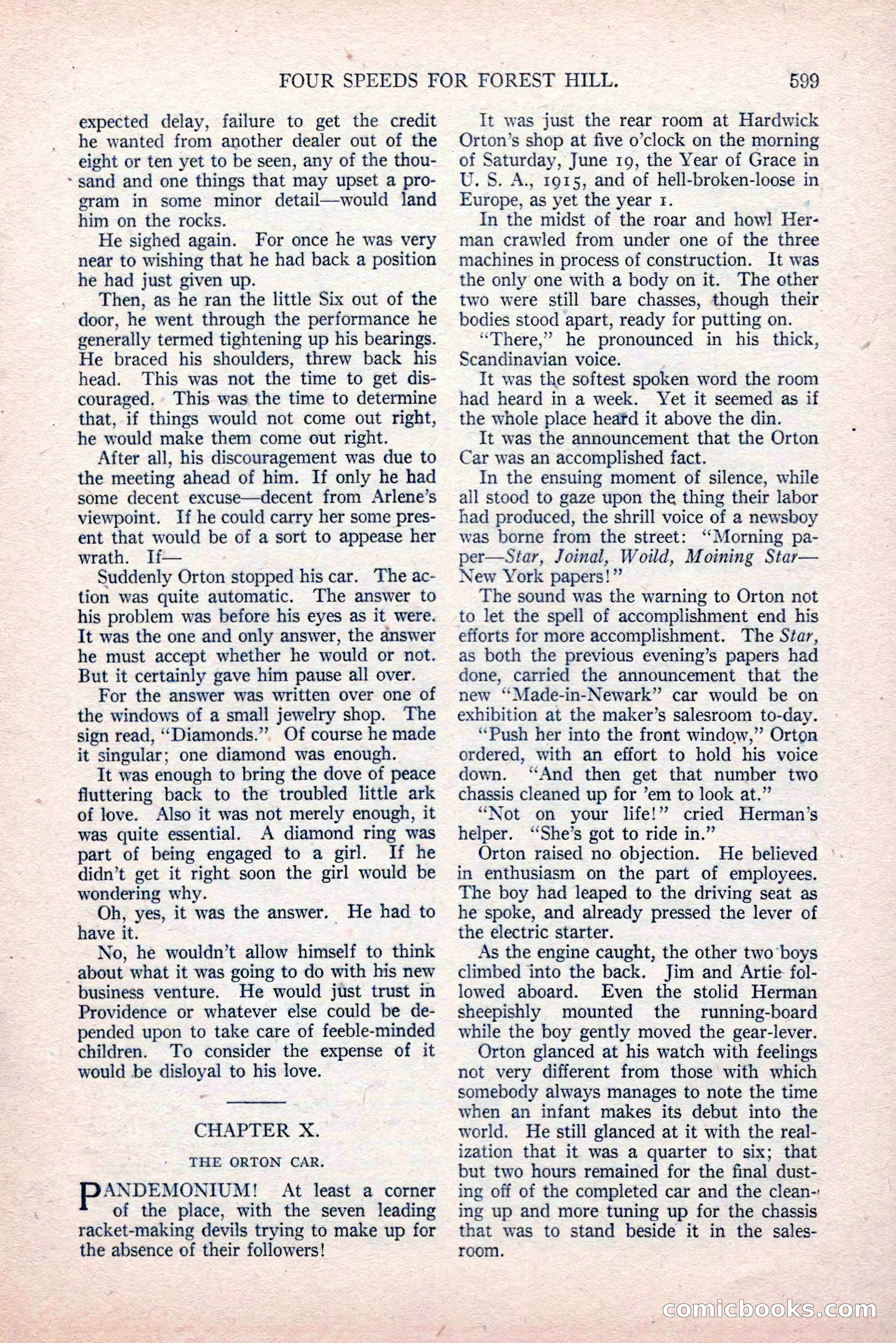
A restored page from Pulp Fiction, 1916. Page through the whole issue in the reader above.
📄 Transcribed text from this page (OCR, searchable)
Machine-transcribed from the original scan — historical spelling and the odd misread are preserved.
FOUR SPEEDS FOR FOREST HILL. expected delay, failure to get the credit he wanted from another dealer out of the eight or ten yet to be seen, any of the thou- ~ sand and one things that may upset a pro- gram in some minor detail—would land him on the rocks. He sighed again. For once he was very near to wishing that he had back a position he had just given up. . Then, as he ran the little Six out of the door, he went through the performance he generally termed tightening up his bearings. He braced his shoulders, threw back his head. This was not the time to get dis- couraged, This was the time to determine that, if things would not come out right, he would make them come out right. After all, his discouragement was due to the meeting ahead of him. If only he had some decent excuse—decent from Arlene’s viewpoint. If he could carry her some pres- ent that would be of a sort to appease her wrath. Ifi— Suddenly Orton stopped his car. The ac- tion was quite automatic. The answer to his problem was before his eyes as it were. It was the one and only answer, the answer he must accept whether he would or not. But it certainly gave him pause all over. For the answer was written over one of the windows of a small jewelry shop. The sign read, ‘““Diamonds.”. Of course he made it singular; one diamond was enough. It was enough to bring the dove of peace fluttering back to the troubled little ark of love. Also it was not merely enough, it was quite essential. A diamond ring was part of being engaged to a girl. If he didn’t get it right soon the girl would be wondering why. Oh, yes, it was the answer. He had to have it. No, he wouldn’t allow himself to think about what it was going to do with his new business venture. He would just trust in Providence or whatever else could be de- pended upon to take care of feeble-minded children. To consider the expense of it would be disloyal to his love. CHAPTER X. THE ORTON CAR. ANDEMONIUM! At least a corner of the place, with the seven leading racket-making devils trying to make up for the absence of their followers! 599 It was just the rear room at Hardwick Orton’s shop at five o’clock on the morning of Saturday, June 19, the Year of Grace in U. 8. A., 1915, and of hell-broken-loose in Europe, as yet the year rf. In the midst of the roar and how! Her- man crawled from under one of the three machines in process of construction. It was the only one with a body on it. The other two were still bare chasses, though their bodies stood apart, ready for putting on. “There,” he pronounced in his thick, Scandinavian voice. It was the softest spoken word the room had heard in a week. Yet it seemed as if the whole place heafd it above the din. It was the announcement that the Orton Car was an accomplished fact. In the ensuing moment of silence, while all stood to gaze upon the thing their labor had produced, the shrill voice of a newsboy was borne from the street: ‘Morning pa- per—Star, Joinal, Woild, Moining Star— New York papers!” The sound was the warning to Orton not to let the spell of accomplishment end his efforts for more accomplishment. The Siar, as both the previous evening’s papers had done, carried the announcement that the new ‘Made-in-Newark” car would be on exhibition at the maker’s salesroom to-day. “Push her into the front window,” Orton ordered, with an effort to hold his voice down. “And then get that number two chassis cleaned up for ’em to look at.” “Not on your life!” cried Herman’s helper. ‘“She’s got to ride in.” Orton raised no objection. in enthusiasm on the part of employees. The boy had leaped to the driving seat as he spoke, and already pressed the lever of the electric starter. As the engine caught, the other two boys climbed into the back. Jim and Artie fol- lowed aboard. Even the stolid Herman sheepishly mounted the running-board while the boy gently moved the gear-lever. Orton glanced at his watch with feelings not very different from those with which somebody always manages to note the time when an infant makes its debut into the world. He still glanced at it with the real- ization that it was a quarter to six; that but two hours remained for the final dust- ing off of the completed car and the clean-: ing up and more tuning up for the chassis that was to stand beside it in the sales- room. connie VOOKS He believed ©» (E@)