
Pulp Fiction, 1914 · page 251 of 268
The Argosy, Vol. 75, No. 4 — page 251: what you’re looking at
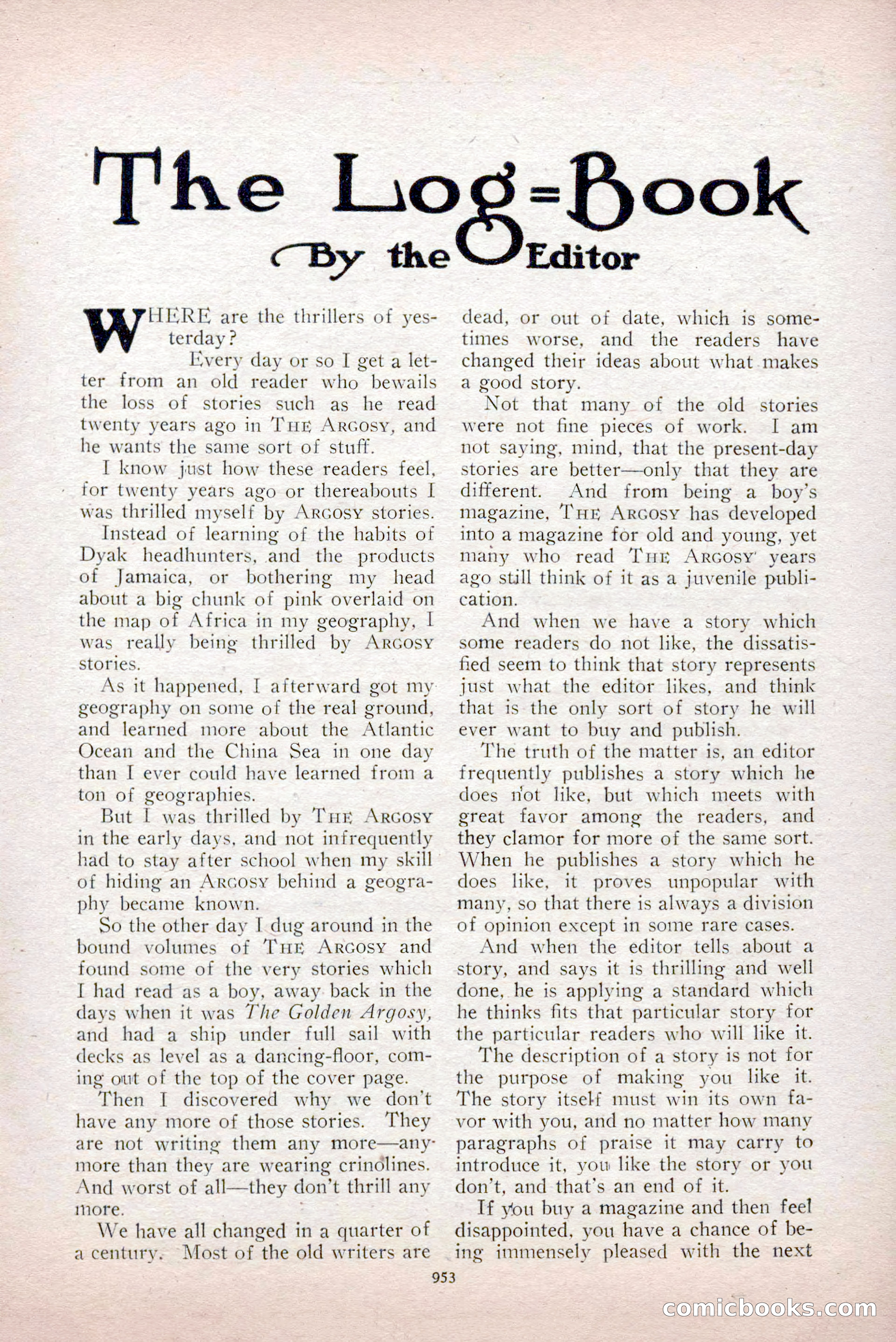
A restored page from Pulp Fiction, 1914. Page through the whole issue in the reader above.
📄 Transcribed text from this page (OCR, searchable)
Machine-transcribed from the original scan — historical spelling and the odd misread are preserved.
HERE are the thrillers of yes- terday? I.very day or so I get a let- ter from an old reader who bewails the loss of stories such as he read twenty years ago in Tur Arcosy, and he wants the same sort of stuff. [ know just how these readers feel, for twenty years ago or thereabouts | was thrilled myself “by ARGOSY stories. Instead of learning of the habits of Dyak headhunters, and the products head Jamaica, or bothering my about a big chunk of pink overlaid on the map of Africa in my geography, | was really being thrilled by Arcosy stories. As it happened, I afterward got my geography on some of the real ground, and learned more about the Atlantic Ocean and the China Sea in one day than I ever could have learned trom a ton of geographies. But I was thrilled by THe Arcosy in the early days, and not infrequently had to stay after school when my skill of hiding an Arcosy behind a geogra- phy became known. So the other day I dug around in the bound volumes of THE Arcosy and found some of the very stories which I had read as a boy, away. back in the days when it was The Golden Argosy, and had a ship under full sail with decks as level as a dancing-floor, com- ing out of the top of the cover page. Then [I discovered why we don't have any more of those stories. They are not writing them any more—any- more than they are wearing crinolines. And worst of all—they don’t thrill any more. We have all changed in a quarter of a century. Most of the old writers are which is some- times worse, and the readers have changed their ideas about what makes a good story. Not that many of the old stories were not fine pieces of work. I am not saying, mind, that the present-day stories are better—only that they are different. And from being a boy’s magazine, THE ARGOosy has developed into a magazine for old and young, yet many who read THe ArGosy’ years ago still think of it as a juvenile publi- cation. And when we have a story which some readers do not like, the dissatis- fied seem to think that story represents just what the editor likes, and think that is the only sort of story he will ever want to buy and publish. The truth of the matter is, an editor frequently publishes a story which he does not like, but which meets with great favor among the readers, and they clamor for more of the same sort. When he publishes a story which he does like, it proves unpopular with many, so that there is always a division of opinion except in some rare cases. And when the editor tells about a story, and says it is thrilling and well done, he is applying a standard which he thinks fits that particular story for the particular readers who will like it. The description of a story is not for the purpose of making you like it. The story itself must win its own fa- vor with you, and no matter how many paragraphs of praise it may carry to introduce it, you like the story or you don’t, and that’s an end of it. If you buy a magazine and then feel disappointed, you have a chance of be- ing immensely pleased with the next dead, or out of date, 953 COnniclooolks (E@)