
Pulp Fiction, 1914 · page 235 of 268
The Argosy, Vol. 75, No. 4 — page 235: what you’re looking at
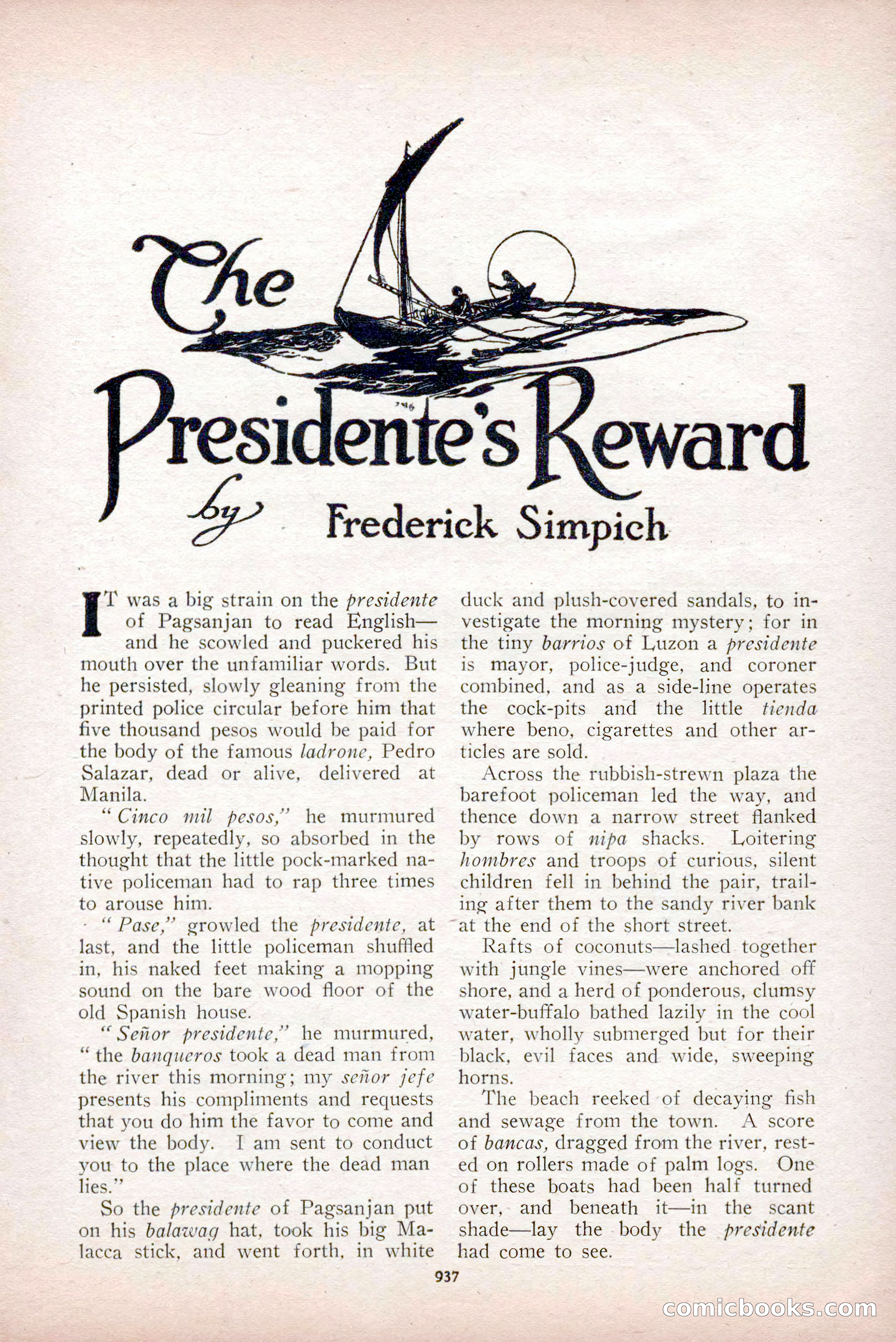
A restored page from Pulp Fiction, 1914. Page through the whole issue in the reader above.
📄 Transcribed text from this page (OCR, searchable)
Machine-transcribed from the original scan — historical spelling and the odd misread are preserved.
- T was a big strain on the presidente i of Pagsanjan to read English— and he scowled and puckered his mouth over the unfamiliar words. But he persisted, slowly gleaning from the printed police circular before him that five thousand pesos would be paid for the body of the famous /adrone, Pedro Salazar, dead or alive, delivered at Manila. “Cinco mil pesos,’ he murmured slowly, repeatedly, so absorbed in the thought that the little pock-marked na- tive policeman had to rap three times to arouse him. “ Pase,”’ growled the presidente, at last, and the little policeman shuffled in, his naked feet making a mopping sound on the bare wood floor of the old Spanish house. “Senor presidente,’ he murmured, “the banqueros took a dead man from the river this morning; my senor jefe presents his compliments and requests that you do him the favor to come and view the body. I am sent to conduct you to the place where the dead man lies.” So the presidente of Pagsanjan put on his balawag hat, took his big Ma- lacca stick, and went forth, in white residente’s, y, eward Frederick Simpich duck and plush-covered sandals, to in- vestigate the morning mystery; for in the tiny barrios of Luzon a presidente is mayor, police-judge, and coroner combined, and as a side-line operates the cock-pits and the little tienda where beno, cigarettes and other ar- ticles are sold. Across the rubbish-strewn plaza the barefoot policeman led the way, and thence down a narrow street flanked by rows of mnipa shacks. Loitering hombres and troops of curious, silent children fell in behind the pair, trail- ing after them to the sandy river bank “at the end of the short street. Rafts of coconuts—lashed together with jungle vines—were anchored off shore, and a herd of ponderous, clumsy water-buffalo bathed lazily in the cool water, wholly submerged but for their black, evil faces and wide, sweeping horns. The beach reeked of decaying fish and sewage from the town. A score of bancas, dragged from the river, rest- ed on rollers made of palm logs. One of these boats had been half turned over, and beneath it—in the scant shade—lay the body the presidente had come to see. 937 ECOMMICLOOOLK< (C@)