
Pulp Fiction, 1914 · page 124 of 268
The Argosy, Vol. 75, No. 4 — page 124: what you’re looking at
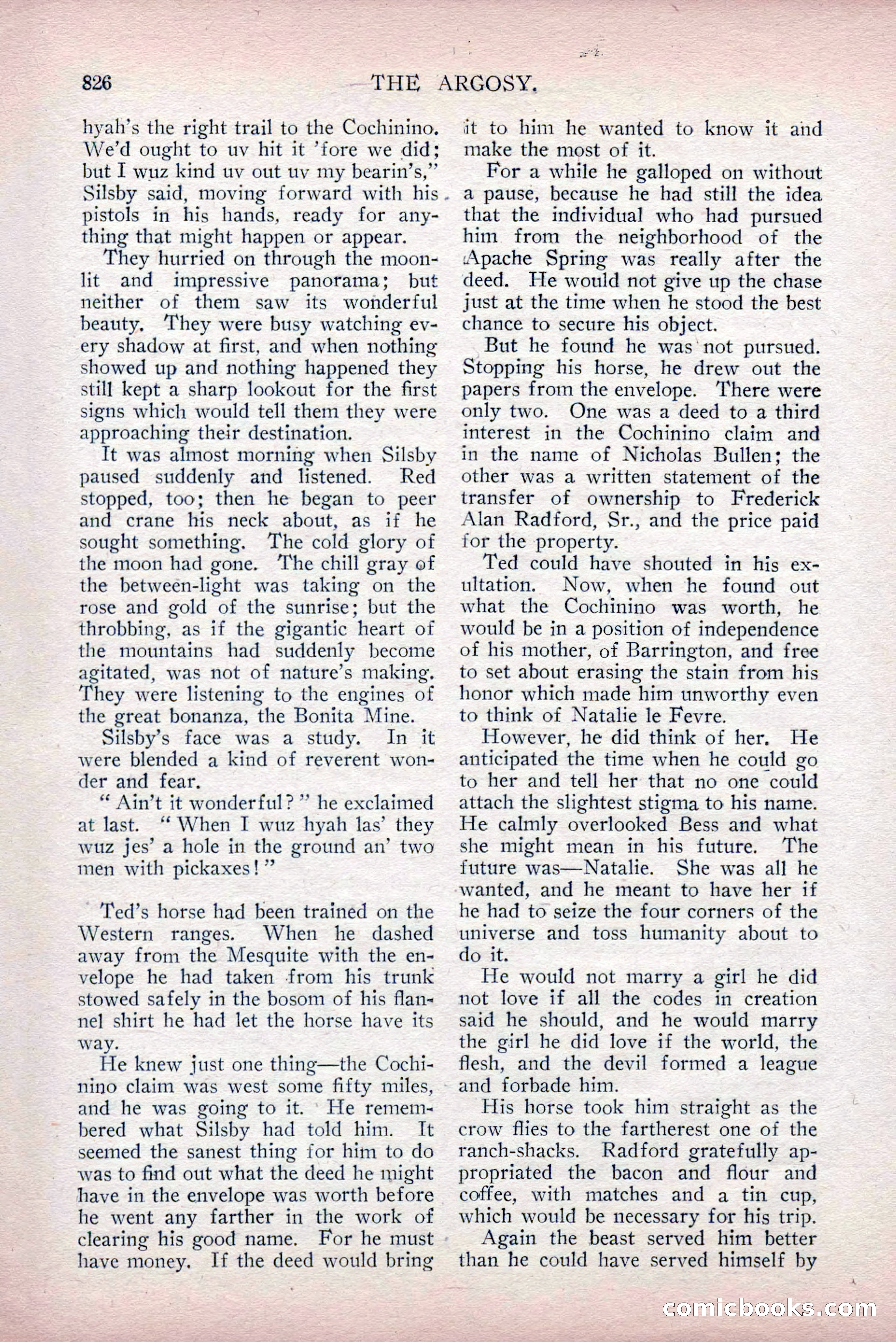
A restored page from Pulp Fiction, 1914. Page through the whole issue in the reader above.
📄 Transcribed text from this page (OCR, searchable)
Machine-transcribed from the original scan — historical spelling and the odd misread are preserved.
826 hyah’s the right trail to the Cochinino, We'd ought to uv hit it ’fore we did; but [ wuz kind uv out uy my bearin’s,” Silsby said, moving forward with his. pistols in his hands, ready for any- thing that might happen or appear. They hurried on through the moon- lit and impressive panorama; but neither of them saw its wonderful beauty, They were busy watching ev- ery shadow at first, and when nothing showed up and nothing happened they still kept a sharp lookout for the first signs which would tell them they were approaching their destination. It was almost morning when Silsby paused suddenly and listened. Red stopped, too; then he began to peer and crane his neck about, as if he sought something. The cold glory of the moon had gone. The chill gray of the between-light was taking on the rose and gold of the sunrise; but the throbbing, as if the gigantic heart of the mountains had suddenly become agitated, was not of nature’s making. They were listening to the engines of the great bonanza, the Bonita Mine. Silsby’s face was a study. In it were blended a kind of reverent won- der and fear. * Ain’t it wonderful? ” he exclaimed at last. ‘‘ When I wuz hyah las’ they wuz jes’ a hole in the ground an’ two men with pickaxes!” Ted’s horse had been trained on the Western ranges. When he dashed away from the Mesquite with the en- velope he had taken from his trunk stowed safely in the bosom of his flan< nel shirt he had let the horse have its Way. He knew just one thing—the Cochi- nino claim was west some fifty miles, and he was going to it. © He remem- bered what Silsby had told him. It seemed the sanest thing for him to do was to find out what the deed he might have in the envelope was worth before he went any farther in the work of clearing his good name. For he must have money. If the deed would bring THE ARGOSY. it to him he wanted to know it and make the most of it. For a while he galloped on without a pause, because he had still the idea that the individual who had pursued him from the neighborhood of the ‘Apache Spring was really after the deed. He would not give up the chase just at the time when he stood the best chance to secure his object. But he found he was not pursued. Stopping his horse, he drew out the papers from the envelope. There were only two. One was a deed to a third interest in the Cochinino claim and in the name of Nicholas Bullen; the other was a written statement of the transfer of ownership to Frederick Alan Radford, Sr., and the price paid for the property. Ted could have shouted in his ex- ultation. Now, when he found out what the Cochinino was worth, he would be in a position of independence of his mother, of Barrington, and free to set about erasing the stain from his honor which made him unworthy even to think of Natalie le Fevre. However, he did think of her. He anticipated the time when he could go to her and tell her that no one could attach the slightest stigma to his name. He calmly overlooked Bess and what she might mean in his future. The future was—Natalie. She was all he wanted, and he meant to have her if he had to seize the four corners of the universe and toss humanity about to do it. He would not marry a girl he did not love if all the codes in creation said he should, and he would marry the girl he did love if the world, the flesh, and the devil formed a league and forbade him. His horse took him straight as the crow flies to the fartherest one of the ranch-shacks. Radford gratefully ap- propriated the bacon and flour and coffee, with matches and a tin cup, which would be necessary for his trip. Again the beast served him better than he could have served himself by Gomichbooks (E@)