
Pulp Fiction, 1891 · page 11 of 20
The Argosy, Vol. XI, No. 21 — page 11: what you’re looking at
A restored page from Pulp Fiction, 1891. Page through the whole issue in the reader above.
📄 Transcribed text from this page (OCR, searchable)
Machine-transcribed from the original scan — historical spelling and the odd misread are preserved.
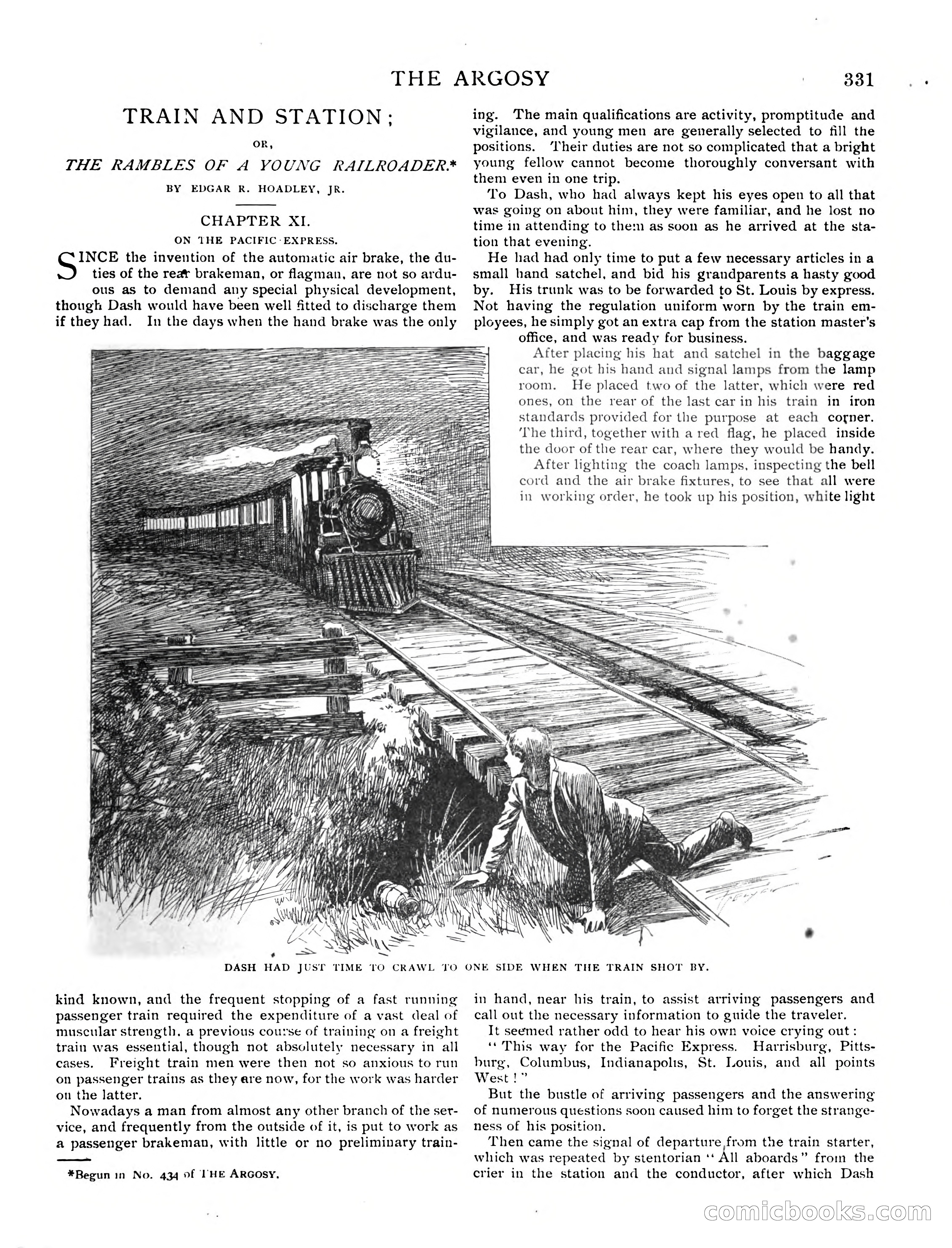
THE ARGOSY . TRAIN AND STATION; OR, THE RAMBLES OF A YOUNG RAILROADER-* BY EDGAR R. HOADLEY, JR. CHAPTER XI. ON THE PACIFIC: EXPRESS. INCE the invention of the automatic air brake, the du- ties of the reat brakeman, or flagman, are not so ardu- ous as to demand any special physical development, though Dash would have been well fitted to discharge them In the days when the hand brake was the only if they had. —— ——————e eae — > — ae SS CF J 7 ’ J, Ci ghle Gat Ar it Phage 2s We be Wii ; (ft ip YA) “ i oe A4/ 4 / /Z e =— DASH HAD JUST TIME TO CRAWL TO ONE SIDE WHEN THE TRAIN SHOT BY. kind known, and the frequent stopping of a fast running passenger train required the expenditure of a vast deal of muscular strength, a previous course of training on a freight train was essential, though not absolutely necessary in all cases. Freight train men were then not so anxious to run on passenger trains as they are now, for the work was harder ou the latter. Nowadays a man from almost any other branch of the ser- vice, and frequently from the outside of it, is put to work as a passenger brakeman, with little or no preliminary train- —_——— *Begun in No. 434 of THE ARGOSY. 331 ing. The main qualifications are activity, promptitude and vigilance, and young men are generally selected to fill the positions. ‘Their duties are not so complicated that a bright young fellow cannot become thoroughly conversant with them even in one trip. To Dash, who had always kept his eyes open to all that was going on about him, they were familiar, and he lost no time in attending to them as soon as he arrived at the sta- tion that evening. He had had only time to put a few necessary articles in a small hand satchel, and bid his grandparents a hasty good by. His trunk was to be forwarded to St. Louis by express. Not having the regulation uniform worn by the train em- ployees, he simply got an extra cap from the station master’s office, and was ready for business. After placing his hat and satchel in the baggage car, he got his hand and signal lamps from the lamp room. He placed two of the latter, which were red ones, on the rear of the last carin his train in iron standards provided for the purpose at each cogner. ‘The third, together with a red flag, he placed inside the door of the rear car, where they would be handy. After lighting the coach lamps, inspecting the bell cord and the air brake fixtures, to see that all were in working order, he took up his position, white light Stine: in hand, near his train, to assist arriving passengers and call out the necessary information to guide the traveler. It seemed rather odd to hear his own voice crying out: ‘“This way for the Pacific Express. Harrisburg, Pitts- burg, Columbus, Indianapolis, St. Louis, and all points West!” But the bustle of arriving passengers and the answering of numerous questions soon caused him to forget the strange- ness of his position. Then came the signal of departure from the train starter, which was repeated by stentorian ‘ All aboards” from the crier in the station and the conductor, after which Dash GOMIGIOOkKSHEO