
Pulp Fiction, 1927 · page 77 of 180
Argosy All-Story Weekly, Vol. 189, No. 4 — page 77: what you’re looking at
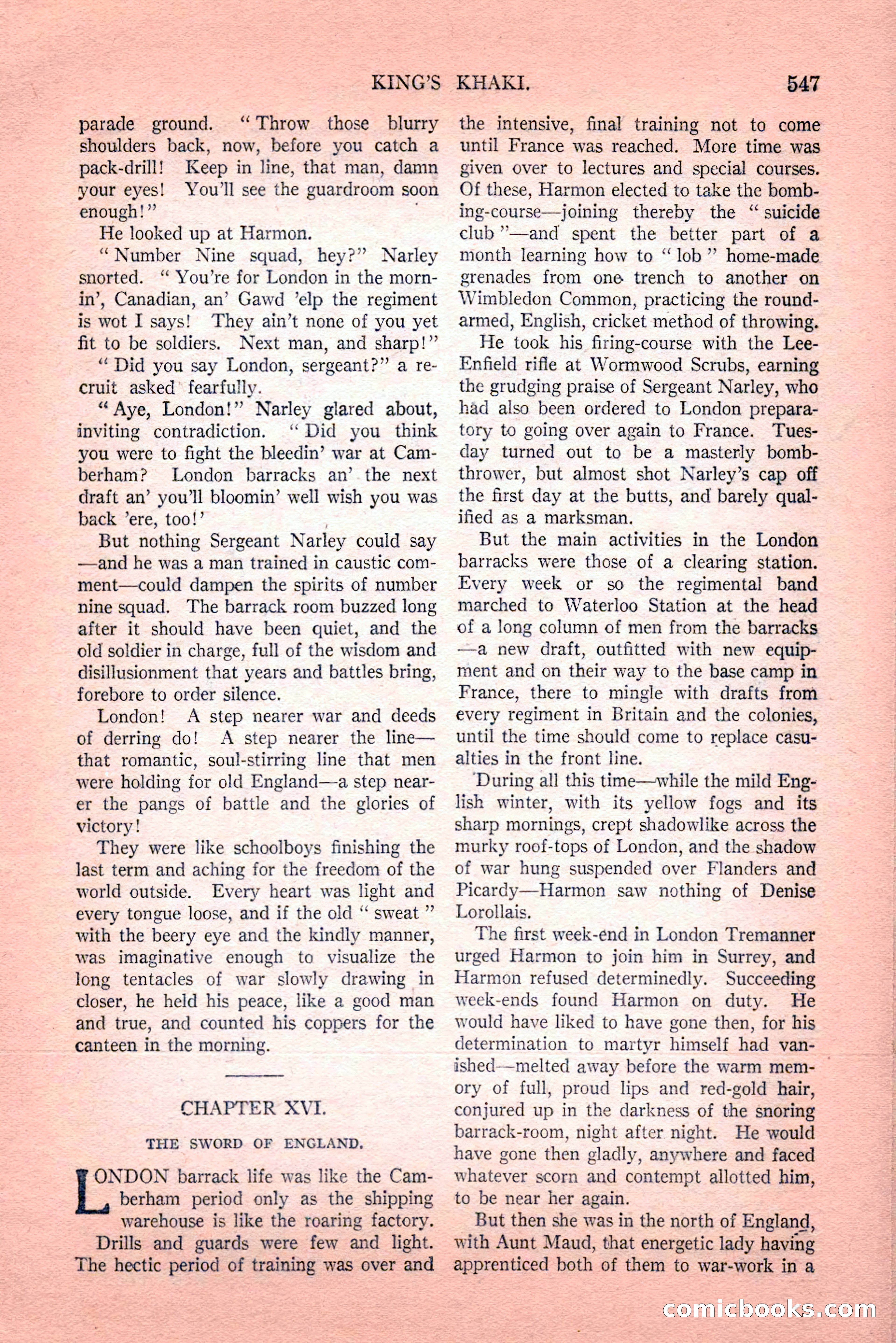
A restored page from Pulp Fiction, 1927. Page through the whole issue in the reader above.
📄 Transcribed text from this page (OCR, searchable)
Machine-transcribed from the original scan — historical spelling and the odd misread are preserved.
KING’S parade ground. ‘ Throw those blurry shoulders back, now, before you catch a pack-drill! Keep in line, that man, damn your eyes! You'll see the guardroom soon enough!” He looked up at Harmon. “Number Nine squad, hey?” Narley snorted. ‘“ You’re for London in the morn- in’, Canadian, an’ Gawd ’elp the regiment is wot I says! They ain’t none of you yet fit to be soldiers. Next man, and sharp!” “Did you say London, sergeant?” a re- cruit asked’ fearfully. “Aye, London!” Narley glared about, inviting contradiction. ‘‘ Did you think you were to fight the bleedin’ war at Cam- berham? London barracks an’ the next draft an’ you'll bloomin’ well wish you was back ’ere, too!’ 3 But nothing Sergeant Narley could say —and he was a man trained in caustic com- ment—could dampen the spirits of number nine squad. The barrack room buzzed long after it should have been quiet, and the old soldier in charge, full of the wisdom and disillusionment that years and battles bring, forebore to order silence. London! A step nearer war and deeds of derring do! A step nearer the line— that romantic, soul-stirring line that men were holding for old England—a step near- er the pangs of battle and the glories of victory! They were like schoolboys finishing the last term and aching for the freedom of the world outside. Every heart was light and every tongue loose, and if the old “ sweat ” with the beery eye and the kindly manner, was imaginative enough to visualize the long tentacles of war slowly drawing in closer, he held his peace, like a good man and true, and counted his coppers for the canteen in the morning. CHAPTER XVI. THE SWORD OF ENGLAND, ONDON barrack life was like the Cam- berham period only as the shipping warehouse is like the roaring factory. Drills and guards were few and light. The hectic period of training was over and 547 the intensive, final training not to come until France was reached. More time was given over to lectures and special courses. Of these, Harmon elected to take the bomb- ing-course—joining thereby the “ suicide club ”’—and spent the better part of a month learning how to “lob” home-made grenades from one trench to another on Wimbledon Common, practicing the round- armed, English, cricket method of throwing. He took his firing-course with the Lee- Enfield rifle at Wormwood Scrubs, earning the grudging praise of Sergeant Narley, who had also been ordered to London prepara- tory to going over again to France. Tues- day turned out to be a masterly bomb- thrower, but almost shot Narley’s cap off the first day at the butts, and barely qual- ied as a marksman. But the main activities in the London barracks were those of a clearing station. Every week or so the regimental band marched to Waterloo Station at the head of a long column of men from the barracks —a new draft, outfitted with new equip- ment and on their way to the base camp in France, there to mingle with drafts from every regiment in Britain and the colonies, until the time should come to replace casu- alties in the front line. During all this time—while the mild Eng- lish winter, with its yellow fogs and its sharp mornings, crept shadowlike across the murky roof-tops of London, and the shadow of war hung suspended over Flanders and Picardy—Harmon saw nothing of Denise Lorollais. The first week-end in London Tremanner urged Harmon to join him in Surrey, and Harmon refused determinedly. Succeeding week-ends found Harmon on duty. He would have liked to have gone then, for his determination to martyr himself had van- KHAKI, ished—melted away before the warm mem- — ory of full, proud lips and red-gold hair, conjured up in the darkness of the snoring barrack-room, night after night. He would have gone then gladly, anywhere and faced whatever scorn and contempt allotted him, to be near her again. But then she was in the north of England, with Aunt Maud, that energetic lady having apprenticed both of them to war-work in a ECOmIcbooks (EO) { } ae eek Ni ; hd oy oh 4 tgp ria thd in Vy hart Wye Stat: Rew n tab