
Pulp Fiction, 1914 · page 156 of 247
The All-Story, March 1914 — page 156: what you’re looking at
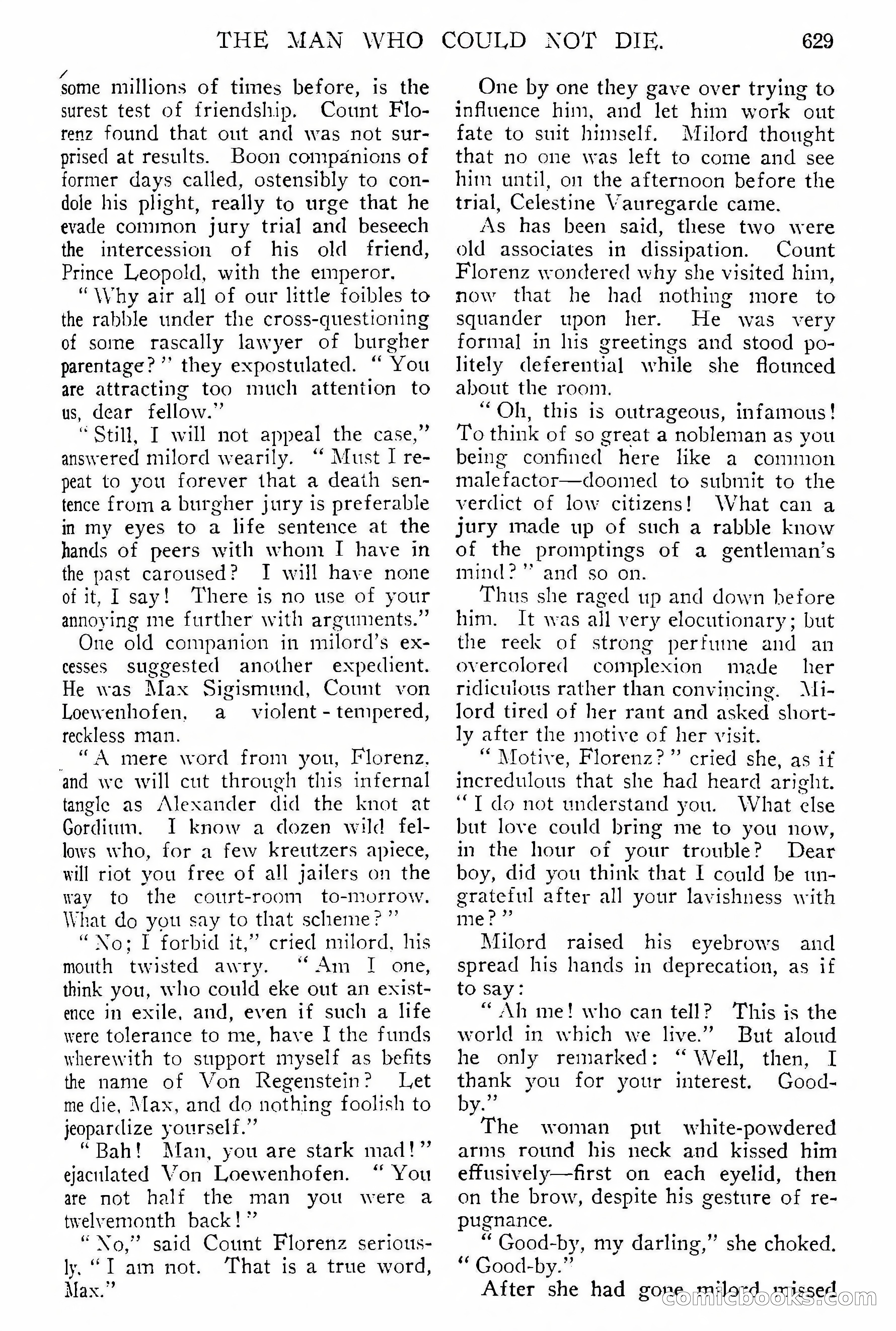
A restored page from Pulp Fiction, 1914. Page through the whole issue in the reader above.
📄 Transcribed text from this page (OCR, searchable)
Machine-transcribed from the original scan — historical spelling and the odd misread are preserved.
THE MAN WHO COULD NOT DIE. 629 some millions of times before, is the surest test of friendship. Count Flo- renz found that out and was not sur- prised at results. Boon compdnions of former days called, ostensibly to con- dole his plight, really to urge that he evade common jury trial and beseech the intercession of his old friend, Prince Leopold, with the emperor. “Why air all of our little foibles to the rabble under the cross-questioning of some rascally lawyer of burgher parentage?’ they expostulated. “ You are attracting too much attention to us, dear fellow.” “Still, I will not appeal the case,” answered milord wearily. “ Must I re- peat to you forever that a deaih sen- tence from a burgher jury is preferable in my eyes to a life sentence at the hands of peers with whom I have in the past caroused? I will have none of it, I say! ‘There is no use of your annoying me further with arguments.” One old companion in milord’s ex- cesses suggested another expedient. He was Max Sigismund, Count von Loewenhofen, a violent - tempered, reckless man. _ “A mere word from you, Florenz. and we will cut through this infernal tangle as Alexander did the knot at Gordium. I know a dozen wild fel- lovs who, for a few kreutzers apiece, will riot you free of all jailers on the way to the court-room to-morrow. What do you say to that scheme?” “No; I forbid it,’ cried nulord, his mouth twisted awry. “Am I one, think you, who could eke out an enist- ece in exile, and, even if such a life were tolerance to me, have | the funds wherewith to support myself as befits the name of Von Regenstein? Let me die, Max, and do nothing foolish to jeopardize yourself.” “Bah! Man, you are stark mad ejaculated Von Loewenhofen. “ You are not half the man yo were a twelvemionth back!” “No,” said Count Florenz serious- ly. “I am not. That is a true word, Max.” aed One by one they gave over trying to influence him, and let him work out fate to suit himself. Milord thought that no one was left to come and see him until, on the afternoon before the trial, Celestine Vauregarde came. As has been said, these two were old associates in dissipation. Count Florenz wondered why she visited him, now that he had nothing more to squander upon her. He was very forma] in his greetings and stood po- litely deferential while she flounced about the room. “Oh, this is outrageous, infamous! To think of so great a nobleman as you being confined here like a common malefactor—doomed to submit to the verdict of low citizens! What can a jury made up of such a rabble know of the promptings of a gentleman’s mind?” and so on. Thus she raged up and down before him. It was all very elocutionary; but the reek of strong perfume and an overcolored complexion made her ridicuious rather than convincing. Mi- lord tired of her rant and asked short- ly after the motive of her visit. “Motive, Florenz?” cried she, as if incredulous that she had heard aright. ‘““T do not understand you. What else but love could bring me to you now, in the hour of your trouble? Dear boy, did you think that I could be tn- gratetul after all your lavishness with me?” Milord raised his eyebrows and spread his hands in deprecation, as if to say: “Ah me! who can tell? This is the world in which we live.” But aloud he only remarked: “ Well, then, I thank you for your interest. Good- by.” The woman put white-powdered arms round his neck and kissed him effusively—first on each eyelid, then on the brow, despite his gesture of re- pugnance. “ Good-by, my darling,” she choked. ‘* Good-by.” Aiter she had gone, mlordmiesed_