
Pulp Fiction, 1926 · page 199 of 232
Adventure Magazine Cover — page 199: what you’re looking at
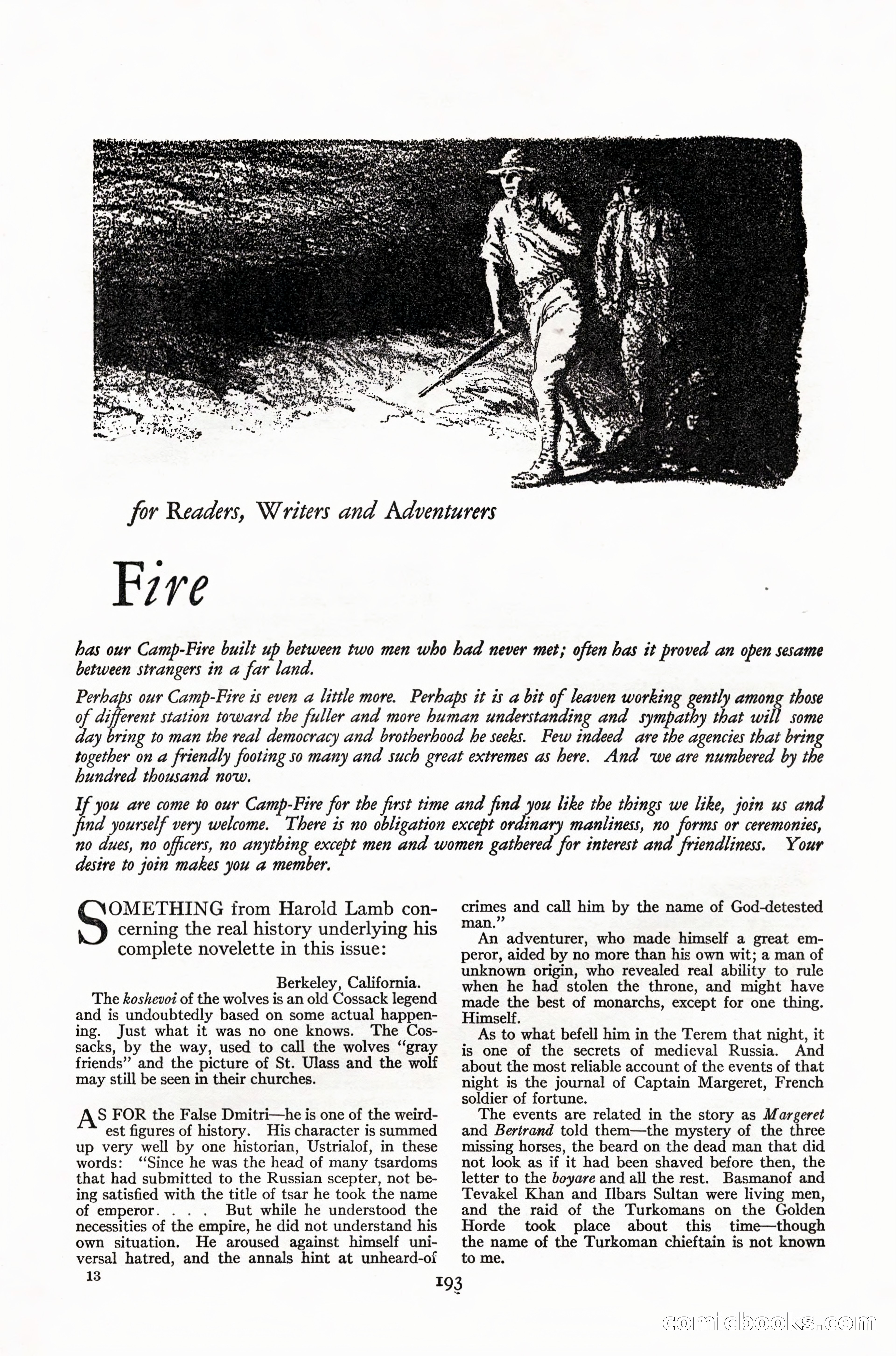
A restored page from Pulp Fiction, 1926. Page through the whole issue in the reader above.
📄 Transcribed text from this page (OCR, searchable)
Machine-transcribed from the original scan — historical spelling and the odd misread are preserved.
for Readers, Writers and Adventurers Fzre has our Camp-Fire built up between two men who had never met; often has it proved an open sesame between strangers in a far land. Perhaps our Camp-Fire is even a little more. Perhaps it is a bit of leaven working gently among those of diferent station toward the fuller and more human understanding and sympathy that will some day bring to man the real democracy and brotherhood he seeks. Few indeed are the agencies that bring together on a friendly footing so many and such great extremes as here. And we are numbered by the hundred thousand now. If you are come to our Camp-Fire for the first time and find you like the things we like, join us and find yourself very welcome. There zs no obligation except ordinary manliness, no forms or ceremonies, no dues, no officers, no anything except men and women gathered for interest and friendliness. Your desire to join makes you a member. cerning the real history underlying his SS cemin HING from Harold Lamb con- complete novelette in this issue: Berkeley, California. The koshevoi of the wolves is an old Cossack legend and is undoubtedly based on some actual happen- ing. Just what it was no one knows. The Cos- sacks, by the way, used to call the wolves “gray friends” and the picture of St. Ulass and the wolf may still be seen in their churches. AS FOR the False Dmitri—he is one of the weird- est figures of history. His character is summed up very well by one historian, Ustrialof, in these words: ‘‘Since he was the head of many tsardoms that had submitted to the Russian scepter, not be- ing satisfied with the title of tsar he took the name of emperor. But while he understood the necessities of the empire, he did not understand his own situation. He aroused against himself uni- versal hatred, and the annals hint at unheard-of crimes and call him by the name of God-detested man.” An adventurer, who made himself a great em- peror, aided by no more than his own wit; a man of unknown origin, who revealed real ability to rule when he had stolen the throne, and might have made the best of monarchs, except for one thing. Himself. As to what befell him in the Terem that night, it is one of the secrets of medieval Russia. And about the most reliable account of the events of that night is the journal of Captain Margeret, French soldier of fortune. The events are related in the story as Margeret and Bertrand told them—the mystery of the three missing horses, the beard on the dead man that did not look as if it had been shaved before then, the letter to the boyare and all the rest. Basmanof and Tevakel Khan and Ilbars Sultan were living men, and the raid of the Turkomans on the Golden Horde took place about this time—though the name of the Turkoman chieftain is not known to me. 13 193 COnmclboookks.c©