
Pulp Fiction, 1926 · page 83 of 212
Adventure Magazine Cover — page 83: what you’re looking at
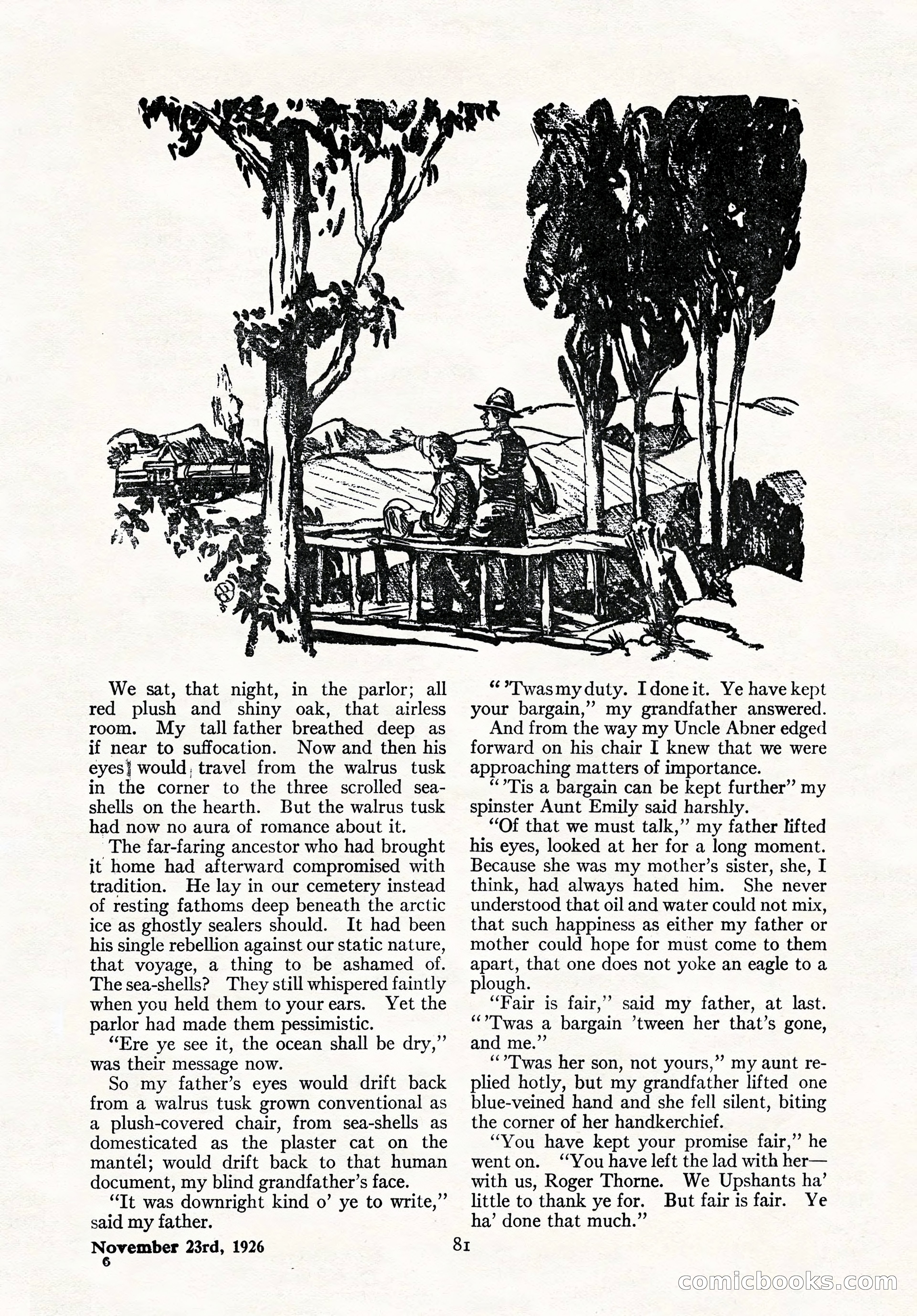
A restored page from Pulp Fiction, 1926. Page through the whole issue in the reader above.
📄 Transcribed text from this page (OCR, searchable)
Machine-transcribed from the original scan — historical spelling and the odd misread are preserved.
We sat, that night, in the parlor; all red plush and shiny oak, that airless room, My tall father breathed deep as if near to suffocation. Now and then his eyes? would: travel from the walrus tusk in the corner to the three scrolled sea- shells on the hearth. But the walrus tusk had now no aura of romance about it. ~The far-faring ancestor who had brought it home had afterward compromised with tradition. He lay in our cemetery instead of resting fathoms deep beneath the arctic ice as ghostly sealers should. It had been his single rebellion against our static nature, that voyage, a thing to be ashamed of. The sea-shells? They still whispered faintly when you held them to yourears. Yet the parlor had made them pessimistic. “Ere ye see it, the ocean shall be dry,” was their message now. So my father’s eyes would drift back from a walrus tusk grown conventional as a plush-covered chair, from sea-shells as domesticated as the plaster cat on the mantel; would drift back to that human document, my blind grandfather’s face. “Tt was downright kind o’ ye to write,” said my father. November 23rd, 1926 “*Twasmyduty. Idoneit. Ye have kept your bargain,” my grandfather answered. And from the way my Uncle Abner edged forward on his chair I knew that we were approaching matters of importance. ‘Tis a bargain can be kept further” my spinster Aunt Emily said harshly. “Of that we must talk,’”’ my father lifted his eyes, looked at her for a long moment. Because she was my mother’s sister, she, I think, had always hated him. She never understood that oil and water could not mix, that such happiness as either my father or mother could hope for must come to them apart, that one does not yoke an eagle to a plough. “Fair is fair,’ said my father, at last. ‘Twas a bargain ’tween her that’s gone, and me.” ‘Twas her son, not yours,” my aunt re- plied hotly, but my grandfather lifted one blue-veined hand and she fell silent, biting the corner of her handkerchief. “You have kept your promise fair,” he wenton. “You have left the lad with her— with us, Roger Thorne. We Upshants ha’ little to thank ye for. But fair is fair. Ye ha’ done that much.” d NOOK C©@