
Pulp Fiction, 1926 · page 193 of 212
Adventure Magazine Cover — page 193: what you’re looking at
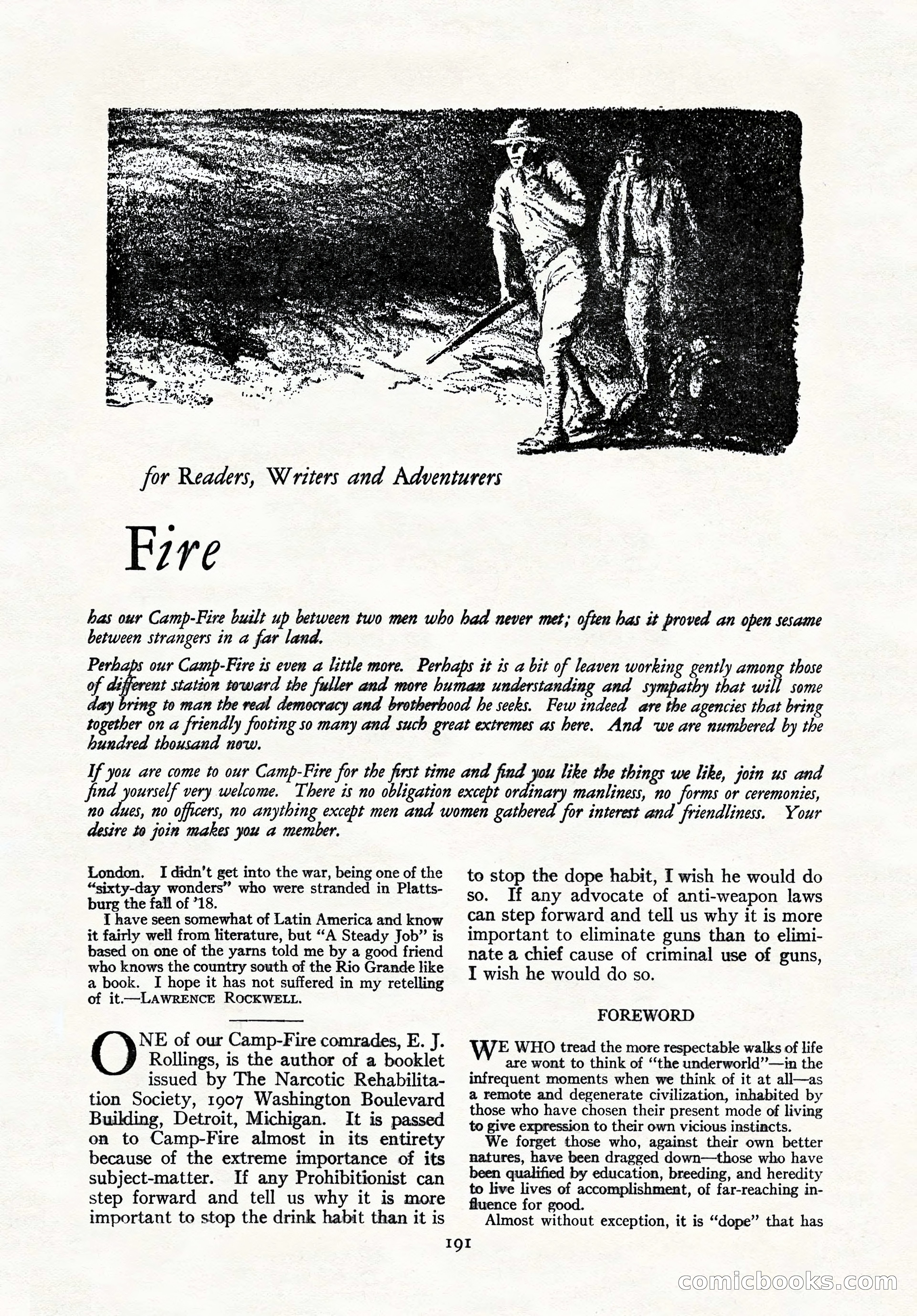
A restored page from Pulp Fiction, 1926. Page through the whole issue in the reader above.
📄 Transcribed text from this page (OCR, searchable)
Machine-transcribed from the original scan — historical spelling and the odd misread are preserved.
jor Readers, Writers and Adventurers Fzre has our Camp-Fire built up between two men who had never met; often has it proved an open sesame between strangers in a far land. Perhaps our Camp-Fire is even a little more. Perhaps it is a bit of leaven working gently among those of di ent station toward the fuller and more human understanding and sympathy that will some day bring to man the real democracy and brotherhood he seeks. Few indeed are the agencies that bring together on a friendly footing so many and such great extremes as here. And we are numbered by the hundred thousand now. If you are come to our Camp-Fire for the first time and find you like the things we like, join us and no desire to join makes you a member. London. I didn’t get into the war, being one of the “sixty-day wonders” who were stranded in Platts- burg the fall of 718. I have seen somewhat of Latin America and know it fairly well from literature, but ““A Steady Job” is based on one of the yarns told me by a good friend who knows the country south of the Rio Grande like a book. I hope it has not suffered in my retelling of it—DLAWRENCE ROCKWELL. NE of our Camp-Fire comrades, E. J. Rollings, is the author of a booklet issued by The Narcotic Rehabilita- tion Society, 1907 Washington Boulevard Building, Detroit, Michigan. It is passed on to Camp-Fire almost in its entirety because of the extreme importance of its subject-matter. If any Prohibitionist can step forward and tell us why it is more important to stop the drink habit than it is Pe very welcome. There is no obligation except ordinary manliness, no forms or ceremonies, ues, no officers, no anything except men and women gathered for interest and friendliness. Your to stop the dope habit, I wish he would do so. If any advocate of anti-weapon laws can step forward and tell us why it is more important to eliminate guns than to elimi- nate a chief cause of criminal use of guns, I wish he would do so. FOREWORD WE WHO tread the more respectable walks of life are wont to think of ‘‘the underworld”’—in the infrequent moments when we think of it at all—as a remote and degenerate civilization, inhabited by those who have chosen their present mode of living to give expression to their own vicious instincts. We forget those who, against their own better natures, have been dragged down—those who have been qualified by education, breeding, and heredity to live lives of accomplishment, of far-reaching in- fluence for good. Almost without exception, it is “dope” that has IQI MICLOO© SS (C@