
Pulp Fiction, 1922 · page 186 of 204
Adventure Magazine Cover — page 186: what you’re looking at
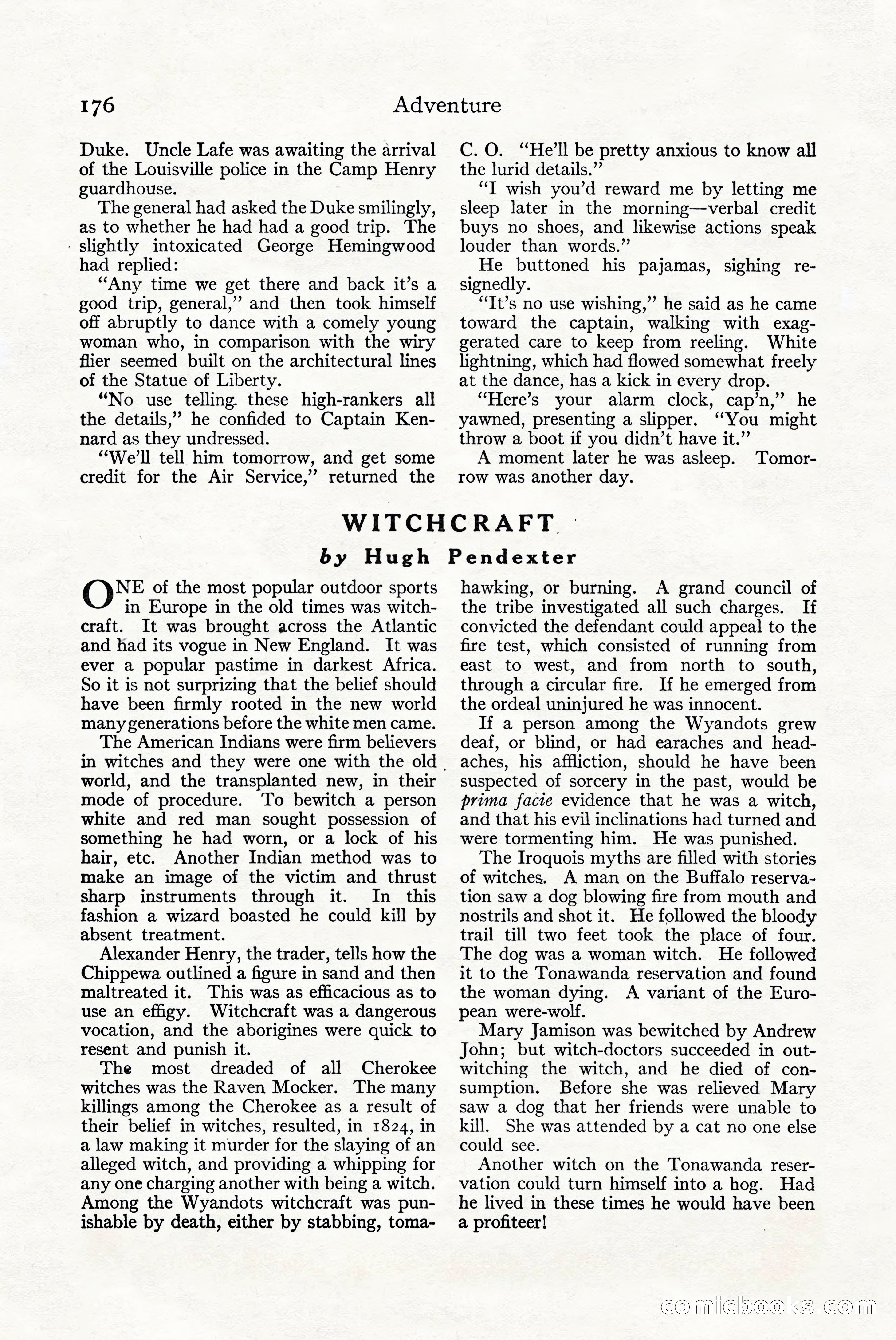
A restored page from Pulp Fiction, 1922. Page through the whole issue in the reader above.
📄 Transcribed text from this page (OCR, searchable)
Machine-transcribed from the original scan — historical spelling and the odd misread are preserved.
176 Duke. Uncle Lafe was awaiting the arrival of the Louisville police in the Camp Henry guardhouse. The general had asked the Duke smilingly, as to whether he had had a good trip. The ' slightly intoxicated George Hemingwood had replied: “Any time we get there and back it’s a good trip, general,’ and then took himself off abruptly to dance with a comely young woman who, in comparison with the wiry flier seemed built on the architectural lines of the Statue of Liberty. “No use telling these high-rankers all the details,” he confided to Captain Ken- nard as they undressed. “We'll tell him tomorrow, and get some credit for the Air Service,’ returned the Adventure C.O. “He'll be pretty anxious to know all the lurid details.” “YT wish you’d reward me by letting me sleep later in the morning—verbal credit buys no shoes, and likewise actions speak louder than words.” He buttoned his pajamas, sighing re- signedly. “It’s no use wishing,’ he said as he came toward the captain, walking with exag- gerated care to keep from reeling. White lightning, which had flowed somewhat freely at the dance, has a kick in every drop. “Here’s your alarm clock, cap’n,” he yawned, presenting a slipper. “You might throw a boot if you didn’t have it.” A moment later he was asleep. Tomor- row was another day. WITCHCRAFT. by Hugh Pendexter (Ox of the most popular outdoor sports in Europe in the old times was witch- craft. It was brought across the Atlantic and had its vogue in New England. It was ever a popular pastime in darkest Africa. So it is not surprizing that the belief should have been firmly rooted in the new world many generations before the white men came. The American Indians were firm believers in witches and they were one with the old . world, and the transplanted new, in their mode of procedure. To bewitch a person white and red man sought possession of something he had worn, or a lock of his hair, etc. Another Indian method was to make an image of the victim and thrust sharp instruments through it. In this fashion a wizard boasted he could kill by absent treatment. Alexander Henry, the trader, tells how the Chippewa outlined a figure in sand and then maltreated it. This was as efficacious as to use an effigy. Witchcraft was a dangerous vocation, and the aborigines were quick to resent and punish it. The most dreaded of all Cherokee witches was the Raven Mocker. The many killings among the Cherokee as a result of their belief in witches, resulted, in 1824, in a law making it murder for the slaying of an alleged witch, and providing a whipping for any one charging another with being a witch. Among the Wyandots witchcraft was pun- ishable by death, either by stabbing, toma- hawking, or burning. A grand council of the tribe investigated all such charges. If convicted the defendant could appeal to the fire test, which consisted of running from east to west, and from north to south, through a circular fire. If he emerged from the ordeal uninjured he was innocent. If a person among the Wyandots grew deaf, or blind, or had earaches and head- aches, his affliction, should he have been suspected of sorcery in the past, would be prima facie evidence that he was a witch, and that his evil inclinations had turned and were tormenting him. He was punished. The Iroquois myths are filled with stories of witches. A man on the Buffalo reserva- tion saw a dog blowing fire from mouth and nostrils and shot it. He followed the bloody trail till two feet took the place of four. The dog was a woman witch. He followed it to the Tonawanda reservation and found the woman dying. A variant of the Euro- pean were-wolf. Mary Jamison was bewitched by Andrew John; but witch-doctors succeeded in out- witching the witch, and he died of con- sumption. Before she was relieved Mary saw a dog that her friends were unable to kill. She was attended by a cat no one else could see. Another witch on the Tonawanda reser- vation could turn himself into a hog. Had he lived in these times he would have been a profiteer! DOOK (©