
Pulp Fiction, 1921 · page 154 of 204
Adventure Magazine Cover, June 18, 1921 — page 154: what you’re looking at
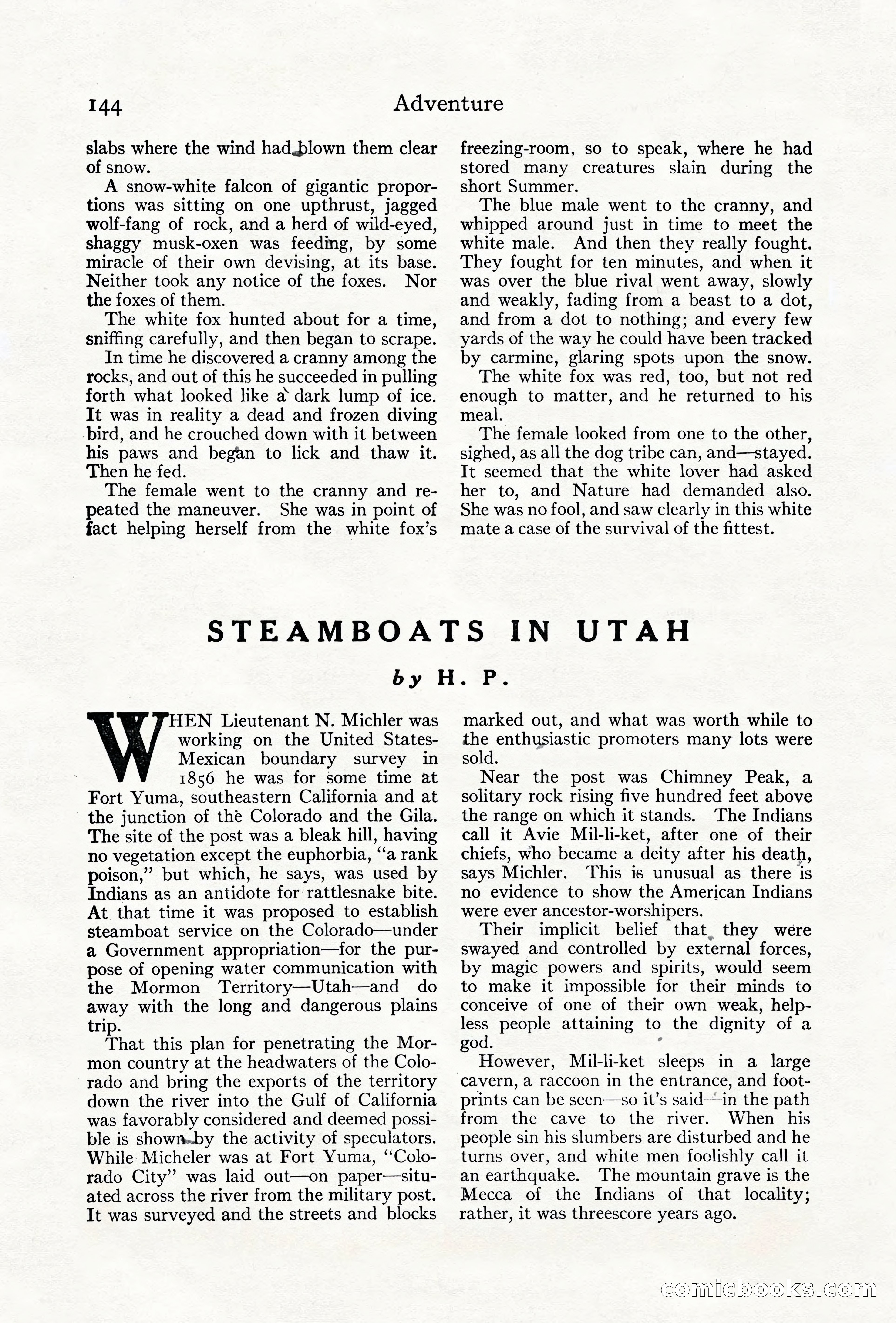
A restored page from Pulp Fiction, 1921. Page through the whole issue in the reader above.
📄 Transcribed text from this page (OCR, searchable)
Machine-transcribed from the original scan — historical spelling and the odd misread are preserved.
144 slabs where the wind had.pDlown them clear of snow. A snow-white falcon of gigantic propor- tions was sitting on one upthrust, jagged wolf-fang of rock, and a herd of wild-eyed, shaggy musk-oxen was feeding, by some miracle of their own devising, at its base. Neither took any notice of the foxes. Nor the foxes of them. The white fox hunted about for a time, sniffing carefully, and then began to scrape. In time he discovered a cranny among the rocks, and out of this he succeeded in pulling forth what looked like a dark lump of ice. It was in reality a dead and frozen diving -bird, and he crouched down with it between his paws and began to lick and thaw it. Then he fed. The female went to the cranny and re- peated the maneuver. She was in point of fact helping herself from the white fox’s Adventure freezing-room, so to speak, where he had stored many creatures slain during the short Summer. The blue male went to the cranny, and whipped around just in time to meet the white male. And then they really fought. They fought for ten minutes, and when it was over the blue rival went away, slowly and weakly, fading from a beast to a dot, and from a dot to nothing; and every few yards of the way he could have been tracked by carmine, glaring spots upon the snow. The white fox was red, too, but not red enough to matter, and he returned to his meal. The female looked from one to the other, sighed, as all the dog tribe can, and—stayed. It seemed that the white lover had asked her to, and Nature had demanded also. She was no fool, and saw clearly in this white mate a case of the survival of the fittest. STEAMBOATS IN UTAH by H. P. HEN Lieutenant N. Michler was working on the United States- Mexican boundary survey in 1856 he was for some time at Fort Yuma, southeastern California and at the junction of the Colorado and the Gila. The site of the post was a bleak hill, having no vegetation except the euphorbia, “a rank poison,” but which, he says, was used by Indians as an antidote for rattlesnake bite. At that time it was proposed to establish steamboat service on the Colorado—under a Government appropriation—for the pur- pose of opening water communication with the Mormon Territory—Utah—and do away with the long and dangerous plains trip. That this plan for penetrating the Mor- mon country at the headwaters of the Colo- -rado and bring the exports of the territory down the river into the Gulf of California was favorably considered and deemed possi- ble is shownby the activity of speculators. While: Micheler was at Fort Yuma, “Colo- rado City” was laid out—on paper—situ- ated across the river from the military post. It was surveyed and the streets and blocks marked out, and what was worth while to the enthusiastic promoters many lots were sold. Near the post was Chimney Peak, a solitary rock rising five hundred feet above the range on which it stands. The Indians call it Avie Mil-li-ket, after one of their chiefs, who became a deity after his death, says Michler. This is unusual as there is no evidence to show the American Indians were ever ancestor-worshipers. Their implicit belief that, they were swayed and controlled by external forces, by magic powers and spirits, would seem to make it impossible for their minds to conceive of one of their own weak, help- less people attaining to the dignity of a god. : However, Mil-li-ket sleeps in a large cavern, a raccoon in the entrance, and foot- prints can be seen—so it’s said—in the path from the cave to the river. When his people sin his slumbers are disturbed and he turns over, and white men foolishly call it an earthquake. The mountain grave is the Mecca of the Indians of that locality; rather, it was threescore years ago. COmicloo oN ) C©