
Pulp Fiction, 1918 · page 108 of 194
Adventure Magazine Cover, April 3, 1918 — page 108: what you’re looking at
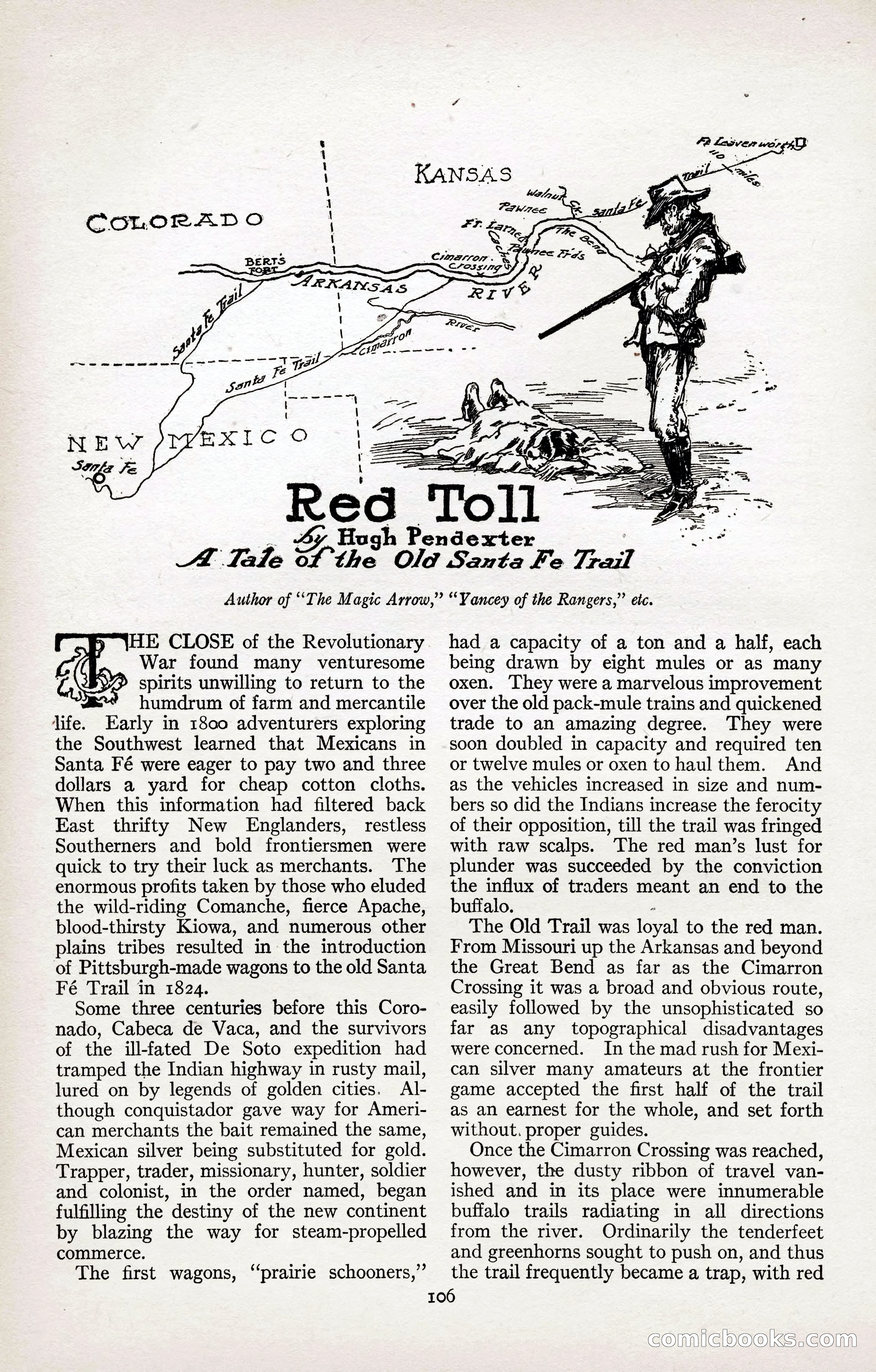
A restored page from Pulp Fiction, 1918. Page through the whole issue in the reader above.
📄 Transcribed text from this page (OCR, searchable)
Machine-transcribed from the original scan — historical spelling and the odd misread are preserved.
COLORADO —aee oe oo” EO Pendexter he Old Santa Fe Trail Al Tale ae, Author of “The Magic Arrow,” “Yancey of the Rangers,” eic. HE CLOSE of the Revolutionary War found many venturesome as spirits unwilling to return to the humdrum of farm and mercantile life. Early in 1800 adventurers exploring the Southwest learned that Mexicans in Santa Fé were eager to pay two and three dollars a yard for cheap cotton cloths. When this information had filtered back East thrifty New Englanders, restless Southerners and bold frontiersmen were quick to try their luck as merchants. The enormous profits taken by those who eluded the wild-riding Comanche, fierce Apache, blood-thirsty Kiowa, and numerous other plains tribes resulted in the introduction of Pittsburgh-made wagons to the old Santa Fé Trail in 1824. Some three centuries before this Coro- nado, Cabeca de Vaca, and the survivors of the ill-fated De Soto expedition had tramped the Indian highway in rusty mail, lured on by legends of golden cities. Al- though conquistador gave way for Ameri- can merchants the bait remained the same, Mexican silver being substituted for gold. Trapper, trader, missionary, hunter, soldier and colonist, in the order named, began fulfilling the destiny of the new continent by blazing the way for steam-propelled commerce. The first wagons, “prairie schooners,” had a capacity of a ton and a half, each being drawn by eight mules or as many oxen. They were a marvelous improvement over the old pack-mule trains and quickened trade to an amazing degree. They were soon doubled in capacity and required ten or twelve mules or oxen to haul them. And as the vehicles increased in size and num- bers so did the Indians increase the ferocity of their opposition, till the trail was fringed with raw scalps. The red man’s lust for plunder was succeeded by the conviction the influx of traders meant an end to the buffalo. The Old Trail was loyal to the red man. From Missouri up the Arkansas and beyond the Great Bend as far as the Cimarron Crossing it was a broad and obvious route, easily followed by the unsophisticated so far as any topographical disadvantages were concerned. In the mad rush for Mexi- can silver many amateurs at the frontier game accepted the first half of the trail as an earnest for the whole, and set forth without. proper guides. Once the Cimarron Crossing was reached, however, the dusty ribbon of travel van- ished and in its place were innumerable buffalo trails radiating in all directions from the river. Ordinarily the tenderfeet and greenhorns sought to push on, and thus the trail frequently became a trap, with red 106 GOmiiGcsvoo S (C@