
Pulp Fiction, 1917 · page 129 of 196
Adventure Magazine, Mid-September 1917 — page 129: what you’re looking at
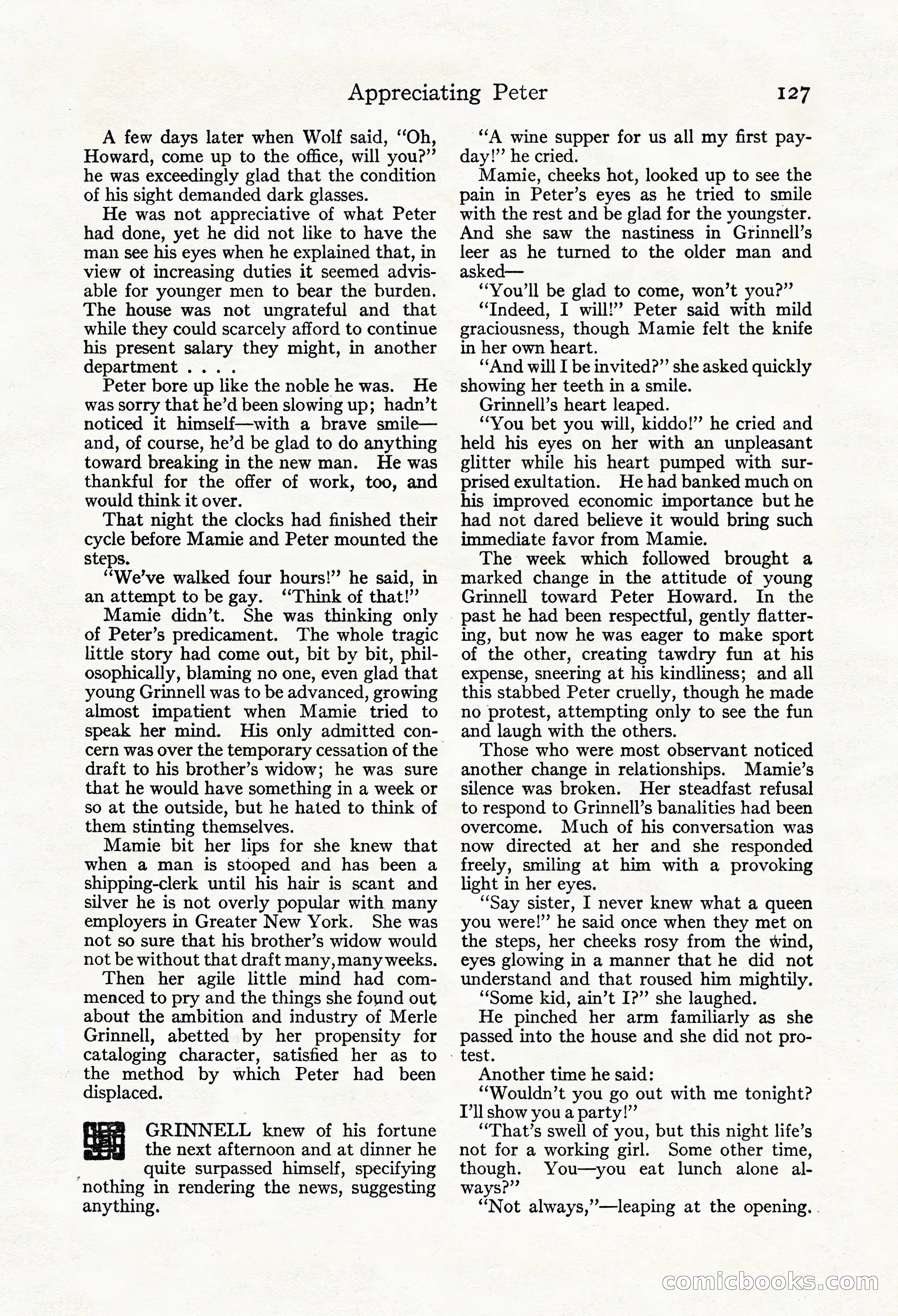
A restored page from Pulp Fiction, 1917. Page through the whole issue in the reader above.
📄 Transcribed text from this page (OCR, searchable)
Machine-transcribed from the original scan — historical spelling and the odd misread are preserved.
Appreciating Peter A few days later when Wolf said, ‘“‘Oh, Howard, come up to the office, will you?” he was exceedingly glad that the condition of his sight demanded dark glasses. He was not appreciative of what Peter had done, yet he did not like to have the man see his eyes when he explained that, in view ot increasing duties it seemed advis- able for younger men to bear the burden. The house was not ungrateful and that while they could scarcely afford to continue his present sa they might, in another department . Peter bore up like the noble he was. He was sorry that he’d been slowing up; hadn’t noticed it himself—with a brave smile— and, of course, he’d be glad to do anything toward breaking in the new man. He was thankful for the offer of work, too, and would think it over. That night the clocks had finished their cycle before Mamie and Peter mounted the steps. ‘We've walked four hours!” he said, in an attempt to be gay. “Think of that!”’ Mamie didn’t. She was thinking only of Peter’s predicament. The whole tragic little story had come out, bit by bit, phil- osophically, blaming no one, even glad that young Grinnell was to be advanced, growing almost impatient when Mamie tried to speak her mind. His only admitted con- cern was over the temporary cessation of the draft to his brother’s widow; he was sure that he would have something in a week or so at the outside, but he hated to think of them stinting themselves. Mamie bit her lips for she knew that when a man is stooped and has been a shipping-clerk until his hair is scant and silver he is not overly popular with many employers in Greater New York. She was not so sure that his brother’s widow would not be without that draft many, many weeks. Then her agile little mind had com- menced to pry and the things she found out about the ambition and industry of Merle Grinnell, abetted by her propensity for cataloging character, satisfied her as to _ the method by which Peter had been displaced. GRINNELL knew of his fortune the next afternoon and at dinner he quite surpassed himself, specifying nothing in rendering the news, suggesting anything. 127 “A wine supper for us all my first pay- day!” he cried. Mamie, cheeks hot, looked up to see the pain in Peter’s eyes as he tried to smile with the rest and be glad for the youngster. And she saw the nastiness in Grinnell’s leer as he turned to the older man and asked— “You'll be glad to come, won’t you?” “Indeed, I will!” Peter said with mild graciousness, though Mamie felt the knife in her own heart. ‘‘And will I be invited?” she asked quickly showing her teeth in a smile. Grinnell’s heart leaped. ‘You bet you will, kiddo!” he cried and held his eyes on her with an unpleasant glitter while his heart pumped with sur- prised exultation. He had banked much on his improved economic importance but he had not dared believe it would bring such immediate favor from Mamie. The week which followed brought a marked change in the attitude of young Grinnell toward Peter Howard. In the _ past he had been respectful, gently flatter- ing, but now he was eager to make sport of the other, creating tawdry fun at his expense, sneering at his kindliness; and all this stabbed Peter cruelly, though he made no protest, attempting only to see the fun and laugh with the others. Those who were most observant noticed another change in relationships. Mamie’s silence was broken. Her steadfast refusal to respond to Grinnell’s banalities had been overcome. Much of his conversation was now directed at her and she responded freely, smiling at him with a provoking light in her eyes. ‘Say sister, I never knew what a queen you were!” he said once when they met on the steps, her cheeks rosy from the wind, eyes glowing in a manner that he did not understand and that roused him mightily. ‘Some kid, ain’t I?” she laughed. He pinched her arm familiarly as she passed into the house and she did not pro- - test. Another time he said: ‘“‘Wouldn’t you go out with me tonight? T’ll show you a party!” “That’s swell of you, but this night life’s not for a working girl. Some other time, though. You—you eat lunch alone al- ways?” “Not always,”—leaping at the opening. COmicloo ©