
Pulp Fiction, 1917 · page 62 of 196
Adventure, August 1917 — page 62: what you’re looking at
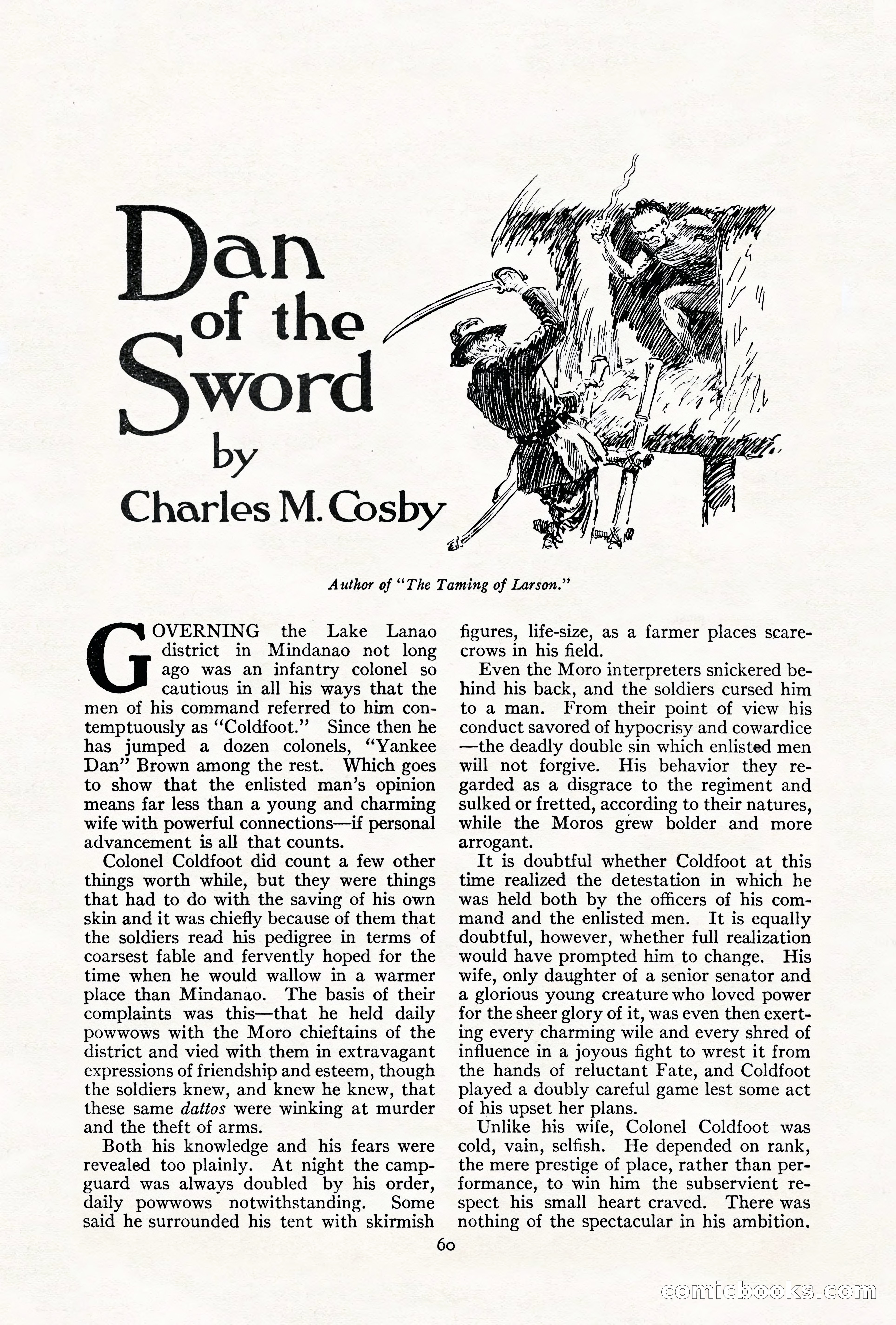
A restored page from Pulp Fiction, 1917. Page through the whole issue in the reader above.
📄 Transcribed text from this page (OCR, searchable)
Machine-transcribed from the original scan — historical spelling and the odd misread are preserved.
Oy , ¢ AA oo ‘ b-9 4 Ah i yy i ny Author of ‘‘The Taming of Larson.” OVERNING the Lake Lanao district in Mindanao not long ago was an infantry colonel so cautious in all his ways that the men of his command referred to him con- temptuously as ‘‘Coldfoot.”’ Since then he has jumped a dozen colonels, “Yankee Dan” Brown among the rest. Which goes to show that the enlisted man’s opinion means far less than a young and charming wife with powerful connections—if personal advancement is all that counts. Colonel Coldfoot did count a few other things worth while, but they were things that had to do with the saving of his own skin and it was chiefly because of them that the soldiers read his pedigree in terms of coarsest fable and fervently hoped for the time when he would wallow in a warmer place than Mindanao. The basis of their complaints was this—that he held daily powwows with the Moro chieftains of the district and vied with them in extravagant expressions of friendship and esteem, though the soldiers knew, and knew he knew, that these same dattos were winking at murder and the theft of arms. Both his knowledge and his fears were revealed too plainly. At night the camp- guard was always doubled by his order, daily powwows notwithstanding. Some said he surrounded his tent with skirmish 60 figures, life-size, as a farmer places scare- crows in his field. Even the Moro interpreters snickered be- hind his back, and the soldiers cursed him to a man. From their point of view his conduct savored of hypocrisy and cowardice —the deadly double sin which enlisted men will not forgive. His behavior they re- garded as a disgrace to the regiment and sulked or fretted, according to their natures, while the Moros grew bolder and more arrogant. It is doubtful whether Coldfoot at this time realized the detestation in which he was held both by the officers of his com- mand and the enlisted men. It is equally doubtful, however, whether full realization would have prompted him to change. His wife, only daughter of a senior senator and a glorious young creature who loved power for the sheer glory of it, was even then exert- ing every charming wile and every shred of influence in a joyous fight to wrest it from the hands of reluctant Fate, and Coldfoot played a doubly careful game lest some act of his upset her plans. Unlike his wife, Colonel Coldfoot was cold, vain, selfish. He depended on rank, the mere prestige of place, rather than per- formance, to win him the subservient re- spect his small heart craved. There was nothing of the spectacular in his ambition. CoOMmiclooks © S|