
Pulp Fiction, 1911 · page 5 of 196
Adventure Magazine Cover — page 5: what you’re looking at
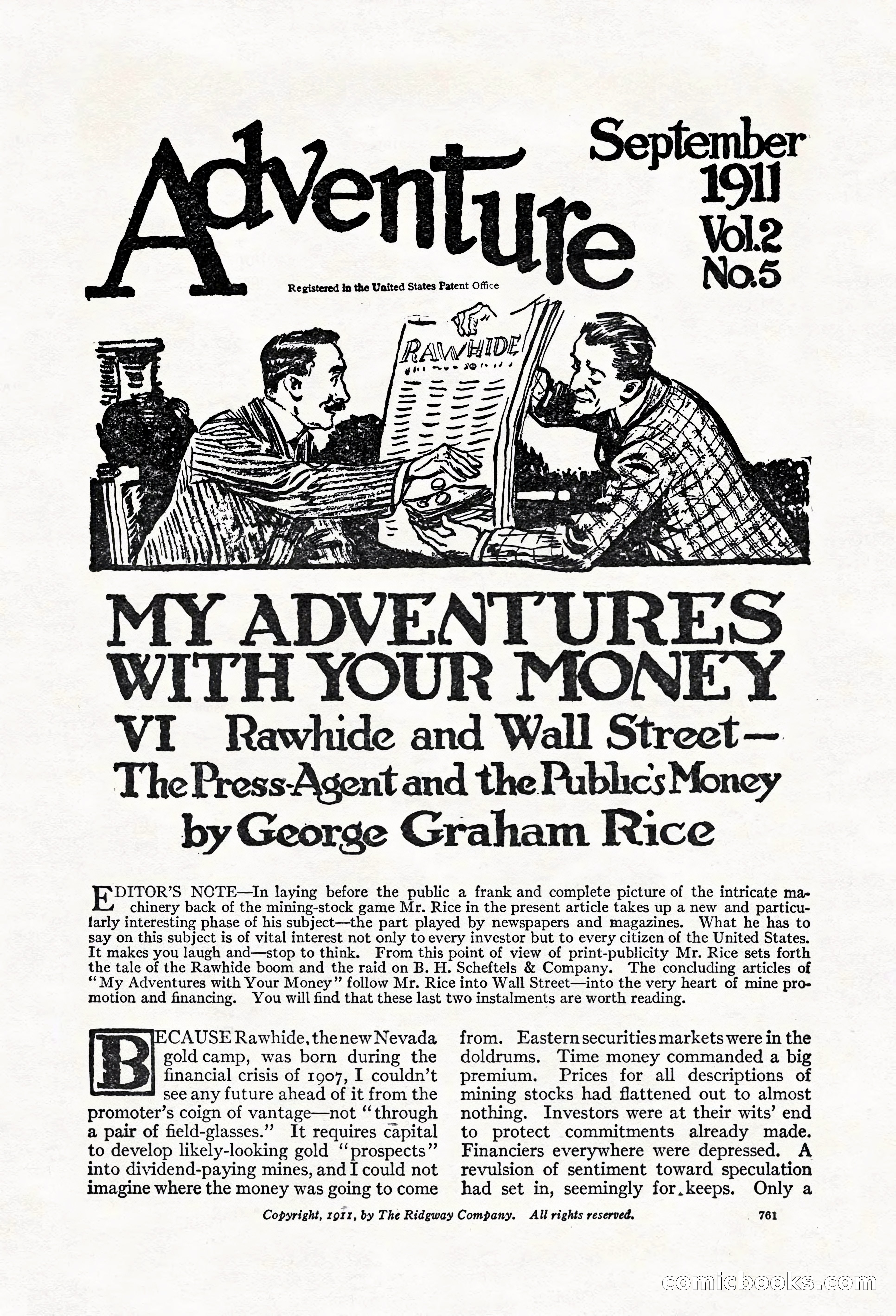
A restored page from Pulp Fiction, 1911. Page through the whole issue in the reader above.
📄 Transcribed text from this page (OCR, searchable)
Machine-transcribed from the original scan — historical spelling and the odd misread are preserved.
_ ; wate ’ a y RAWHIDE give vue WD! of 4 F K SAY , -% bs \ AS . £9; Sy Te. ‘ Se: WITH YOUR MONEY | VI Rawhide and Wall Street— The Press-Agent and the Publics Money by George Graham Rice | aa NOTE—In laying before the public a frank and complete picture of the intricate ma- chinery back of the mining-stock game Mr. Rice in the present article takes up a new and particu- larly interesting phase of his subject—the part played by newspapers and magazines. What he has to say on this subject is of vital interest not only to every investor but to every citizen of the United States. It makes you laugh and—stop to think. From this point of view of print-publicity Mr. Rice sets forth the tale of the Rawhide boom and the raid on B. H. Scheftels & Company. The concluding articles of “My Adventures with Your Money” follow Mr. Rice into Wall Street—into the very heart of mine pro- motion and financing. You will find that these last two instalments are worth reading. CAUSE Rawhide, thenew Nevada gold camp, was born during the financial crisis of 1907, I couldn’t see any future ahead of it from the promoter’s coign of vantage—not “‘through a pair of field-glasses.”” It requires capital to develop likely-looking gold ‘‘prospects”’ into dividend-paying mines, and I could not imagine where the money was going to come Copyright, 1911, by The Ridgway Company. Ali rights reserved. from. Easternsecurities markets were in the doldrums. Time money commanded a big premium. Prices for all descriptions of mining stocks had flattened out to almost nothing. Investors were at their wits’ end to protect commitments already made. Financiers everywhere were depressed. A revulsion of sentiment toward speculation had set in, seemingly for.keeps. Only a - 76t C© Ghbooks 5}