
Pulp Fiction, 1921 · page 67 of 194
Adventure Magazine Cover — page 67: what you’re looking at
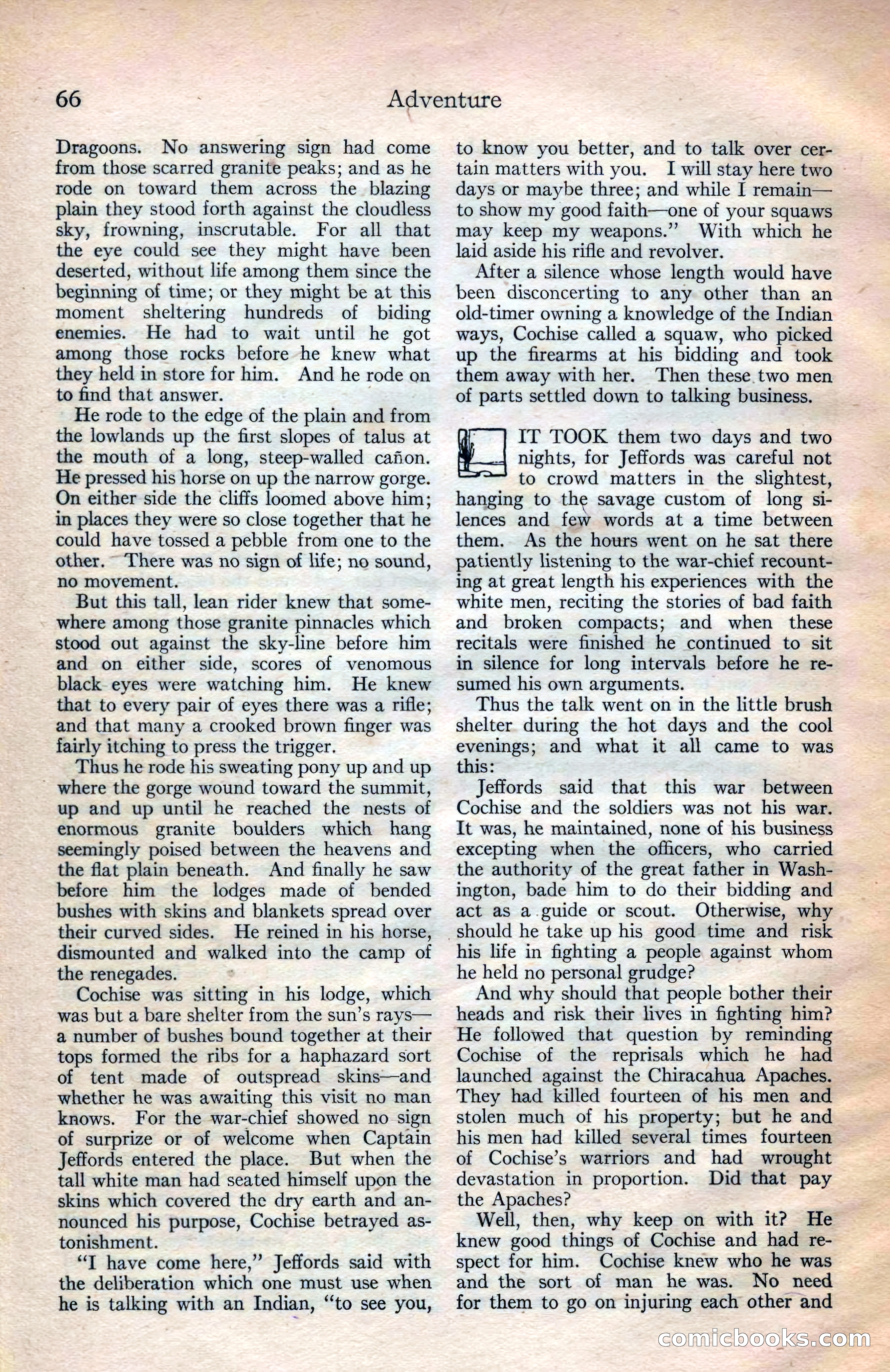
A restored page from Pulp Fiction, 1921. Page through the whole issue in the reader above.
📄 Transcribed text from this page (OCR, searchable)
Machine-transcribed from the original scan — historical spelling and the odd misread are preserved.
66 Dragoons. No answering sign had come from those scarred granite peaks; and as he rode on toward them across the _ blazing plain they stood forth against the cloudless sky, frowning, inscrutable. For all that the eye could see they might have been deserted, without life among them since the beginning of time; or they might be at this moment sheltering hundreds of biding enemies. He had to wait until he got among those rocks before he knew what they held in store for him. And he rode on to find that answer. , He rode to the edge of the plain and from the lowlands up the first slopes of talus at the mouth of a long, steep-walled cafion. He pressed his horse on up the narrow gorge. On either side the cliffs loomed above him; in places they were so close together that he could have tossed a pebble from one to the other. There was no sign of life; no sound, no movement. But this tall, lean rider knew that some- where among those granite pinnacles which stood out against the sky-line before him and on either side, scores of venomous black- eyes were watching him. He knew that to every pair of eyes there was a rifle; and that many a crooked brown finger was fairly itching to press the trigger. Thus he rode his sweating pony up and up _ where the gorge wound toward the summit, up and up until he reached the nests of enormous granite boulders which hang seemingly poised between the heavens and the flat plain beneath. And finally he saw before him the lodges made of bended bushes with skins and blankets spread over their curved sides. He reined in his horse, dismounted and walked into the camp of the renegades. Cochise was sitting in his lodge, which was but a bare shelter from the sun’s rays— a number of bushes bound together at their tops formed the ribs for a haphazard sort of tent made of outspread skins—and whether he was awaiting this visit no man knows. For the war-chief showed no sign of surprize or of welcome when Captain Jeffords entered the place. But when the tall white man had seated himself upon the skins which covered the dry earth and an- nounced his purpose, Cochise betrayed as- tonishment. “T have come here,” Jeffords said with the deliberation which one must use when he is talking with an Indian, “to see you, Adventure to know you better, and to talk over cer- tain matters with you. I will stay here two © days or maybe three; and while I remain— to show my good faith—one of your squaws may keep my weapons.” With which he laid aside his rifle and revolver. After a silence whose length would have been disconcerting to any other than an old-timer owning a knowledge of the Indian ways, Cochise called a squaw, who picked up the firearms at his bidding and took them away with her. Then these two men of parts settled down to talking business, IT TOOK them two days and two nights, for Jeffords was careful not to crowd matters in the slightest, hanging to the savage custom of long si- lences and few words at a time between them. As the hours went on he sat there patiently listening to the war-chief recount- ing at great length his experiences with the white men, reciting the stories of bad faith and broken compacts; and when these recitals were finished he continued to sit in silence for long intervals before he re- sumed his own arguments. Thus the talk went on in the little brush shelter during the hot days and the cool evenings; and what it all came to was this: Jeffords said that this war between Cochise and the soldiers was not his war. It was, he maintained, none of his business excepting when the officers, who carried the authority of the great father in Wash- ington, bade him to do their bidding and act as a guide or scout. Otherwise, why should he take up his good time and risk his life in fighting a people against whom he held no personal grudge? And why should that people bother their heads and risk their lives in fighting him? He followed that question by reminding Cochise of the reprisals which he had launched against the Chiracahua Apaches. They had killed fourteen of his men and stolen much of his property; but he and his men had killed several times fourteen of Cochise’s warriors and had wrought devastation in proportion. Did that pay the Apaches? Well, then, why keep on with it? He knew good things of Cochise and had re- spect for him. Cochise knew who he was and the sort of man he was. No need for them to go on injuring each other and COMMGENOOKSaEC)