
Pulp Fiction, 1922 · page 27 of 200
Adventure Magazine Cover, December 10, 1922 — page 27: what you’re looking at
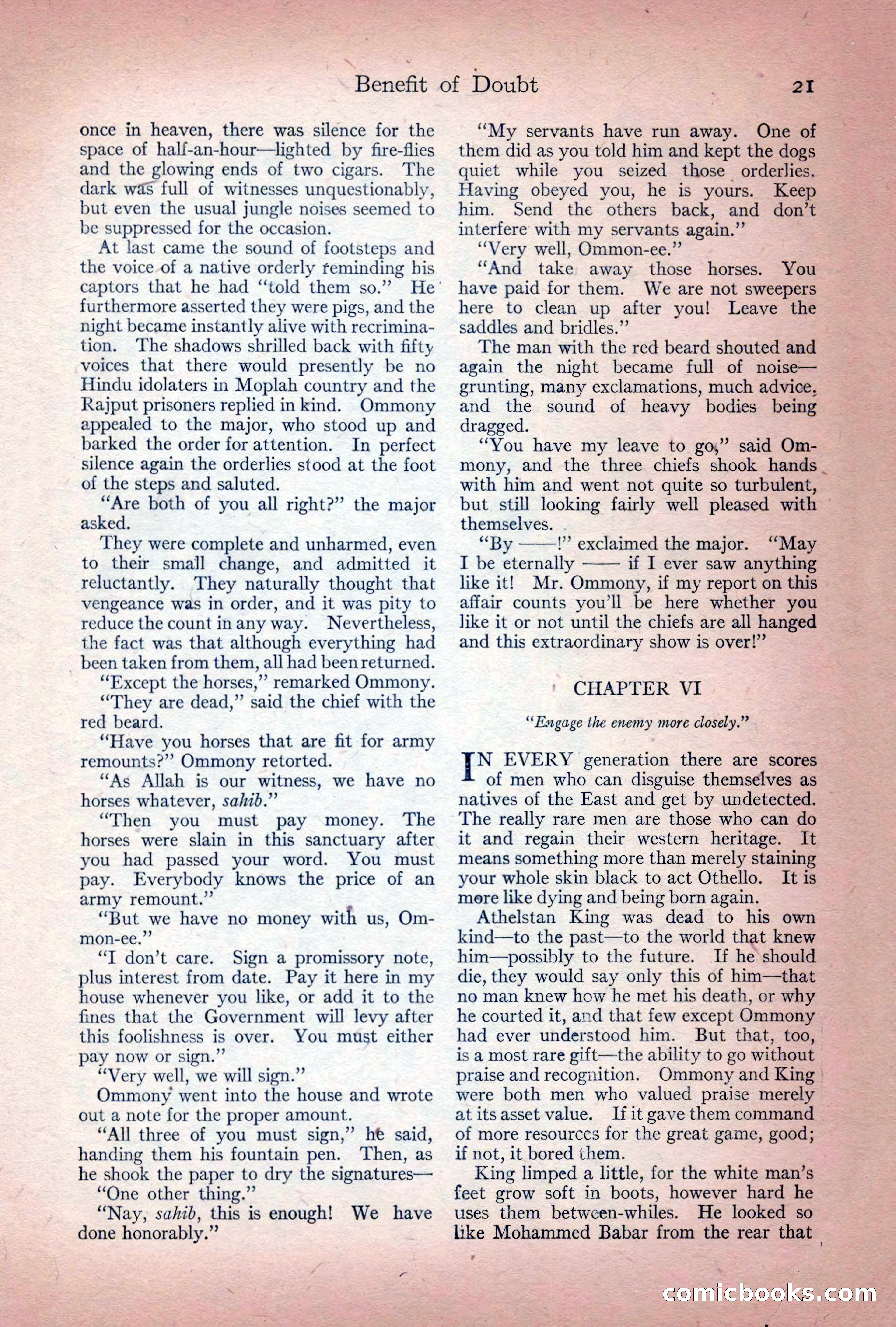
A restored page from Pulp Fiction, 1922. Page through the whole issue in the reader above.
📄 Transcribed text from this page (OCR, searchable)
Machine-transcribed from the original scan — historical spelling and the odd misread are preserved.
Benefit of Doubt once in heaven, there was silence for the space of half-an-hour—lighted by fire-flies and the glowing ends of two cigars. The dark was full of witnesses unquestionably, but even the usual jungle noises seemed to be suppressed for the occasion. At last came the sound of footsteps and the voice of a native orderly teminding his captors that he had “told them so.” furthermore asserted they were pigs, and the night became instantly alive with recrimina- tion. ‘The shadows shrilled back with fifty voices that there would presently be no Hindu idolaters in Moplah country and the Rajput prisoners replied in kind. Ommony appealed to the major, who stood up and barked the order for attention. In perfect silence again the orderlies stood at the foot of the steps and saluted. “Are both of you all right?” the major asked. They were complete and unharmed, even to their small change, and admitted it reluctantly. They naturally thought that vengeance was in order, and it was pity to reduce the count inany way. Nevertheless, the fact was that although everything had been taken from them, all had been returned. “Except the horses,” remarked Ommony. “They are dead,” said the chief with the red beard. “Have you horses that are fit for army remounts?”” Ommony retorted. “As Allah is our witness, we have no horses whatever, sahib.” “Then you must pay money. The horses were slain in this sanctuary after you had passed your word. You must pay. Everybody knows the price of an army remount.” “But we have no money with us, Om- mon-ee.”’ “T don’t care. Sign a promissory note, plus interest from date. Pay it here in my house whenever you like, or add it to the fines that the Government will levy after this foolishness is over. You must either pay now or sign.” “Very well, we will sign.” Ommony went into the house and wrote out a note for the proper amount. “All three of you must sign,” he said, handing them his fountain pen. ‘Then, as he shook the paper to dry the signatures— “One other thing.” “Nay, sahib, this is enough! We have done honorably.” He’ 21 “My servants have run away. One of them did as you told him and kept the dogs quiet while you seized those orderlies. Having obeyed you, he is yours. Keep him. Send the others back, and don’t interfere with my servants again.” ‘Very well, Ommon-ee.”’ “And take away those horses. You have paid for them. We are not sweepers here to clean up after you! Leave the saddles and bridles.” The man with the red beard shouted and again the night became full of noise— grunting, many exclamations, much advice. and the sound of heavy bodies being dragged. “You have my leave to go,” said Om- mony, and the three chiefs shook hands _ with him and went not quite so turbulent, but still looking fairly well pleased with — themselves. . “By !” exclaimed the major. “May I be eternally if I ever saw anything like it! Mr. Ommony, if my report on this affair counts you'll be here whether you like it or not until the chiefs are all hanged and this extraordinary show is over!’ CHAPTER VI “Engage the enemy more closely.” i EVERY generation there are scores of men who can disguise themselves as natives of the East and get by undetected. — The really rare men are those who can do it and regain their western heritage. It means something more than merely staining your whole skin black to act Othello. It is mere like dying and being born again. Athelstan King was dead to his own kind—to the past—to the world that knew him—possibly to the future. If he should die, they would say only this of him—that no man knew how he met his death, or why he courted it, and that few except Ommony had ever understood him. But that, too, is a most rare gift—the ability to go without praise and recogiition. were both men who valued praise merely at its asset value. of more resources for the great game, good; if not, it bored them. King limped a little, for the white man’s feet grow soft in boots, however hard he uses them between-whiles. He looked so like Mohammed Babar from the rear that . r EcOmMmIc Ommony and King If it gave them command (e(0) .OOKS ne a . é y=