
Pulp Fiction, 1922 · page 95 of 200
Adventure Magazine Cover — page 95: what you’re looking at
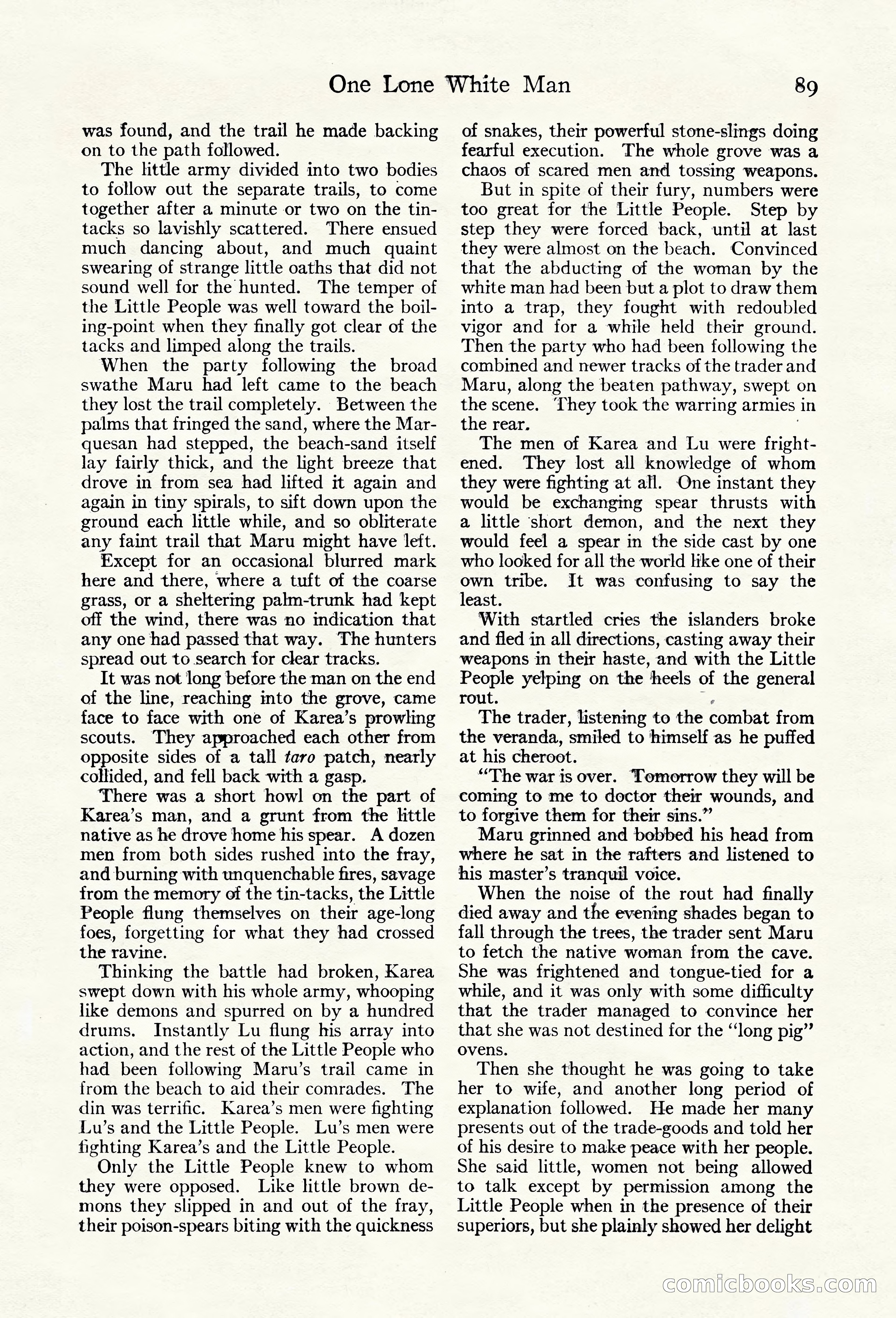
A restored page from Pulp Fiction, 1922. Page through the whole issue in the reader above.
📄 Transcribed text from this page (OCR, searchable)
Machine-transcribed from the original scan — historical spelling and the odd misread are preserved.
One Lone White Man was found, and the trail he made backing on to the path followed. The httle army divided into two bodies to follow out the separate trails, to come together after a minute or two on the tin- tacks so lavishly scattered. There ensued much dancing about, and much quaint swearing of strange little oaths that did not sound well for the hunted. The temper of the Little People was well toward the boil- ing-point when they finally got clear of the tacks and limped along the trails. When the party following the broad swathe Maru had left came to the beach they lost the trail completely. Between the palms that fringed the sand, where the Mar- quesan had stepped, the beach-sand itself lay fairly thick, and the light breeze that drove in from sea had lifted it again and again in tiny spirals, to sift down upon the ground each little while, and so obliterate any faint trail that Maru might have left. Except for an occasional blurred mark here and there, where a tuft of the coarse grass, or a sheltering palm-trunk had kept off the wind, there was no indication that any one had passed that way. The hunters spread out to search for clear tracks. It was not long before the man on the end of the line, reaching into the grove, came face to face with one of Karea’s prowhng scouts. ‘They approached each other from opposite sides of a tall taro patch, nearly collided, and fell back with a gasp. There was a short howl on the part of Karea’s man, and a grunt from the httle native as he drove home his spear. A dozen men from both sides rushed into the fray, and burning with unquenchable fires, savage from the memory of the tin-tacks, the Little People flung themselves on their age-long foes, forgetting for what they had crossed the ravine. Thinking the battle had broken, Karea swept down with his whole army, whooping like demons and spurred on by a hundred drums. Instantly Lu flung his array into action, and the rest of the Little People who had been following Maru’s trail came in from the beach to aid their comrades. The din was terrific. Karea’s men were fighting Lu’s and the Little People. Lu’s men were fighting Karea’s and the Little People. Only the Little People knew to whom they were opposed. Like little brown de- mons they slipped in and out of the fray, their poison-spears biting with the quickness 89 of snakes, their powerful stone-slings doing fearful execution. The whole grove was a chaos of scared men and tossing weapons. But in spite of their fury, numbers were too great for the Little People. Step by step they were forced back, until at last they were almost on the beach. Convinced that the abducting of the woman by the white man had been but a plot to draw them into a trap, they fought with redoubled vigor and for a while held their ground. Then the party who had been following the combined and newer tracks of the trader and Maru, along the beaten pathway, swept on the scene. They took the warring armies in the rear. : The men of Karea and Lu were fright- ened. They lost all knowledge of whom they were fighting at all. One instant they would be exchanging spear thrusts with a little short demon, and the next they would feel a spear in the side cast by one who looked for all the world like one of their own tribe. It was confusing to say the least. With startled cries the islanders broke and fled in all directions, casting away their weapons in their haste, and with the Little People yelping on the ‘heels of the general rout. oe The trader, listening to the combat from the veranda, smiled to ‘himself as he puffed at his cheroot. “The war is over. Tomorrow they will be coming to me to doctor their wounds, and to forgive them for their sins.” Maru grinned and bobbed his head from where he sat in the rafters and listened to his master’s tranquil voice. When the noise of the rout had finally died away and the evening shades began to fall through the trees, the trader sent Maru to fetch the native woman from the cave. She was frightened and tongue-tied for a while, and it was only with some difficulty that the trader managed to convince her that she was not destined for the “long pig” ovens. Then she thought he was going to take her to wife, and another long period of explanation followed. He made her many presents out of the trade-goods and told her of his desire to make peace with her people. She said little, women not being allowed to talk except by permission among the Little People when in the presence of their superiors, but she plainly showed her delight COnmmiclboooks (C©