
Pulp Fiction, 1922 · page 9 of 200
Adventure Magazine Cover — page 9: what you’re looking at
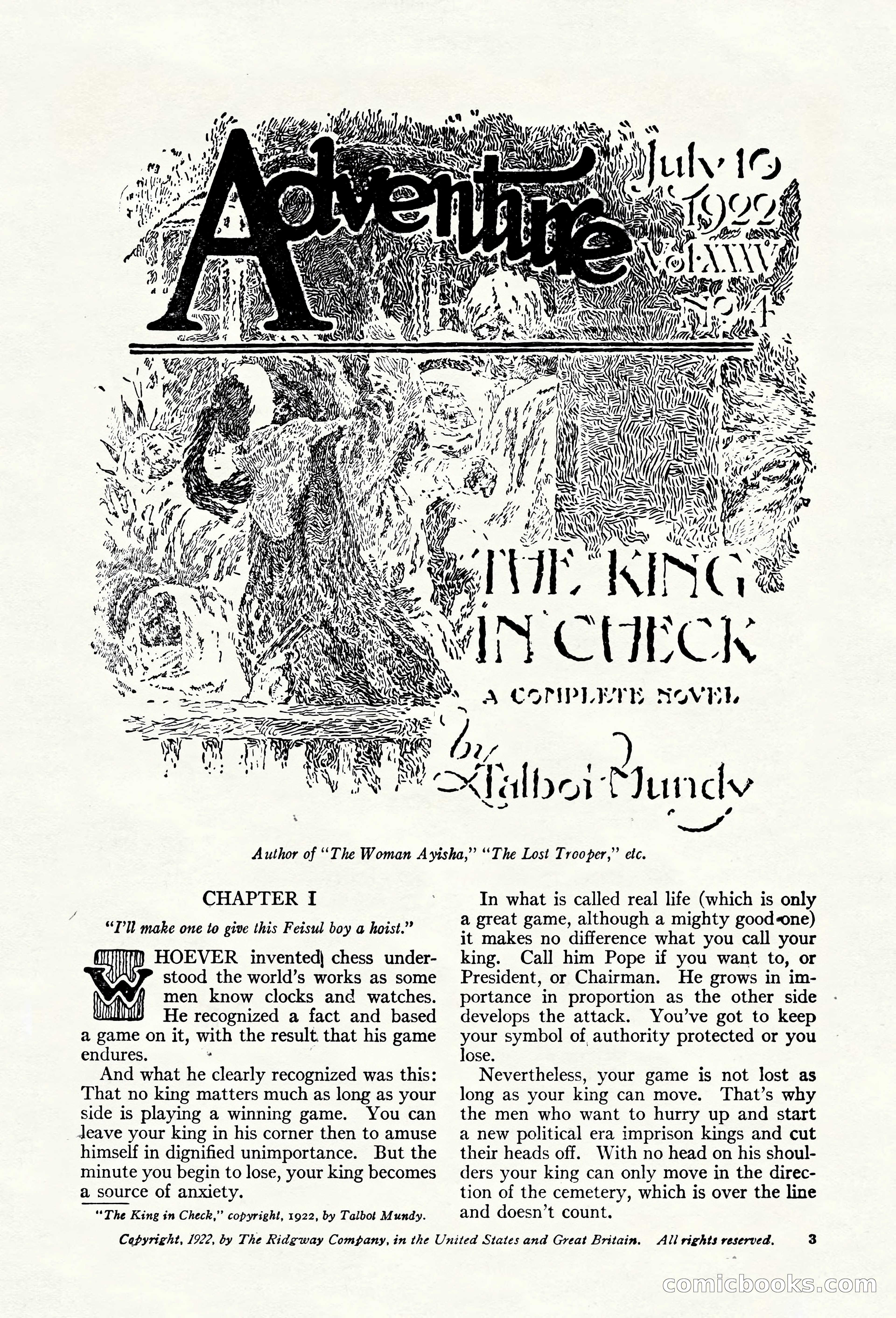
A restored page from Pulp Fiction, 1922. Page through the whole issue in the reader above.
📄 Transcribed text from this page (OCR, searchable)
Machine-transcribed from the original scan — historical spelling and the odd misread are preserved.
’ x a fy ie i: i i a) — 7" i ae BN y Ne ae W i ‘ (1, aS Hie ON Sy &~, wf ing ak — a os ae - eel ab ve ee . pn CUE Ck . a) % ~ " Xt oy Ai uly IS a Saul Hea) SS : oe os ie r a 5 mas 7, >) Wes eet MPLETE NOV core Author of “The Woman Ayisha,” “The Lost Trooper,” etc. “T’ll make one to give this Feisul boy a hoist.” ee HOEVER invented\ chess under- VW men know clocks and watches. He recognized a fact and based endures. 3 And what he clearly recognized was this: side is playing a winning game. You can dJeave your king in his corner then to amuse minute you begin to lose, your king becomes a source of anxiety. CHAPTER I stood the world’s works as some a game on it, with the result. that his game That no king matters much as long as your himself in dignified unimportance. But the “The King in Check,” copyright, 1922, by Talbot Mundy. Capyright, 1922, by The Ridgway Company, in the United States and Great Britain. In what is called real life (which is only a great game, although a mighty good-one) it makes no difference what you call your king. Call him Pope if you want to, or President, or Chairman. He grows in im- portance in proportion as the other side develops the attack. You’ve got to keep your symbol of authority protected or you lose. Nevertheless, your game is not lost as long as your king can move. That’s why the men who want to hurry up and start a new political era imprison kings and cut their heads off. With no head on his shoul- ders your king can only move in the direc- tion of the cemetery, which is over the line and doesn’t count. All rights reserved. 3 GCOMIGIOO (C@