
Pulp Fiction, 1922 · page 105 of 200
Adventure Magazine Cover — page 105: what you’re looking at
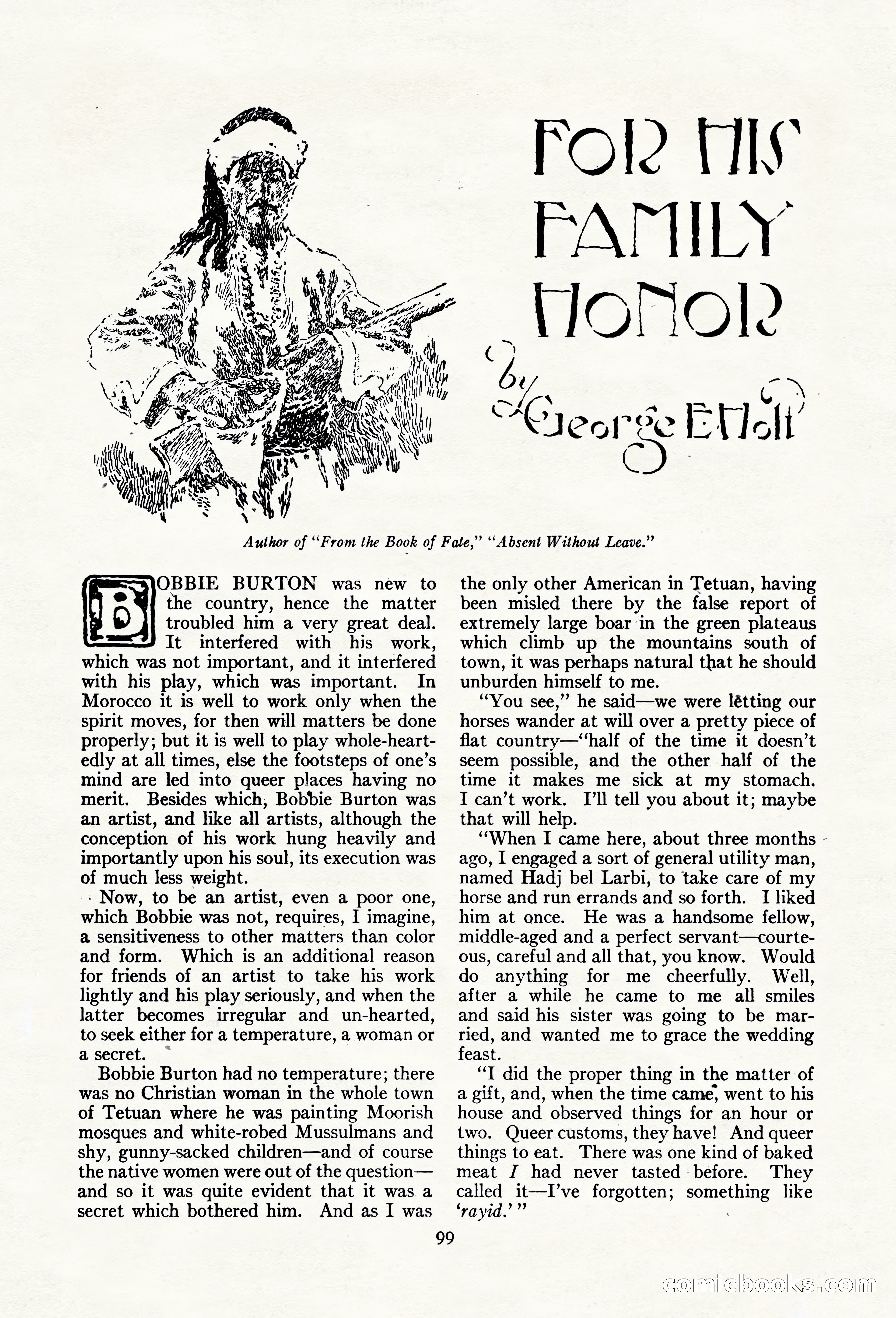
A restored page from Pulp Fiction, 1922. Page through the whole issue in the reader above.
📄 Transcribed text from this page (OCR, searchable)
Machine-transcribed from the original scan — historical spelling and the odd misread are preserved.
Pole Vy PAMILY ATOMO!2 b ¢ ’ 4 - L aw > ins ) li “Cleorse EV] ae Author of ‘From the Book of Fate,” “‘Absent Without Leave.” OBBIE BURTON was new to #{ the country, hence the matter troubled him a very great deal. It interfered with his work, which was not important, and it interfered with his play, which was important. In Morocco it is well to work only when the spirit moves, for then will matters be done properly; but it is well to play whole-heart- edly at all times, else the footsteps of one’s mind are led into queer places having no merit. Besides which, Bobbie Burton was an artist, and hke all artists, although the conception of his work hung heavily and importantly upon his soul, its execution was of much less weight. _. Now, to be an artist, even a poor one, which Bobbie was not, requires, I imagine, a sensitiveness to other matters than color and form. Which is an additional reason for friends of an artist to take his work lightly and his play seriously, and when the latter becomes irregular and un-hearted, to seek either for a temperature, a woman or a secret. — Bobbie Burton had no temperature; there was no Christian woman in the whole town of Tetuan where he was painting Moorish mosques and white-robed Mussulmans and shy, gunny-sacked children—and of course the native women were out of the question— and so it was quite evident that it was. a secret which bothered him. And as I was 99 the only other American in Tetuan, having been misled there by the false report of extremely large boar in the green plateaus which climb up the mountains south of town, it was perhaps natural that he should unburden himself to me. ‘You see,” he said—we were létting our horses wander at will over a pretty piece of flat country—‘“‘half of the time it doesn’t seem possible, and the other half of the time it makes me sick at my stomach. I can’t work. I'll tell you about it; maybe that will help. ‘‘When I came here, about three months - ago, I engaged a sort of general utility man, named Hadj bel Larbi, to take care of my horse and run errands and so forth. I liked him at once. He was a handsome fellow, middle-aged and a perfect servant—courte- ous, careful and all that, you know. Would do anything for me cheerfully. Well, after a while he came to me all smiles and said his sister was going to be mar- ried, and wanted me to grace the wedding feast. “T did the proper thing in the matter of a gift, and, when the time came, went to his house and observed things for an hour or two. Queer customs, they have! And queer things to eat. There was one kind of baked meat J had never tasted before. They called it--I’ve forgotten; something like ‘raytid.’ 9 ‘ (C@ NOOK