
Pulp Fiction, 1921 · page 72 of 204
Adventure Magazine Cover — page 72: what you’re looking at
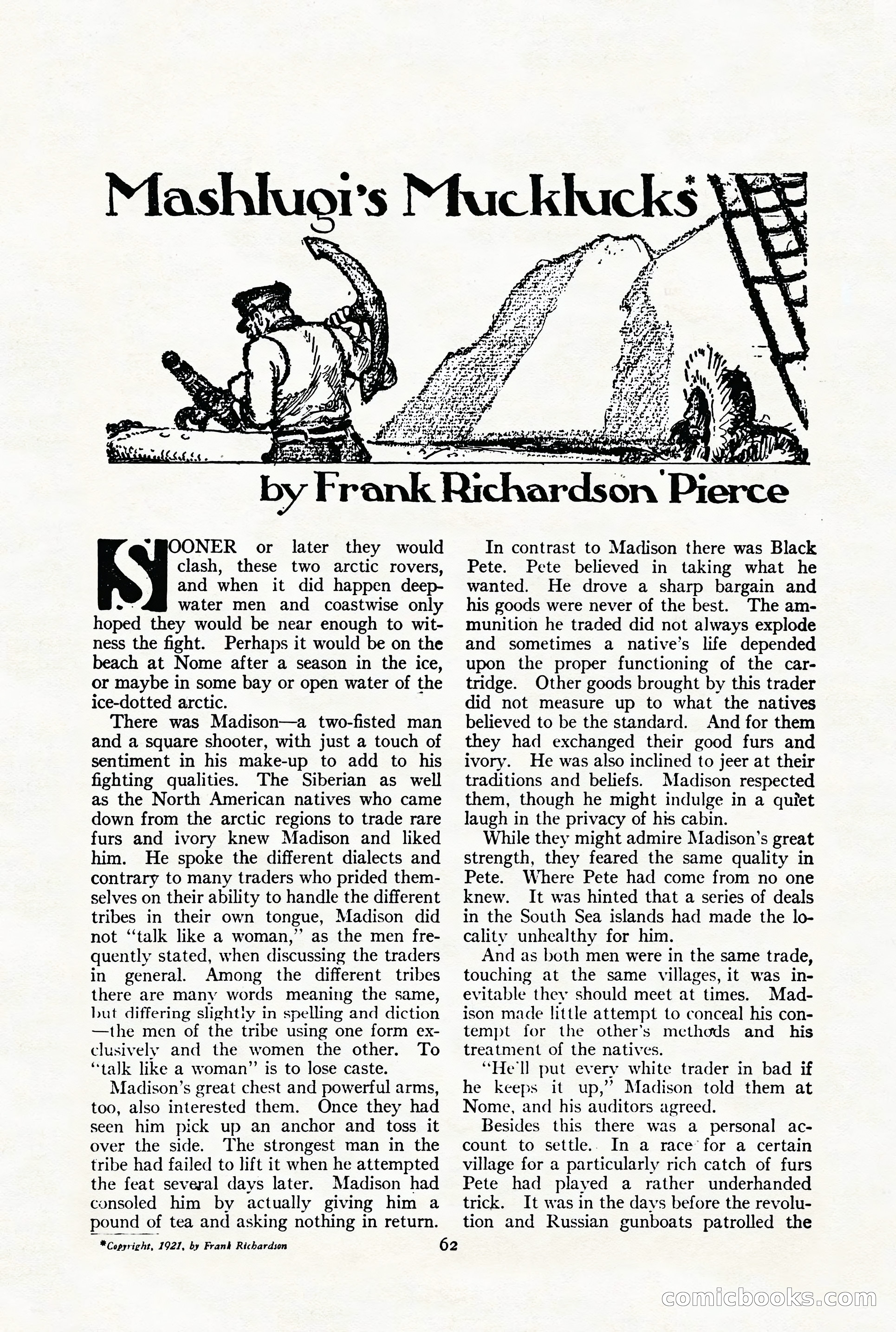
A restored page from Pulp Fiction, 1921. Page through the whole issue in the reader above.
📄 Transcribed text from this page (OCR, searchable)
Machine-transcribed from the original scan — historical spelling and the odd misread are preserved.
« att : wn ‘ , ee: a bes aS Cry oa Per oe ai, UP Sd corey “pewes rere by F Fr nk Richardse: on . Pree OONER or later they would clash, these two arctic rovers, and when it did happen deep- water men and coastwise only Repeat they would be near enough to wit- ness the fight. Perhaps it would be on the beach at Nome after a season in the ice, or maybe in some bay or open water of the ice-dotted arctic. There was Madison—a two-fisted man and a square shooter, with just a touch of sentiment in his make-up to add to his fighting qualities. The Siberian as well as the North American natives who came down from the arctic regions to trade rare furs and ivory knew Madison and liked him. He spoke the different dialects and contrary to many traders who prided them- selves on their ability to handle the different tribes in their own tongue, Madison did not ‘“‘talk like a woman,” as the men fre- quently stated, when discussing the traders in general. Among the different tribes there are many words meaning the same, but differing slightly in spelling and diction —the men of the tribe using one form ex- clusively and the women the other. To “talk like a woman” is to lose caste. Madison’s great chest and powerful arms, too, also interested them. Once they had seen him pick up an anchor and toss it over the side. The strongest man in the tribe had failed to lift it when he attempted the feat several days later. Madison had consoled him by actually giving him a pound of tea and asking nothing in return. * Copyright, 1921, by Frank Richardson 62 In contrast to Madison there was Black Pete. Pete believed in taking what he wanted. He drove a sharp bargain and his goods were never of the best. The am- munition he traded did not always explode and sometimes a native’s life depended upon the proper functioning of the car- tridge. Other goods brought by this trader did not measure up to what the natives believed to be the standard. And for them they had exchanged their good furs and ivory. He was also inclined to jeer at their traditions and beliefs. Madison respected them, though he might indulge in a quiet Jaugh in the privacy of his cabin. While they might admire Madison’s great strength, they feared the same quality in Pete. Where Pete had come from no one knew. It was hinted that a series of deals in the South Sea islands had made the lo- calitv unhealthy for him. And as both men were in the same trade, touching at the same villages, it was in- evitable they should meet at times. Mad- ison made little attempt to conceal his con- tempt for the other’s methods and _ his treatment of the natives. “He'll put every white trader in bad if he keeps it up,’ Madison told them at Nome, and his auditors agreed. Besides this there was a personal ac- count to settle.. In a race for a certain village for a particularly rich catch of furs Pete had played a rather underhanded trick. It was in the davs before the revolu- tion and Russian gunboats patrolled the COMNIELOCIKS CO