
Pulp Fiction, 1920 · page 185 of 208
Adventure Magazine Cover — page 185: what you’re looking at
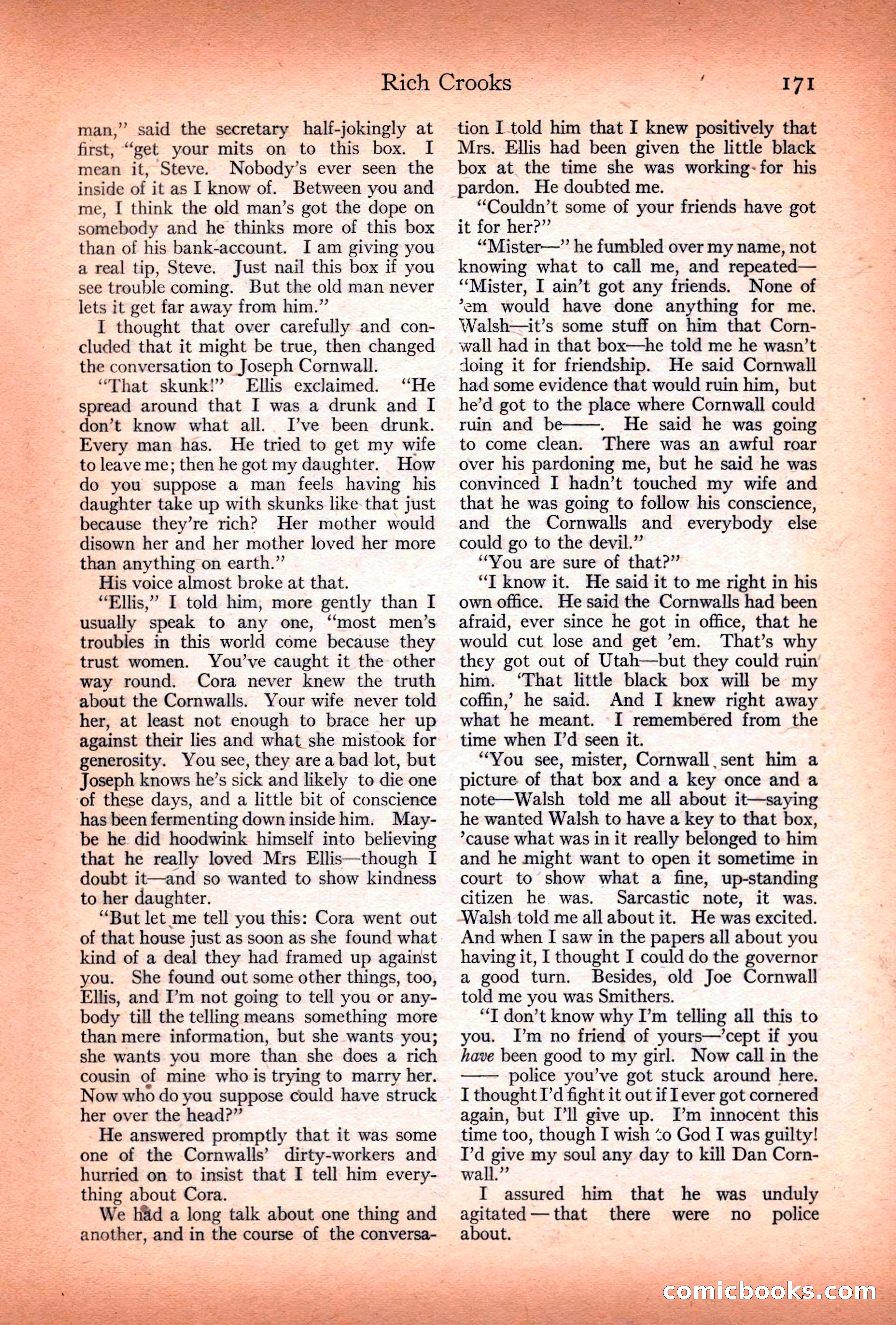
A restored page from Pulp Fiction, 1920. Page through the whole issue in the reader above.
📄 Transcribed text from this page (OCR, searchable)
Machine-transcribed from the original scan — historical spelling and the odd misread are preserved.
- te *S Oe _ don’t know what all. to leave me; then he got my daughter. because they’re rich? man,” said the secretary half-jokingly at first, “get your mits on to this box. I mean it, Steve. Nobody’s ever seen the inside of it as I know of. Between you and me, I think the old man’s got the dope on somebody and he thinks more of this box than of his bank-account. I am giving you a real tip, Steve. Just nail this box if you see trouble coming. But the old man never lets it get far away from him.” I thought that over carefully and con- cluded that it might be true, then changed the conversation to Joseph Cornwall. “That skunk!” Ellis exclaimed. “He spread around that I was a drunk and I I’ve been drunk. He tried to get my wife How do you suppose a man feels having his daughter take up with skunks like that just Her mother would Every man has. -_ disown her and her mother loved her more =~, one of the Cornwalls’ than anything on earth.” His voice almost broke at that. “Ellis,” I told him, more gently than I usually speak to any one, “most men’s troubles in this world come because they trust women. You’ve caught it the other = = way round. Cora never knew the truth about the Cornwalls. Your wife never told her, at least not enough to brace her up -_ against their lies and what she mistook for _ generosity. You see, they area bad lot, but _ Joseph knows he’s sick and likely to die one ‘of these days, and a little bit of conscience has been fermenting down inside him. May- be he did hoodwink himself into believing that he really loved Mrs Ellis—though I doubt it—and so wanted to show kindness to her daughter. “But let me tell you this: Cora went out _ of that house just as soon as she found what kind of a deal they had framed up against you. She found out some other things, too, Ellis, and I’m not going to tell you or any- body till the telling means something more than mere information, but she wants you; she wants you more than she does a rich cousin of mine who is trying to marry her. Now who do you suppose could have struck her over the head?” -He answered promptly that it was some dirty-workers and hurried on to insist that I tell him every- _ thing about Cora. We hfad a long talk about one thing and S s pnether, ant in the course of the conversa- tion I told him that I knew positively that = Mrs. Ellis had been given the little black | box at the time she was working- for his pardon. He doubted me. “Couldn’t some of your friends have got it for her?” “Mister—” he fumbled over my name, not knowing what to call me, and repeated— “Mister, I ain’t got any friends. None of ’em would have done anything for me. Walsh—it’s some stuff on him that Corn- wall had in that box—he told me he wasn’t doing it for friendship. He said Cornwall had some evidence that would ruin him, but he’d got to the place where Cornwall could ruin and be——. He said he was going to come clean. There was an awful roar over his pardoning me, but he said he was convinced I hadn’t touched my wife and that he was going to follow his conscience, and the Cornwalls and everybody else could go to the devil.” “You are sure of that?” “T know it. He said it to me right in his own office. He said the Cornwalls had been afraid, ever since he got in office, that he would cut lose and get ’em. That’s why they got out of Utah—but they could ruin him. ‘That little black box will be my coffin,’ he said. And I knew right away. what he meant. I remembered from the time when I’d seen it. “You see, mister, Cornwall.sent him a picture of that box and a key once and a note—Walsh told me all about it—saying he wanted Walsh to have a key to that box, *cause what was in it really belonged to him and he might want to open it sometime in court to show what a fine, up-standing citizen he was. Sarcastic note, it was. Walsh told me all about it. He was excited. And when I saw in the papers all about you having it, I thought I could do the governor a good turn. Besides, old Joe Cornwall told me you was Smithers. “T don’t know why I’m telling all this to you. I’m no friend of yours— cept if you have been good to my girl. Now call in the police you’ve got stuck around here. I thought I’d fight it out if ever got cornered again, but I'll give up. I’m innocent this time too, though I wish %o God I was guilty! I’d give my soul any day to kill Dan Corn- wall.” I assured him that he was unduly agitated— that there were no_ police about. , Satie. 4 AsO it | Fs ( ‘4 ¥ he ; A ‘ TIth f! Piha, hts wie Rane PY cd Pa et ee