
Pulp Fiction, 1919 · page 149 of 204
Adventure, August 3, 1919 — page 149: what you’re looking at
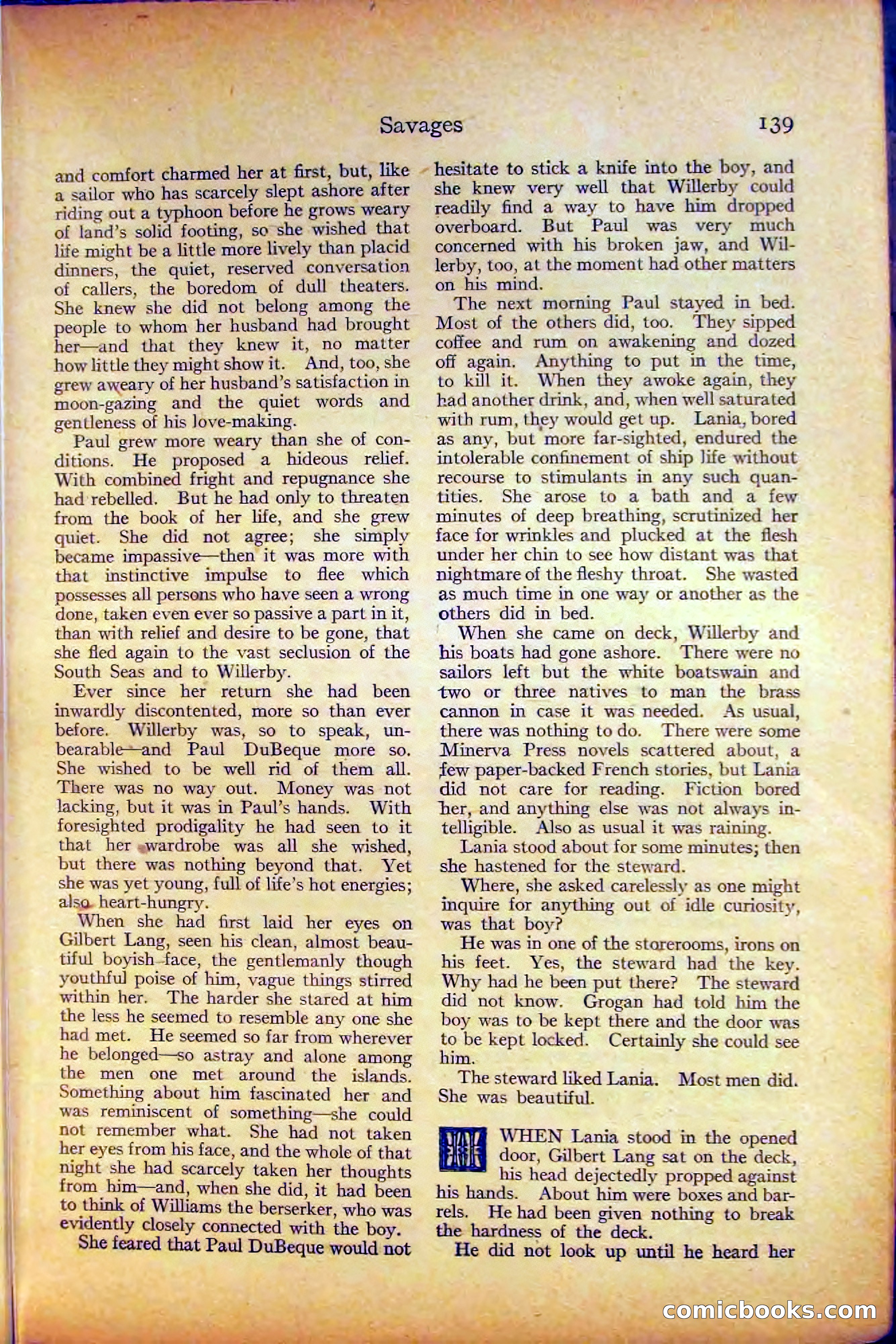
A restored page from Pulp Fiction, 1919. Page through the whole issue in the reader above.
📄 Transcribed text from this page (OCR, searchable)
Machine-transcribed from the original scan — historical spelling and the odd misread are preserved.
I | ; _ 4 o ~ & a sailor who has scarcely slept ashore after riding out a typhoon before he grows weary of land’s solid footing, so she wished that life might be a little more lively than placid dinners, the quiet, reserved conversation of callers, the boredom of dull theaters. She knew she did not belong among the people to whom her husband had brought her—and that they knew it, no matter how little they might show it. And, too, she grew aweary of her husband’s satisfaction in moon-gazing and the quiet words and gentleness of his Jove-making. Paul grew more weary than she of con- ditions. He proposed a hideous relief. With combined fright and repugnance she had rebelled. But he had only to threaten from the book of her life, and she grew quiet. She did not agree; she simply became impassive—then it was more with that instinctive impulse to flee which possesses all persons who have seen a wrong done, taken even ever so passive a part in it, than with relief and desire to be gone, that she fled again to the vast seclusion of the South Seas and to Willerby. Ever since her return she had been inwardly discontented, more so than ever before. Willerby was, so to speak, un- bearable—and Paul DuBeque more so. She wished to be well rid of them all. There was no way out. Money was not lacking, but it was in Paul’s hands. With foresighted prodigality he had seen to it that her swardrobe was all she wished, but there was nothing beyond that. Yet she was yet young, full of life’s hot energies; also. heart-hungry. When she had first laid her eyes on Gilbert Lang, seen his clean, almost beau- tiful boyish-face, the gentlemanly though youthful poise of him, vague things stirred within her. The harder she stared at him the less he seemed to resemble any one she had met. He seemed so far from wherever he belonged—so astray and alone among the men one met around the islands. Something about him fascinated her and was reminiscent of something—she could not remember what. She had not taken her eyes from his face, and the whole of that night she had scarcely taken her thoughts from him—and, when she did, it had been to think of Williams the berserker, who was evidently closely connected with the boy. ‘She feared that Paul DuBeque would not (4 0, a * Pee re a i - Savages” 139 and comfort charmed her at first, but, like ~ hesitate to stick a knife into the boy, and she knew very well that Willerby could readily find a way to have him dropped overboard. But Paul was very much concerned with his broken jaw, and Wil- lerby, too, at the moment had other matters on his mind. The next morning Paul stayed in bed. Most of the others did, too. They sipped coffee and rum on awakening and dozed off again. Anything to put im the time, to kill it. When they awoke again, they had another drink, and, when well saturated - with rum, they would get up. Lania, bored as any, but more far-sighted, endured the intolerable confinement of ship Jife without recourse to stimulants in any such quan- tities. She arose to a bath and a few minutes of deep breathing, scrutinized her face for wrinkles and plucked at the flesh under her chin to see how distant was that nightmare of the fleshy throat. She wasted as much time in one way or another as the others did in bed. _ When she came on deck, Willerby and his boats had gone ashore. There were no sailors left but the white boatswain and two or three natives to man the brass cannon in case it was needed. As usual, there was nothing todo. There were some Minerva Press novels scattered about, a few paper-backed French stories, but Lania did not care for reading. Fiction bored her, and anything else was not always in- telligible. Also as usual it was raining. Lania stood about for some minutes; then she hastened for the steward. Where, she asked carelessly as one might inquire for anything out of idle curiosity, was that boy? He was in one of the starerooms, irons on his feet. Yes, the steward had the key. Why had he been put there? The steward did not know. Grogan had told him the boy was to be kept there and the door was Me be kept locked. Certainly she could see m. The steward liked Lania. Most men did. She was beautiful. Witg WHEN Lania stood in the opened aE door, Gilbert Lang sat on the deck, _ bis head dejectedly propped against his hands. About him were boxes and bar- rels. He had been given nothing to break the hardness of the deck. He did not look up until he heard her i “ - ~ . =