
Pulp Fiction, 1919 · page 145 of 204
Adventure, August 3, 1919 — page 145: what you’re looking at
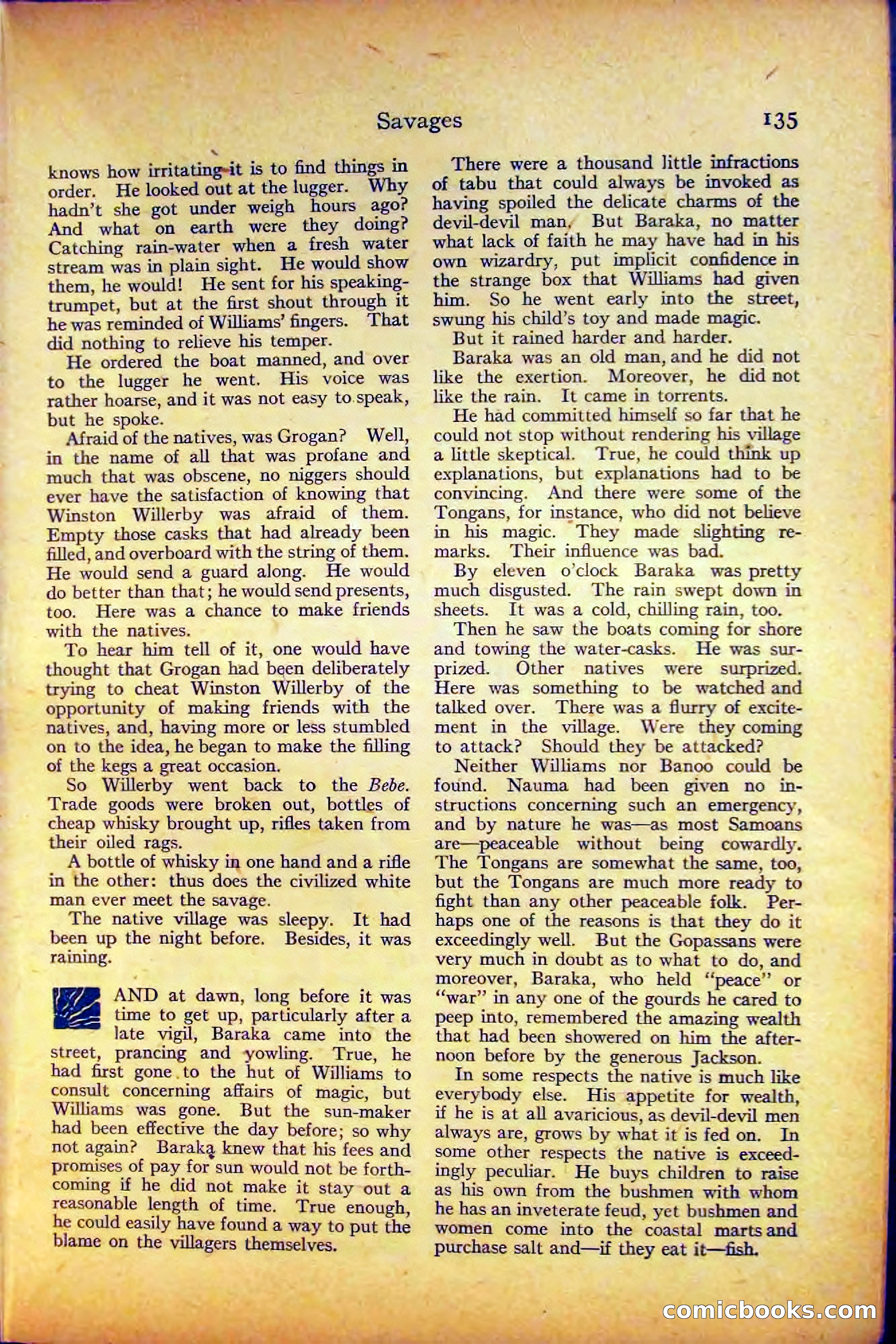
A restored page from Pulp Fiction, 1919. Page through the whole issue in the reader above.
📄 Transcribed text from this page (OCR, searchable)
Machine-transcribed from the original scan — historical spelling and the odd misread are preserved.
*%, . knows how irritating-it is to find things in order. He looked out at the lugger. Why hadn’t she got under weigh hours ago? And what on earth were they doing? Catching rain-water when a fresh water stream was in plain sight. He would show them, he would! He sent for his speaking- trumpet, but at the first shout through it he was reminded of Williams’ fingers. That did nothing to relieve his temper. He ordered the boat manned, and over to the lugger he went. His voice was rather hoarse, and it was not easy to.speak, but he spoke. Afraid of the natives, was Grogan? Well, in the name of all that was profane and much that was obscene, no niggers should ever have the satisfaction of knowing that Winston Willerby was afraid of them. Empty those casks that had already been filled, and overboard with the string of them. He would send a guard along. He would do better than that; he would send presents, too. Here was a chance to make friends with the natives. To hear him tell of it, one would have thought that Grogan had been deliberately . trying to cheat Winston Willerby of the opportunity of making friends with the natives, and, having more or less stumbled on to the idea, he began to make the filling of the kegs a great occasion. So Willerby went back to the Bebe. Trade goods were broken out, bottles of cheap whisky brought up, rifles taken from their oiled rags. A bottle of whisky in one hand and a rifle in the other: thus does the civilized white man ever meet the savage. The native village was sleepy. It had been up the night before. Besides, it was raining. We AND at dawn, long before it was wie time to get up, particularly after a ~ late vigil, Baraka came into the street, prancing and yowling. True, he had first gone.to the hut of Williams to consult concerning affairs of magic, but Williams was gone. But the sun-maker had been effective the day before; so why not again? Baraka knew that his fees and _ promises of pay for sun would not be forth- coming if he did not make it stay out a reasonable length of time. True enough, pe poate easily have found a way to put the lame on the villagers themselves. ; ' . ce =. + ¢ ~ ~@ 4 i « £ > 2 S ° a rt: * ‘ ' \ Pe y eA Ned - . Savages ‘purchase salt and—if they eat it—fish. 135 There were a thousand little infractions of tabu that could always be invoked as having spoiled the delicate charms of the devil-devil man, But Baraka, no matter what lack of faith he may have had in his own wizardry, put implicit confidence in the strange box that Williams had given him. So he went early into the street, swung his child’s toy and made magic. But it rained harder and harder. Baraka was an old man, and he did not like the exertion. Moreover, he did not like the rain. It came in torrents. He had committed himself so far that he could not stop without rendering his village a little skeptical. True, he could think up explanations, but explanations had to be convincing. And there were some of the Tongans, for instance, who did not believe in his magic. They made slighting re- marks. Their influence was bad. By eleven o’clock Baraka was pretty much disgusted. The rain swept down in sheets. It was a cold, chilling rain, too. Then he saw the boats coming for shore and towing the water-casks. He was sur- prized. Other natives were surprized. Here was something to be watched and talked over. There was a flurry of excite- ment in the village. Were they coming to attack? Should they be attacked? Neither Williams nor Banoo could be found. Nauma had been given no in- structions concerning such an emergency, and by nature he was—as most Samoans are—peaceable without being cowardly. The Tongans are somewhat the same, too, but the Tongans are much more ready to fight than any other peaceable folk. Per- haps one of the reasons is that they do it exceedingly well. But the Gopassans were very much in doubt as to what to do, and moreover, Baraka, who held ‘‘peace’’ or “‘war’’ in any one of the gourds he cared to peep into, remembered the amazing wealth that had been showered on him the after- noon before by the generous Jackson. In some respects the native is much like everybody else. His appetite for wealth, if he is at all avaricious, as devil-devil men always are, grows by what it is fed on. In some other respects the native is exceed- ingly peculiar. He buys children to raise as his own from the bushmen with whom he has an inveterate feud, yet bushmen and women come into the coastal martsand % h “a ae oe