
Pulp Fiction, 1931 · page 30 of 68
10-Story Book, July 1931 — page 30: what you’re looking at
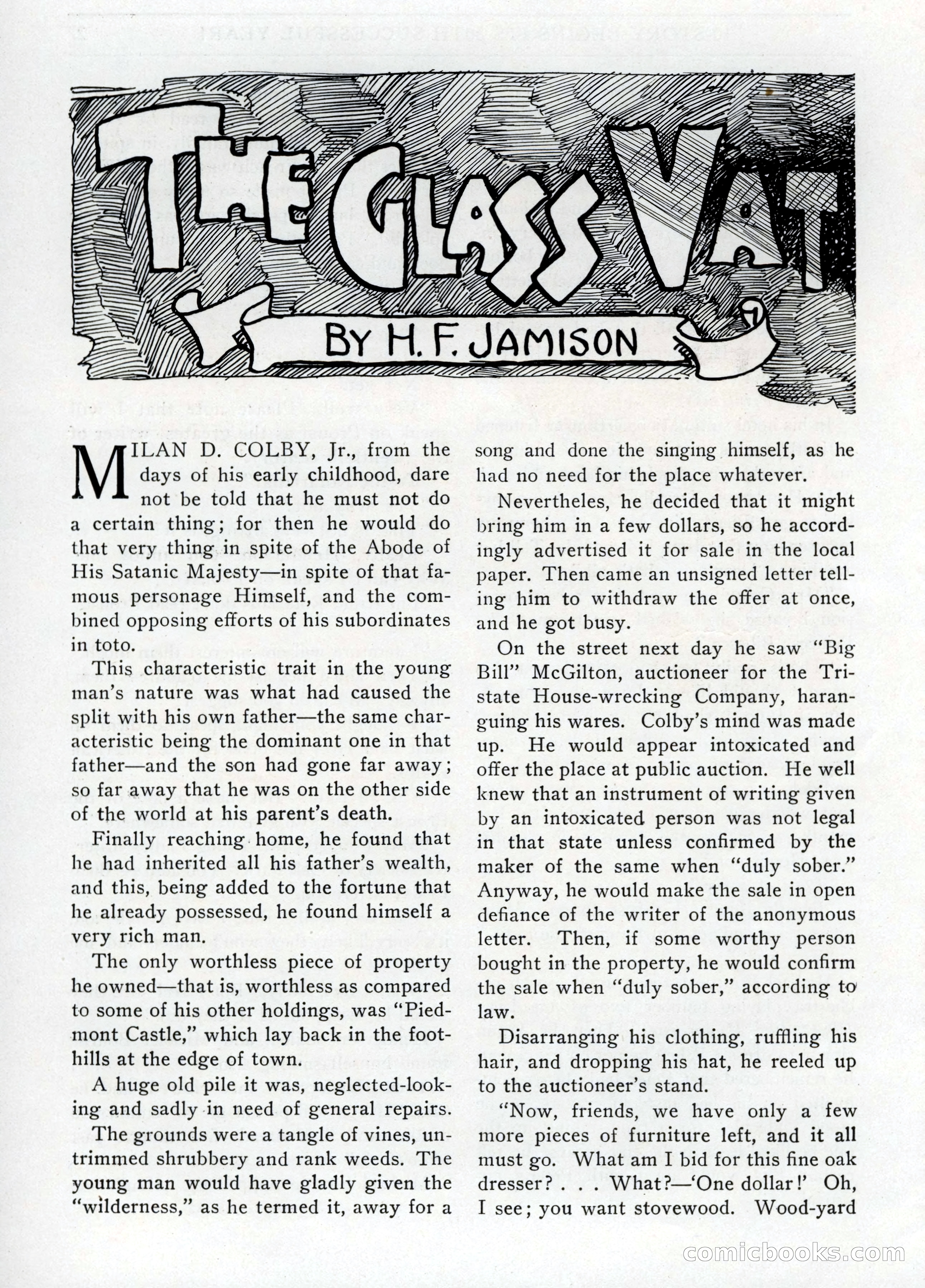
A restored page from Pulp Fiction, 1931. Page through the whole issue in the reader above.
📄 Transcribed text from this page (OCR, searchable)
Machine-transcribed from the original scan — historical spelling and the odd misread are preserved.
WN ILAN D: COLBY: tt..cfrom the MI days of his early childhood, dare not be told that he must not do a certain thing; for then he would do that very thing in spite of the Abode of His Satanic Majesty—in spite of that fa- mous personage Himself, and the com- bined opposing efforts of his subordinates in toto. This characteristic trait in the young man’s nature was what had caused the split with his own father—the same char- acteristic being the dominant one in that father—and the son had gone far away; so far away that he was on the other side of the world at his parent’s death. Finally reaching. home, he found that he had inherited all his father’s wealth, and this, being added to the fortune that he already possessed, he found himself a very rich man. The only worthless piece of property he owned—that is, worthless as compared to some of his other holdings, was “Pied- mont Castle,” which lay back in the foot- hills at the edge of town. A huge old pile it was, neglected-look- ing and sadly in need of general repairs. The grounds were a tangle of vines, un- trimmed shrubbery and rank weeds. The young man would have gladly given the “wilderness,” as he termed it, away for a — w; A Y yy ‘ // 4: ‘ f » ! : lly . N ayy : un I); ip y iu / N Les Ky Y ’ uN Wylie NG WS te ’ 4" ae ¥ a Vrae ee @n5-2 on ~ “¢ . ad SG SS: S SS: o> s song and done the singing himself, as he had no need for the place whatever. Nevertheles, he decided that it might bring him in a few dollars, so he accord- ingly advertised it for sale in the local paper. Then came an unsigned letter tell- ing him to withdraw the offer at once, and he got busy. On the street next day he saw “Big Bill” McGilton, auctioneer for the Tri- state House-wrecking Company, haran- euing his wares. Colby’s mind was made up. He would appear intoxicated and offer the place at public auction. He well knew that an instrument of writing given by an intoxicated person was not legal in that state unless confirmed by the maker of the same when “duly sober.” Anyway, he would make the sale in open defiance of the writer of the anonymous letter. Then, if some worthy person bought in the property, he would confirm the sale when “duly sober,” according to law. Disarranging his clothing, ruffling his hair, and dropping his hat, he reeled up to the auctioneer’s stand. “Now, friends, we have only a few more pieces of furniture left, and it all must go. What am I bid for this fine oak dresser? . . . What?—‘One dollar!’ Oh, I see; you want stovewood. Wood-yard CORNICIHOOKS.EO© mn