
Penny Dreadfuls, 1900 · page 162 of 392
The Mysteries of the Court of London — page 162: what you’re looking at
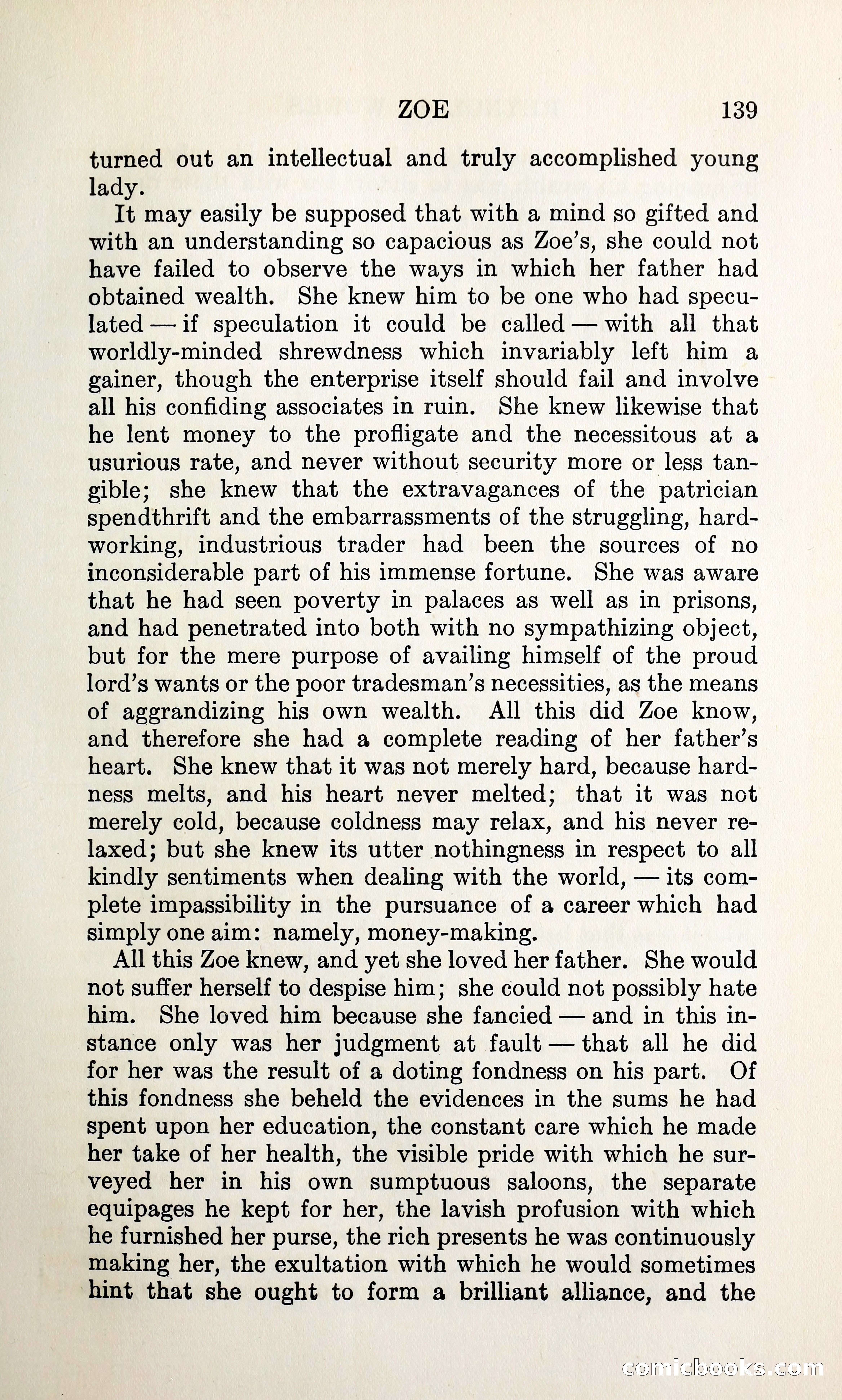
A restored page from Penny Dreadfuls, 1900. Page through the whole issue in the reader above.
📄 Transcribed text from this page (OCR, searchable)
Machine-transcribed from the original scan — historical spelling and the odd misread are preserved.
ZOE 139 turned out an intellectual and truly accomplished young lady. . It may easily be supposed that with a mind so gifted and with an understanding so capacious as Zoe’s, she could not have failed to observe the ways in which her father had obtained wealth. She knew him to be one who had specu- lated —if speculation it could be called — with all that worldly-minded shrewdness which invariably left him a gainer, though the enterprise itself should fail and involve all his confiding associates in ruin. She knew likewise that he lent money to the profligate and the necessitous at a usurious rate, and never without security more or less tan- gible; she knew that the extravagances of the patrician spendthrift and the embarrassments of the struggling, hard- working, industrious trader had been the sources of no inconsiderable part of his immense fortune. She was aware that he had seen poverty in palaces as well as in prisons, and had penetrated into both with no sympathizing object, but for the mere purpose of availing himself of the proud lord’s wants or the poor tradesman’s necessities, as the means of aggrandizing his own wealth. All this did Zoe know, and therefore she had a complete reading of her father’s heart. She knew that it was not merely hard, because hard- ness melts, and his heart never melted; that it was not merely cold, because coldness may relax, and his never re- laxed; but she knew its utter nothingness in respect to all kindly sentiments when dealing with the world, — its com- plete impassibility in the pursuance of a career which had simply one aim: namely, money-making. All this Zoe knew, and yet she loved her father. She would not suffer herself to despise him; she could not possibly hate him. She loved him because she fancied — and in this in- stance only was her judgment at fault — that all he did for her was the result of a doting fondness on his part. Of this fondness she beheld the evidences in the sums he had spent upon her education, the constant care which he made her take of her health, the visible pride with which he sur- veyed her in his own sumptuous saloons, the separate equipages he kept for her, the lavish profusion with which he furnished her purse, the rich presents he was continuously making her, the exultation with which he would sometimes hint that she ought to form a brilliant alliance, and the EORNICLIOOKS (E(0)