
Penny Dreadfuls, 1870 · page 277 of 392
The Works of George W. M. Reynolds — page 277: what you’re looking at
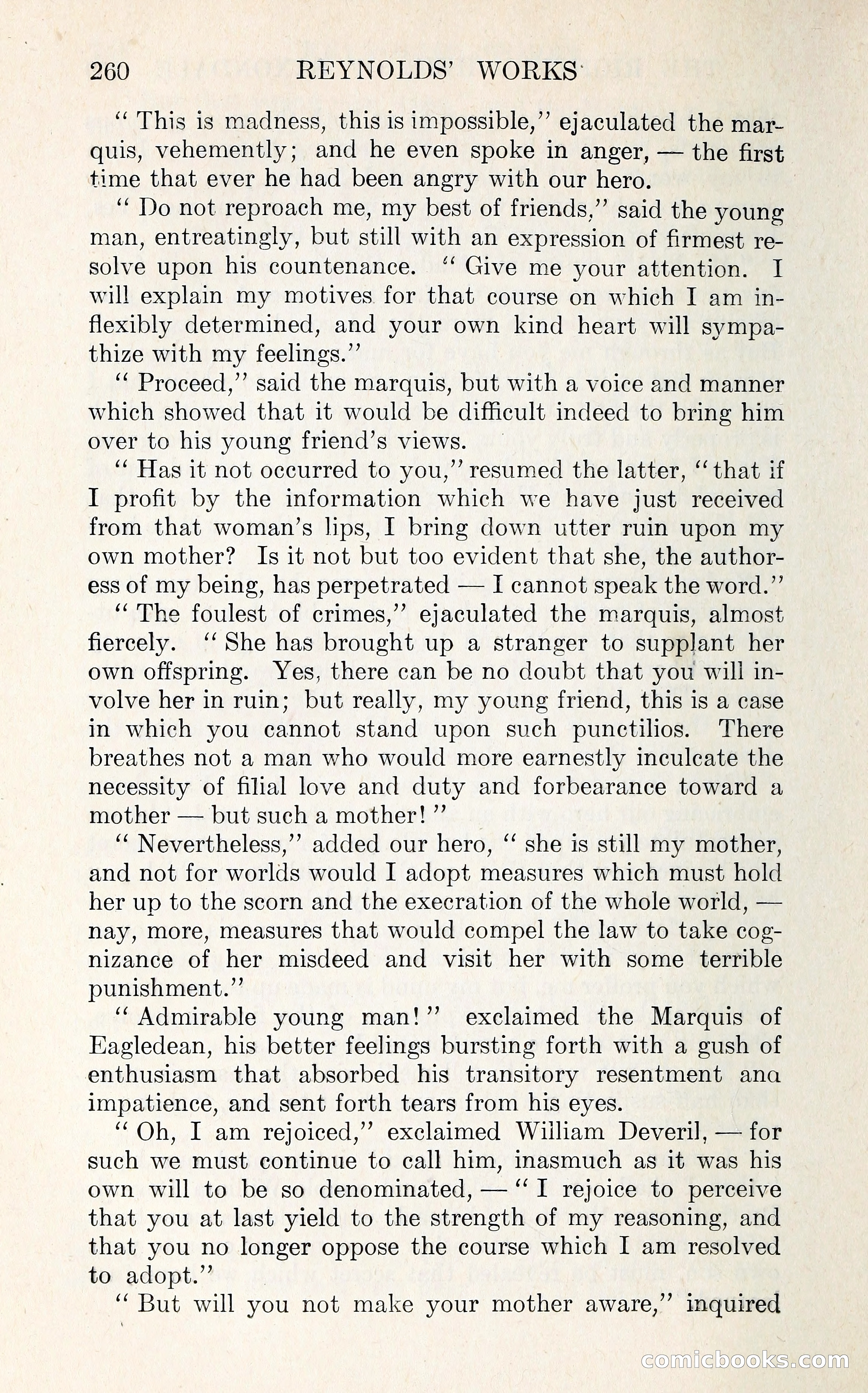
A restored page from Penny Dreadfuls, 1870. Page through the whole issue in the reader above.
📄 Transcribed text from this page (OCR, searchable)
Machine-transcribed from the original scan — historical spelling and the odd misread are preserved.
260 REYNOLDS’ WORKS: “This is madness, this is impossible,” ejaculated the mar- quis, vehemently; and he even spoke in anger, — the first time that ever he had been angry with our hero. ‘“ Do not reproach me, my best of friends,” said the young man, entreatingly, but still with an expression of firmest re- solve upon his countenance. ‘“‘ Give me your attention. I will explain my motives for that course on which I am in- flexibly determined, and your own kind heart will sympa- thize with my feelings.” “ Proceed,’ said the marquis, but with a voice and manner which showed that 1t would be difficult indeed to bring him over to his young friend’s views. ‘“ Has it not occurred to you,’ resumed the latter, “ that if I profit by the information which we have just received from that woman’s lips, I bring down utter ruin upon my own mother? Is it not but too evident that she, the author- ess of my being, has perpetrated — I cannot speak the word.”’ ‘The foulest of crimes,’’ ejaculated the marquis, almost fiercely. ‘“‘ She has brought up a stranger to supplant her own offspring. Yes, there can be no doubt that you will in- volve her in ruin; but really, my young friend, this is a case in which you cannot stand upon such punctilios. There breathes not a man who would more earnestly inculcate the necessity of filial love and duty and forbearance toward a mother — but such a mother! ”’ ‘““ Nevertheless,’ added our hero, “‘ she is still my mother, and not for worlds would I adopt measures which must hold her up to the scorn and the execration of the whole world, — nay, more, measures that would compel the law to take cog- nizance of her misdeed and visit her with some terrible punishment.”’ ‘“Admirable young man!’’ exclaimed the Marquis of Eagledean, his better feelings bursting forth with a gush of enthusiasm that absorbed his transitory resentment ana impatience, and sent forth tears from his eyes. “Oh, I am rejoiced,” exclaimed Wiliam Deveril, — for such we must continue to call him, inasmuch as it was his own will to be so denominated, — ‘‘ I rejoice to perceive that you at last yield to the strength of my reasoning, and that you no longer oppose the course which I am resolved to adopt.”’ “ But will you not make your mother aware,”’ inquired CONNIE DOOKS (E(0)