
Penny Dreadfuls, 1870 · page 276 of 392
The Works of George W. M. Reynolds — page 276: what you’re looking at
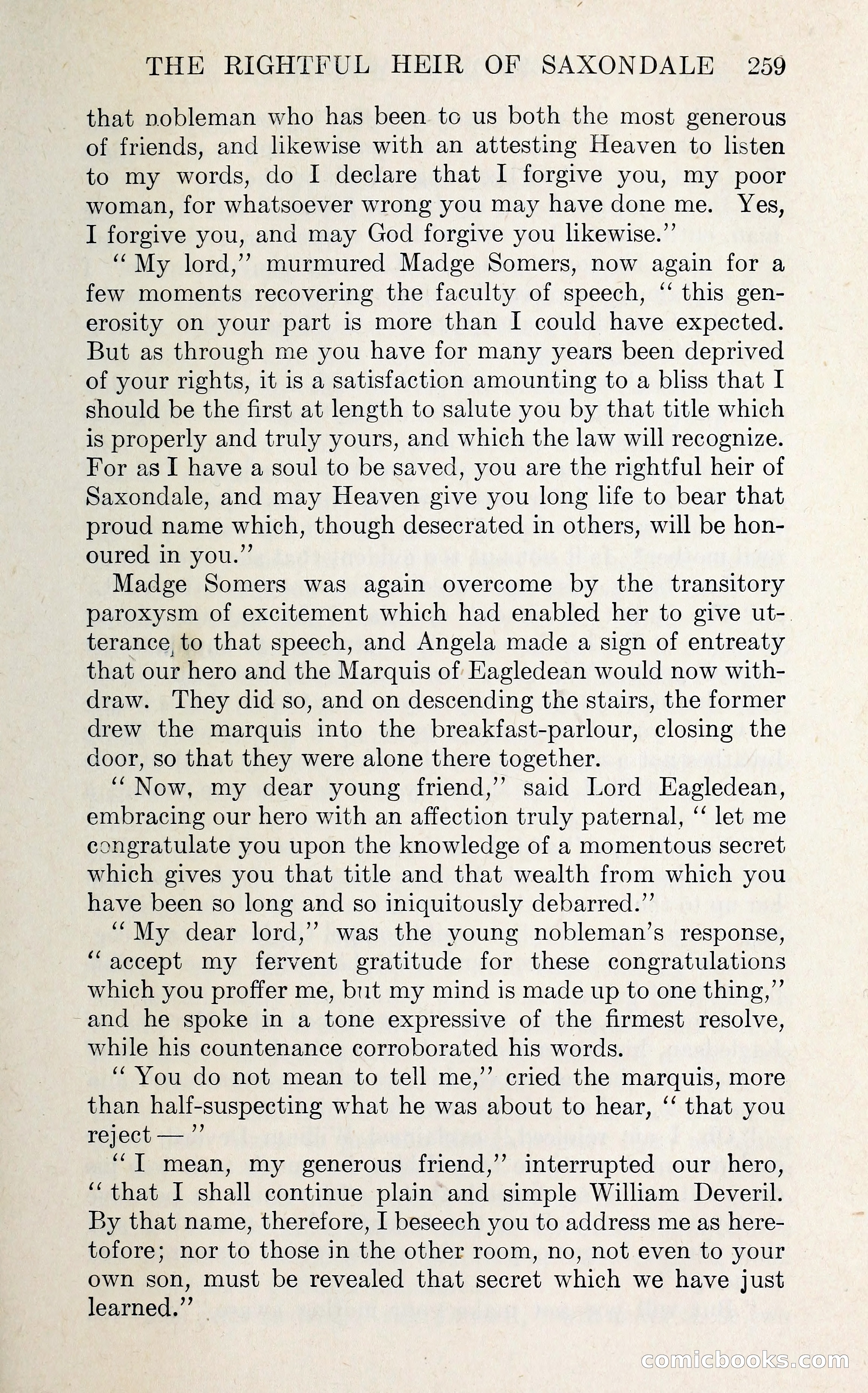
A restored page from Penny Dreadfuls, 1870. Page through the whole issue in the reader above.
📄 Transcribed text from this page (OCR, searchable)
Machine-transcribed from the original scan — historical spelling and the odd misread are preserved.
THE RIGHTFUL HEIR OF SAXONDALE_ 259 that nobleman who has been to us both the most generous of friends, and likewise with an attesting Heaven to listen to my words, do I declare that I forgive you, my poor woman, for whatsoever wrong you may have done me. Yes, I forgive you, and may God forgive you likewise.”’ “My lord,’ murmured Madge Somers, now again for a few moments recovering the faculty of speech, “‘ this gen- erosity on your part is more than I could have expected. But as through me you have for many years been deprived of your rights, it is a satisfaction amounting to a bliss that I should be the first at length to salute you by that title which is properly and truly yours, and which the law will recognize. For as I have a soul to be saved, you are the rightful heir of Saxondale, and may Heaven give you long life to bear that proud name which, though desecrated in others, will be hon- oured in you.”’ Madge Somers was again overcome by the transitory paroxysm of excitement which had enabled her to give ut-. terance, to that speech, and Angela made a sign of entreaty that our hero and the Marquis of Eagledean would now with- draw. They did so, and on descending the stairs, the former drew the marquis into the breakfast-parlour, closing the door, so that they were alone there together. ‘Now, my dear young friend,’’ said Lord Eagledean, embracing our hero with an affection truly paternal, “‘ let me congratulate you upon the knowledge of a momentous secret which gives you that title and that wealth from which you have been so long and so iniquitously debarred.”’ “My dear lord,’ was the young nobleman’s response, “accept my fervent gratitude for these congratulations which you proffer me, but my mind is made up to one thing,”’ and he spoke in a tone expressive of the firmest resolve, while his countenance corroborated his words. “You do not mean to tell me,’’ cried the marquis, more than half-suspecting what he was about to hear, ‘‘ that you reject — ”’ “I mean, my generous friend,’ interrupted our hero, “that I shall continue plain and simple William Deveril. By that name, therefore, I beseech you to address me as here- tofore; nor to those in the other room, no, not even to your own son, must be revealed that secret which we have just learned.”’ © CONnNIELDOOKS (C(O)