
Penny Dreadfuls, 1870 · page 235 of 392
The Works of George W. M. Reynolds — page 235: what you’re looking at
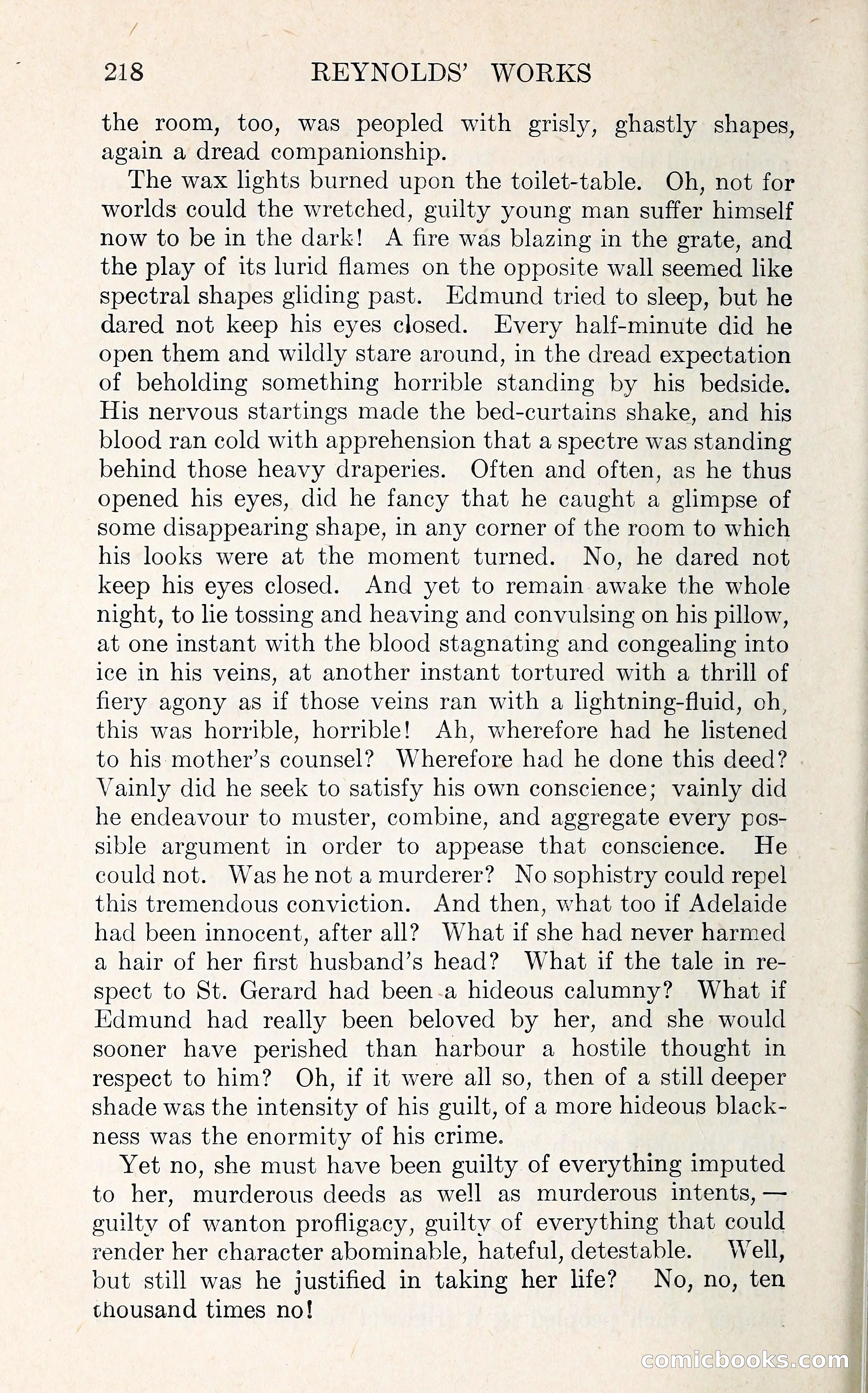
A restored page from Penny Dreadfuls, 1870. Page through the whole issue in the reader above.
📄 Transcribed text from this page (OCR, searchable)
Machine-transcribed from the original scan — historical spelling and the odd misread are preserved.
218 REYNOLDS’ WORKS the room, too, was peopled with grisly, ghastly shapes, again a dread companionship. Lhe wax hghts burned upon the toilet-table. Oh, not for worlds could the wretched, guilty young man suffer himself now to be in the dark! A fire was blazing in the grate, and the play of its lurid flames on the opposite wall seemed like spectral shapes gliding past. Edmund tried to sleep, but he dared not keep his eyes closed. Every half-minute did he open them and wildly stare around, in the dread expectation of beholding something horrible standing by his bedside. His nervous startings made the bed-curtains shake, and his blood ran cold with apprehension that a spectre was standing behind those heavy draperies. Often and often, as he thus opened his eyes, did he fancy that he caught a glimpse of some disappearing shape, in any corner of the room to which his looks were at the moment turned. No, he dared not keep his eyes closed. And yet to remain awake the whole night, to he tossing and heaving and convulsing on his pillow, at one instant with the blood stagnating and congealing into ice in his veins, at another instant tortured with a thrill of fiery agony as if those veins ran with a lightning-fluid, ch, this was horrible, horrible! Ah, wherefore had he listened to his mother’s counsel? Wherefore had he done this deed? Vainly did he seek to satisfy his own conscience; vainly did he endeavour to muster, combine, and aggregate every pos- sible argument in order to appease that conscience. He could not. Was henotamurderer? No sophistry could repel this tremendous conviction. And then, what too if Adelaide had been innocent, after all? What if she had never harmed a hair of her first husband’s head? What if the tale in re- spect to St. Gerard had been-a hideous calumny? What if Edmund had really been beloved by her, and she would sooner have perished than harbour a hostile thought in respect to him? Oh, if it were all so, then of a still deeper shade was the intensity of his guilt, of a more hideous black- ness was the enormity of his crime. Yet no, she must have been guilty of everything imputed to her, murderous deeds as well as murderous intents, — culty of wanton profligacy, guilty of everything that could render her character abominable, hateful, detestable. Well, but still was he justified in taking her life? No, no, ten thousand times no! CONNIE NO KS (E(0)