
Penny Dreadfuls, 1870 · page 228 of 392
The Works of George W. M. Reynolds — page 228: what you’re looking at
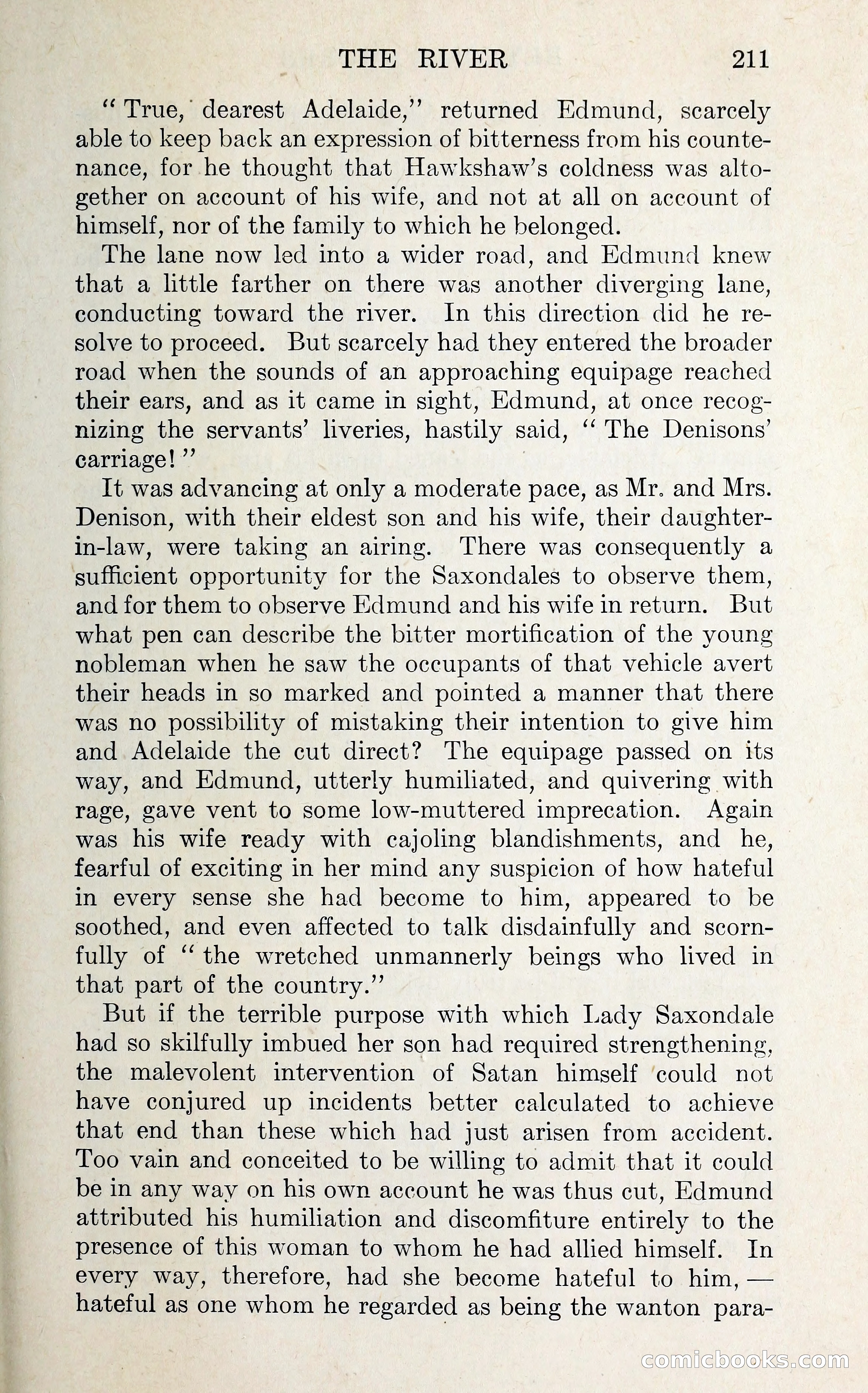
A restored page from Penny Dreadfuls, 1870. Page through the whole issue in the reader above.
📄 Transcribed text from this page (OCR, searchable)
Machine-transcribed from the original scan — historical spelling and the odd misread are preserved.
THE RIVER 211 “True, dearest Adelaide,’ returned Edmund, scarcely able to keep back an expression of bitterness from his counte- nance, for he thought that Hawkshaw’s coldness was alto- gether on account of his wife, and not at all on account of himself, nor of the family to which he belonged. The lane now led into a wider road, and Edmund knew that a little farther on there was another diverging lane, conducting toward the river. In this direction did he re- solve to proceed. But scarcely had they entered the broader road when the sounds of an approaching equipage reached their ears, and as it came in sight, Edmund, at once recog- nizing the servants’ liveries, hastily said, *“‘ The Denisons’ carriage! ”’ It was advancing at only a moderate pace, as Mr. and Mrs. Denison, with their eldest son and his wife, their daughter- in-law, were taking an airing. There was consequently a sufficient opportunity for the Saxondales to observe them, and for them to observe Edmund and his wifein return. But what pen can describe the bitter mortification of the young nobleman when he saw the occupants of that vehicle avert their heads in so marked and pointed a manner that there was no possibility of mistaking their intention to give him and Adelaide the cut direct? The equipage passed on its way, and Edmund, utterly humiliated, and quivering with rage, gave vent to some low-muttered imprecation. Again was his wife ready with cajoling blandishments, and _ he, fearful of exciting in her mind any suspicion of how hateful in every sense she had become to him, appeared to be soothed, and even affected to talk disdainfully and scorn- fully of “the wretched unmannerly beings who lived in that part of the country.” But uf the terrible purpose with which Lady Saxondale had so skilfully imbued her son had required strengthening, the malevolent intervention of Satan himself ‘could not have conjured up incidents better calculated to achieve that end than these which had just arisen from accident. Too vain and conceited to be willing to admit that it could be in any way on his own account he was thus cut, Edmund attributed his humiliation and discomfiture entirely to the presence of this woman to whom he had allied himself. In every way, therefore, had she become hateful to him, — hateful as one whom he regarded as being the wanton para- CONnNIEOOOKS (©)