
Penny Dreadfuls, 1857 · page 378 of 400
Pickwick Abroad; or, The Tour in France — page 378: what you’re looking at
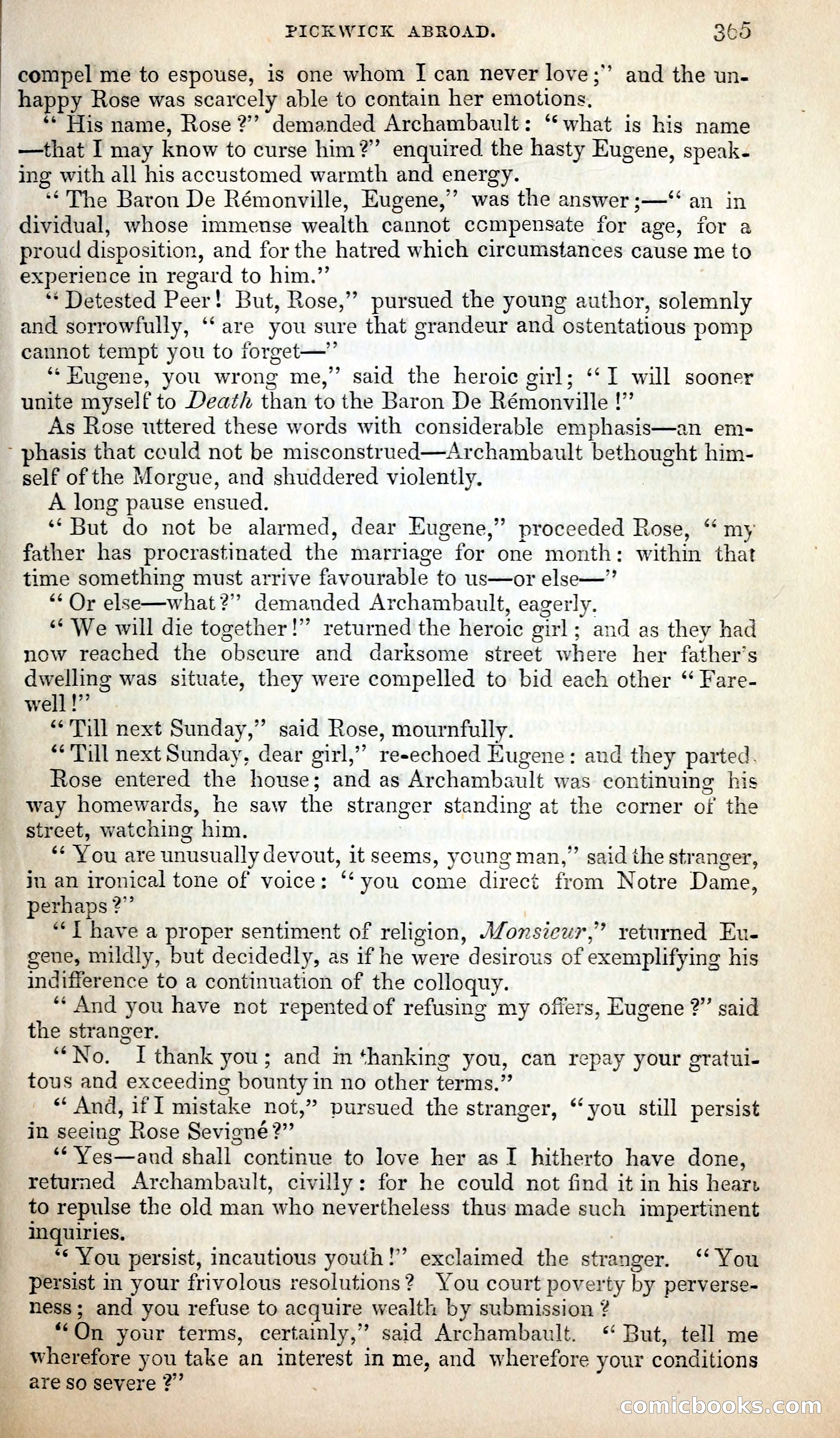
A restored page from Penny Dreadfuls, 1857. Page through the whole issue in the reader above.
📄 Transcribed text from this page (OCR, searchable)
Machine-transcribed from the original scan — historical spelling and the odd misread are preserved.
, % * oe vet _ m ‘ - PICKWICK ABROAD. 360 compel me to espouse, is one whom I can never love;’’ and the un- happy Rose was scarcely able to contain her emotions. ‘** His name, Rose 2?”” demanded Archambault: ‘what is his name —that I may know to curse him?” enquired the hasty Eugene, speak- ing with all his accustomed warmth and energy. ‘The Baron De Rémonville, Eugene,” was the answer ;—*“‘ an in dividual, whose immense wealth cannot ccmpensate for age, for a proud disposition, and for the hatred which circumstances cause me to experience in regard to him.”’ ‘** Detested Peer! But, Rose,” pursued the young author, solemnly and sorrowfully, ‘‘are you sure that grandeur and ostentatious pomp cannot tempt you to forget—”’ “* Hugene, you wrong me,” said the heroic girl; ‘* I will sooner unite myself to Death than to the Baron De Rémonville !” As Rose uttered these words with considerable emphasis—an em- phasis that could not be misconstruned—Archambault bethought him- self of the Morgue, and shuddered violently. A long pause ensued. ‘‘ But do not be alarmed, dear Eugene,” proceeded Rose, “ my father has procrastinated the marriage for one month: within that time something must arrive favourable to us—or else—” “* Or else—what ?” demanded Archambault, eagerly. “* We will die together!’ returned the heroic girl; and as they had now reached the obscure and darksome street where her father’s dwelling was situate, they were compelled to bid each other “ Fare- well!” “Till next Sunday,” said Rose, mournfully. “Till next Sunday, dear girl,”’ resechoed Eugene: and they parted. Rose entered the house; and as Archambault was continuing his way homewards, he saw the stranger standing at the corner of the street, watching him. ** You are unusually devout, 1t seems, young man,” said the stranger, in an ironical tone of voice: ‘‘ you come direct from Notre Dame, perhaps ?” “I have a proper sentiment of religion, MWonszeur,” returned Eu- gene, mildly, but decidedly, as if he were desirous of exemplifying his indifference to a continuation of the colloquy. ‘** And you have not repented of refusing my offers, Eugene 2” said the stranger. ‘“No. I thank you; and m ‘thanking you, can repay your gratui- tous and exceeding bounty in no other terms.” “And, if I mistake not,” pursued the stranger, “‘you still persist in seeing Rose Sevigne ?” ‘‘ Yes—and shall continue to love her as I hitherto have done, returned Archambault, civilly: for he could not find it in his hear to repulse the old man who nevertheless thus made such impertinent inquiries, . ‘** You persist, incautious youth!” exclaimed the stranger. ‘‘ You persist in your frivolous resolutions? You court poverty by perverse- ness; and you refuse to acquire wealth by submission ? “Qn your terms, certainly,” said Archambault. “ But, tell me wherefore you take an interest in me, and wherefore your conditions are so severe 2?” Eomichbooks (E(0) =