
Penny Dreadfuls, 1900 · page 384 of 398
Moths by Ouida — page 384: what you’re looking at
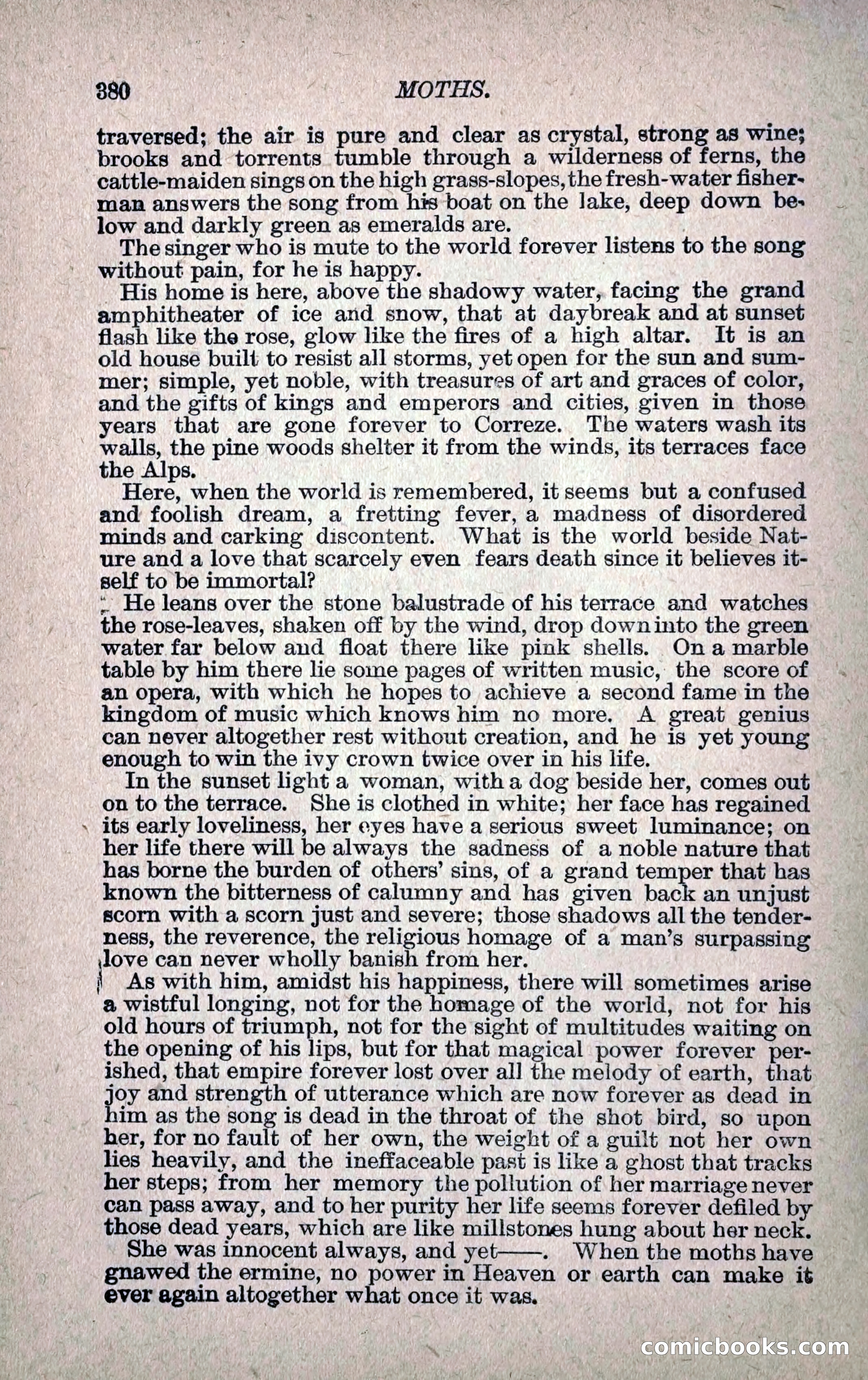
A restored page from Penny Dreadfuls, 1900. Page through the whole issue in the reader above.
📄 Transcribed text from this page (OCR, searchable)
Machine-transcribed from the original scan — historical spelling and the odd misread are preserved.
380 : MOTHS. traversed; the air is pure and clear as crystal, strong as wine; brooks and torrents tumble through a wilderness of ferns, the cattle-maiden sings on the high grass-slopes, the fresh-water fisher- man answers the song from his boat on the lake, deep down be: low and darkly green as emeralds are. | The singer who is mute to the world forever listens to the song without pain, for he is happy. _ His home is here, above the shadowy water, facing the grand amphitheater of ice and snow, that at daybreak and at sunset flash like the rose, glow like the fires of a high altar. It is an old house built to resist all storms, yet open for the sun and sum- mer; simple, yet noble, with treasures of art and graces of color, and the gifts of kings and emperors and cities, given in those years that are gone forever to Correze. The waters wash its _ walls, the pine woods shelter it from the winds, its terraces face the Alps. Here, when the world is remembered, it seems but a confused and foolish dream, a fretting fever, a madness of disordered minds and carking discontent. What is the world beside Nat- ure and a love that scarcely even fears death since it believes it- self to be immortal? ‘ He leans over the stone balustrade of his terrace and watches the rose-leaves, shaken off by the wind, drop down into the green water far below and float there like pink shells. Ona marble table by him there lie some pages of written music, the score of an opera, with which he hopes to achieve a second fame in the kingdom of music which knows him no more. A great genius can never altogether rest without creation, and he is yet young enough to win the ivy crown twice over in his life. In the sunset light a woman, with a dog beside her, comes out on to the terrace. She is clothed in white; her face has regained . its early loveliness, her eyes have a serious sweet luminance; on her life there will be always the sadness of a noble nature that has borne the burden of others’ sins, of a grand temper that has known the bitterness of calumny and has given back an unjust scorn with a scorn just and severe; those shadows all the tender- ness, the reverence, the religious homage of a man’s surpassing love can never wholly banish from her. As with him, amidst his happiness, there will sometimes arise a wistful longing, not for the homage of the world, not for his ~ old hours of triumph, not for the sight of multitudes waiting on the opening of his lips, but for that magical power forever per- ished, that empire forever lost over all the melody of earth, that joy and strength of utterance which are now forever as dead in im as the song is dead in the throat of the shot bird, so upon her, for no fault of her own, the weight of a guilt not her own lies heavily, and the ineffaceable past is like a ghost that tracks © her steps; from her memory the pollution of her marriage never can pass away, and to her purity her life seems forever defiled by those dead years, which are like millstones hung about her neck. She was innocent always, and yet-——. Whenthe mothshave ~ gnawed the ermine, no power in Heaven or earth can make it ever again altogether what once it was. _ mt ‘comicbooks.co