
Life, 1928-11-16 · page 43 of 44
Life — November 16, 1928 — page 43: what you’re looking at
What you’re looking at
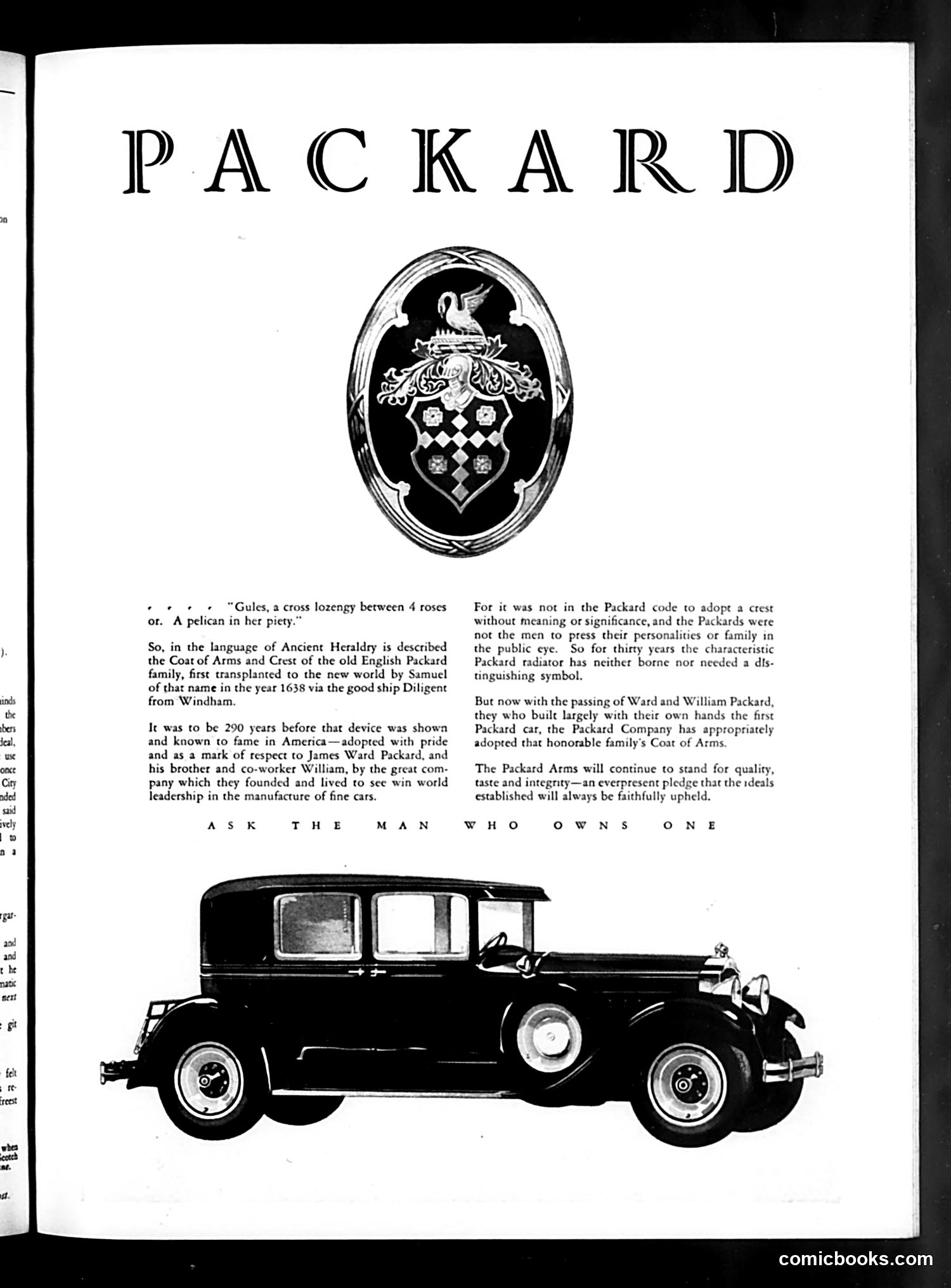
This is **not a cartoon or satire**—it's a corporate advertisement for Packard automobiles. The page uses heraldic imagery and historical narrative to market the car brand. The ad traces the Packard family lineage from 1638 England to the American automobile founders James Ward and William Packard. It argues that the company has now adopted the family's traditional coat of arms (featuring a pelican and cross design) following the founders' deaths, signifying continuity and legitimacy. The appeal is to **class and pedigree**: by connecting a luxury car manufacturer to aristocratic heritage and family honor, the ad positions Packard vehicles as symbols of quality and refined taste. The message suggests that Packard's adoption of ancestral heraldry represents not vanity but respect for established values—"quality, taste and integrity." This was marketing strategy for a high-end automobile brand targeting wealthy, status-conscious buyers of the early 20th century.
📄 Transcribed text from this page (OCR, searchable)
Machine-transcribed from the original scan — historical spelling and the odd misread are preserved.
PACKARD “Gules, a cross lozengy between 4 roses or. A pelican in her piety.” So, in the language of Ancient Heraldry is described the Coat of Arms and Crest of the old English Packard family, first transplanted to the new world by Samuel of thar name in the year 1638 via the good ship Diligent from Windham. It was to be 290 years before that device was shown and known to fame in America—adopted with pride and as a mark of respect to James Ward Packard, and his brother and co-worker William, by the great com- pany which they founded and lived to see win world leadership in the manufacture of fine cars. For it was not in the Packard code to adopt a crest without meaning or significance, and the Packards were not the men to press their personalities or family in the public eye. So for thirty years the characteristic Packard radiator has neither borne nor needed a dis- tinguishing symbol. But now with the passing of Ward and William Packard, they who built largely with their own hands the first Packard car, the Packard Company has appropriately adopted that honorable family’s Coat of Arms. The Packard Arms will continue to stand for quality, taste and integrity—an everpresent pledge that the ideals established will always be faithfully upheld. OoOwWwWN S ONE comicbooks.com