
Life, 1928-08-09 · page 13 of 40
Life — August 9, 1928 — page 13: what you’re looking at
What you’re looking at
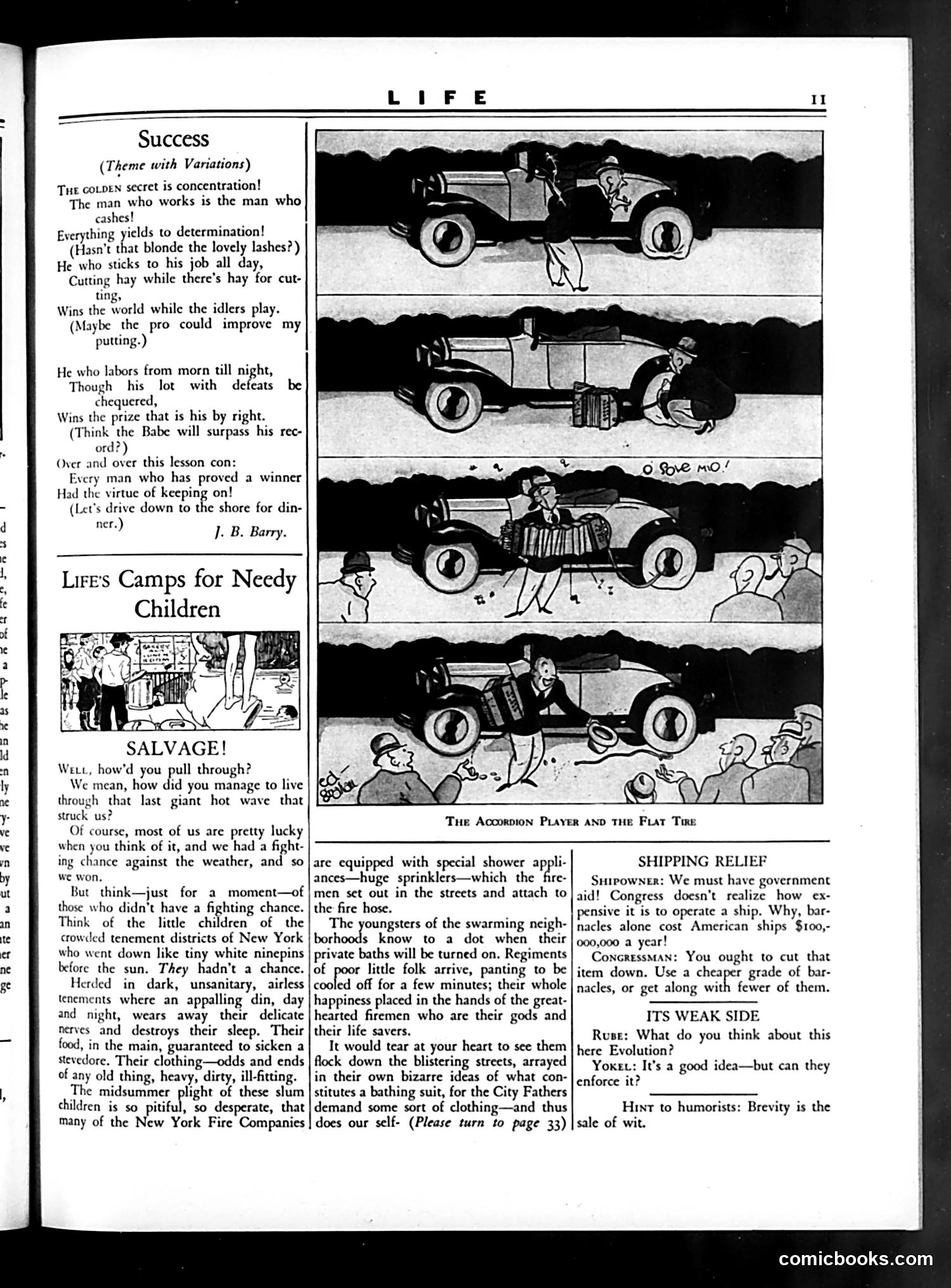
This four-panel comic satirizes street musicians during economic hardship. A man plays accordion while standing near a car with a flat tire. In successive panels, his music apparently causes the tire to deflate further, the car to sink, and finally collapse entirely—presented as if his playing is literally destructive. The joke relies on the period stereotype of accordion music as unbearably bad or annoying. The satire likely targets both struggling street performers (common during economic depression) and the public's disdain for them. The exaggerated physical destruction suggests the visceral irritation his music causes observers, making it a commentary on class attitudes toward impoverished musicians seeking survival income.
📄 Transcribed text from this page (OCR, searchable)
Machine-transcribed from the original scan — historical spelling and the odd misread are preserved.
(Theme with Variations) Tue coven secret is concentration! The man who works is the man who cashes! Everything yields to determination! (Hasn't that blonde the lovely lashes?) He who sticks to his job all day, Cutting hay while there’s hay for cut- ung, Wins the wratld while the idlers play. (Maybe the pro could improve my putting.) He who labors from morn till night, Though his lot with defeats be chequered, Wins the prize that is his by right. (Think the Babe will surpass his rec- ord?) Over and over this lesson con: Every man who has proved a winner Had the virtue of keeping on! (Let's drive down to the shore for din- ner.) J. B. Barry. Lires Camps for Needy Children SAL Wett, how'd you pull through? We mean, how did you manage to live through that last giant hot wave that struck us? Of course, most of us are pretty lucky when you think of it, and we had a fight- ing chance against the weather, and so we won, But think—just for a moment—of those who didn’t have a fighting chance. Think of the little children of the crowded tenement districts of New York who went down like tiny white ninepins before the sun. They hadn't a chance. Herded in dark, unsanitary, airless tenements where an appalling din, day and night, wears away their delicate nerves and destroys their sleep. Their food, in the main, guaranteed to sicken a stevedore. Their clothing—odds and ends of any old thing, heavy, dirty, ill-fitting. The midsummer plight of these slum children is so pitiful, so desperate, that many of the New York Fire Companies Tue Accorpion PLAYER AND THE Fiat Tine are equipped with special shower appli- ances—huge sprinklers—which the fire- men set out in the streets and attach to the fire hose. The youngsters of the swarming neigh- borhoods know to a dot when their private baths will be turned on. Regiments of r little folk arrive, panting to be cooled off for a few minutes; their whole happiness placed in the hands of the great- hearted firemen who are their gods and their life savers. It would tear at your heart to see them flock down the blistering streets, arrayed in their own bizarre ideas of what con- stitutes a bathing suit, for the City Fathers demand some sort of clothing—and thus does our self- (Please turn to page 33) SHIPPING RELIEF Suipowner: We must have government aid! Congress doesn’t realize how ex- pensive it is to operate a ship. Why, bar- nacles alone cost American ships $100,- 000,000 a year! ConcressMAN: You ought to cut that item down. Use a cheaper grade of bar- nacles, or get along with fewer of them. ITS WEAK SIDE Ruse: What do you think about this here Evolution? Yoxe: It’s a good idea—but can they enforce it? Hint to humorists: Brevity is the sale of wit. comicbooks.com