
Life, 1927-05-12 · page 10 of 43
Life — May 12, 1927 — page 10: what you’re looking at
What you’re looking at
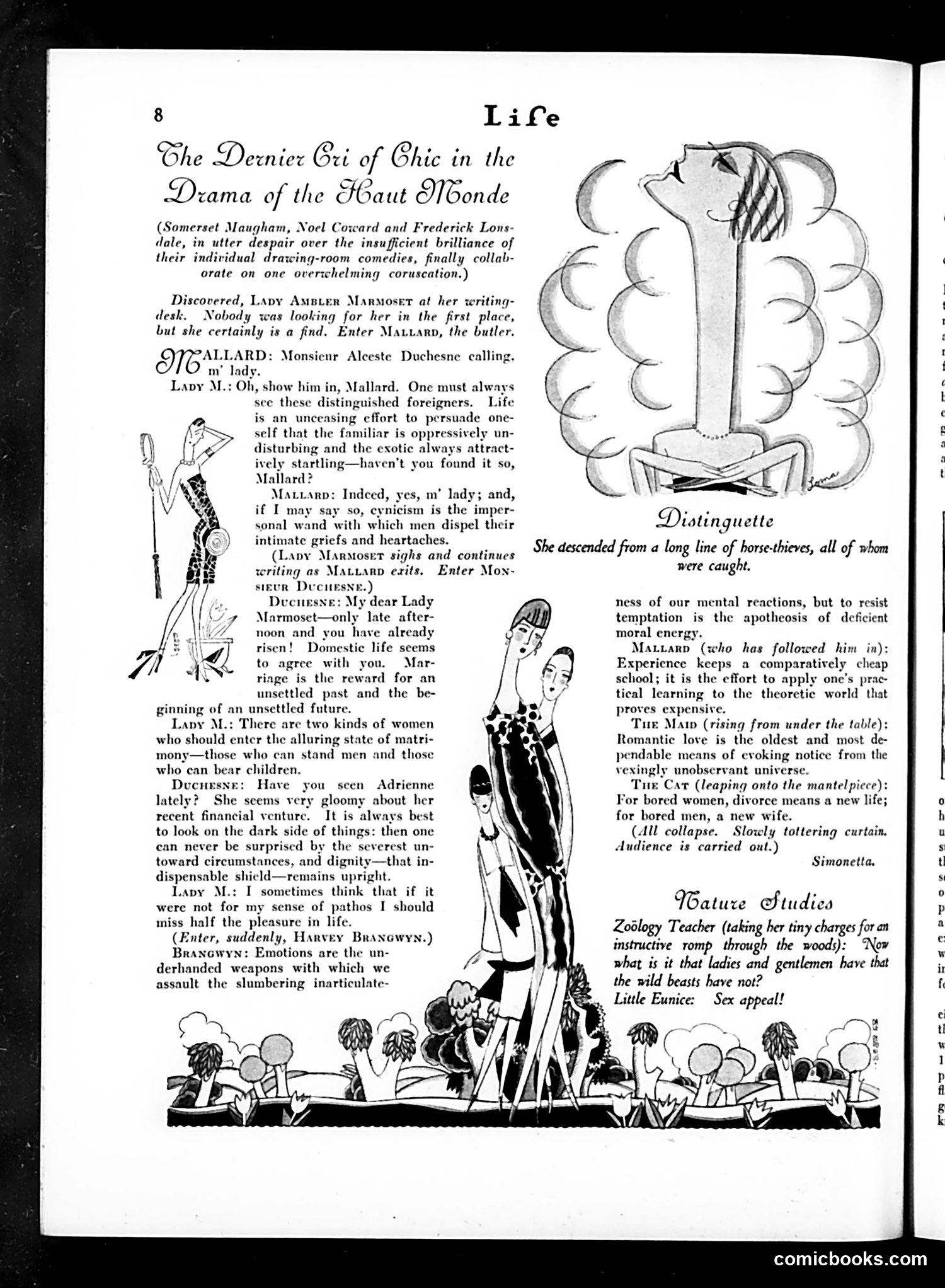
This page satirizes the social pretensions of wealthy aristocrats and their drawing-room comedies. The heading references Somerset Maugham, Noël Coward, and Frederick Lonsdale—three famous playwrights known for sophisticated comedies about the British upper class. The text mocks Lady Ambler Marmoset discovering a character named "Monsieur Alceste Duchesne" and the affected conversation that follows. The satire targets how the wealthy treat encounters with "distinguished foreigners" as status symbols, while engaging in tedious gossip about divorce, infidelity, and financial scandals presented as witty repartee. The accompanying illustration shows an elegantly dressed woman, emphasizing the visual mockery of high-society pretension. The cartoon critiques how this social class mistakes shallow worldliness for genuine sophistication and moral depth.
📄 Transcribed text from this page (OCR, searchable)
Machine-transcribed from the original scan — historical spelling and the odd misread are preserved.
8 Life Ghe Dernier Gri of Ghic in the Dama of the HCaut MNobonde (Somerset Maugham, Noel Coward and Frederick Lons- dale, in utter despair over the insufficient brilliance of their individual drawing-room comedies, finally collab- orate on one overwhelming coruscation.) Discovered, Lavy Ampter Marmoset at her writing- desk. Nobody was looking for her in the first place, but she certainly is a find. Enter Matuanp, the butler. & ALLARD: Monsieur Alceste Duchesne calling. m’ lady. Lapy M.: Oh, show him in, Mallard. One must always see these distinguished foreigners. Life is an unceasing effort to persuade one- self that the familiar is oppre vy un- disturbing and the exotic always attract- ively startling—haven't you found it so, Mallard? Mattarp: Indeed, yes, m’ lady; and, say so, cynicism is the imper- sonal wand with which men dispel their intimate griefs and heartaches. (Lavy Marmoset sighs and continues writing as Matuarp exits, Enter Mon- sigur Ducit 9) Duci My dear Lady Marmoset—only late after- noon and you have already risen! Domestic life seems ree with you. Mar- is the reward for an unsettled past and the be- ginning of an unsettled future. Lapy M.: There are two kinds of women who should enter the alluring state of matri- mony—those who can stand men and those who can bear children. Ducnesne: Have you seen Adrienne lately? She seems very gloomy about her recent financial venture. It is always best to look on the dark side of things: then one can never be surprised by the severes toward circumstances, and digni dispensable shield—remains upright. Lavy M.: I sometimes think that if it were not for my sense of pathos I should miss half the pleasure in life. (Enter, suddenly, Harvey Branowyn.) Branewyn: Emotions are the un- derhanded weapons with which we assault the slumbering inarticulate- Distinguette She descended from a long line of horse-thieves, all of whom were caught. ness of our mental reactions, but to resist temptation is the apotheosis of deficient moral energy. Matiarp (who has followed him in): Experience keeps a comparatively cheap school; it is the effort to apply one’s prac- tical learning to the theoretic world that proves expensive. Tur Mat (rising from under the table): Romantic love is the oldest and most de- pendable means of evoking notice from the vexingly unobservant universe. Tue Cat (leaping onto the mantelpiece): For bored women, divorce means a new life; for bored men, a new wife. (All collapse. Slowly tottering curtain. Audience is carried out.) Simonetta. Wature Studies Zoblogy Teacher (taking her tiny charges for an instructive romp through the woods): ‘Now what is it that ladies and gentlemen have that the wild beasts have not? Little Eunice: Sex appeal! comicbooks.com