
Life, 1926-03-18 · page 19 of 44
Life — March 18, 1926 — page 19: what you’re looking at
What you’re looking at
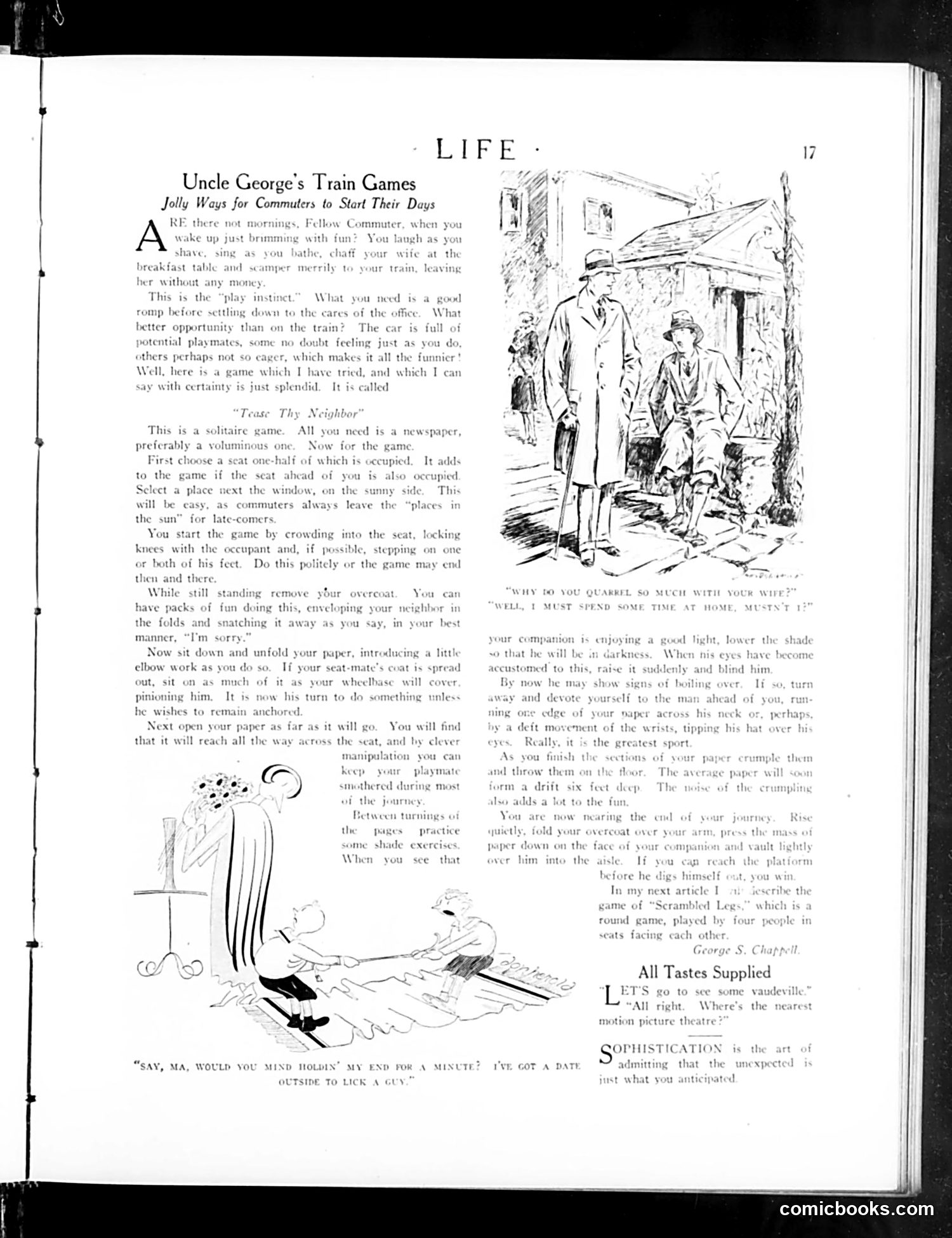
This is a humorous advice column by George S. Chappell about commuter games to enliven tedious morning train rides. The satirical point targets the tedium of daily commuting in the early 20th century. The games described involve deliberately annoying fellow passengers—crowding into seats, monopolizing space with newspapers, elbowing seatmates, and generally creating minor chaos. The accompanying cartoons show commuters engaging in these petty conflicts: a man and woman quarreling over newspaper space, and another scene of physical jostling. The humor works by endorsing socially inconsiderate behavior as a "ramp" to shake off the day's stresses before reaching the office. It's satirizing both commuter frustration and the era's genteel social hypocrisy—suggesting respectable people secretly want to behave badly toward each other. The games mock the constraints of polite society while implicitly commenting on commuting's dehumanizing effects.
📄 Transcribed text from this page (OCR, searchable)
Machine-transcribed from the original scan — historical spelling and the odd misread are preserved.
¢——__—_———__. — LIFE - Uncle George's Train Games Jolly Ways for Commuters to Start Their Days ¢ This is the “play instinct.” What you need is ag of the office. What The car is full romp before settling down to t better opport on the tr tential pl feelin others pert Well, here say with certainty is j commuter or late-comers t the game by crc occupant ar s fect. Do this p the folds and snatching it away manner, “I'm sorry ur companic sit down and unfold your paper, introducing a If your seat-mate’s elbow we out, sit-on a wheelt pinioning him. It is now | a he wishes to rema anchored. Next open y that it will reach all “SAY, MA, WOULD You George S All Tastes Supplied ET'S s s at ion 7 se me v SOBHIsTi ATION what. what y —— i comicbooks.com