
Life, 1926-02-18 · page 11 of 36
Life — February 18, 1926 — page 11: what you’re looking at
What you’re looking at
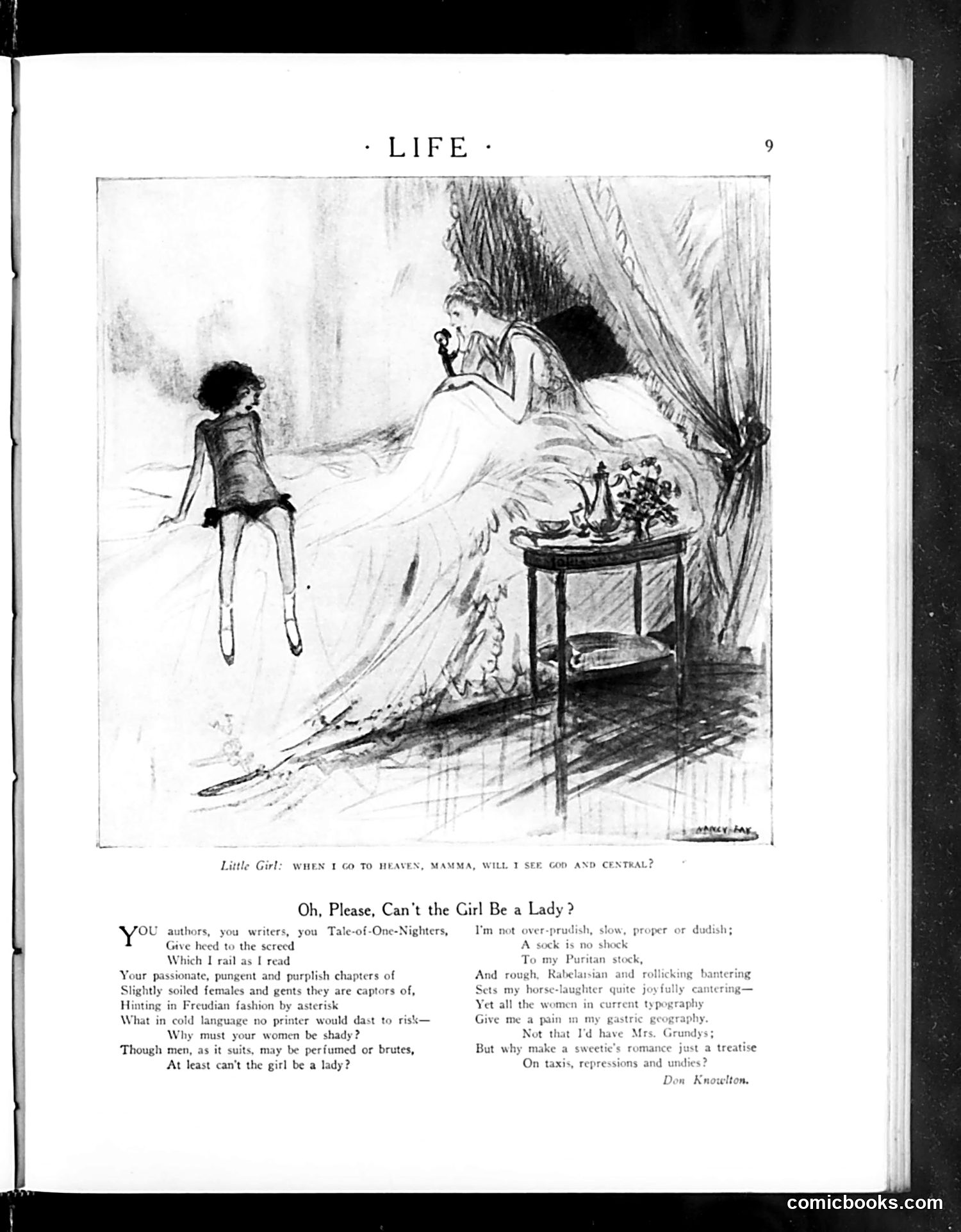
This satirical poem by Don Knowlton critiques literary conventions of the era regarding female characters. The accompanying sketch shows a young girl confronting a fashionably dressed woman in what appears to be a bedroom scene. Knowlton argues that authors habitually portray women as either "shady" or brutish extremes, lacking nuance. He pleads for female characters with dignity—"proper" behavior—rather than caricatures. The poem's refrain challenges writers to depict women as ladies deserving of respect. The satire targets how contemporary literature reduced women to stereotypes: either morally compromised or crude. Knowlton advocates for more complex, respectable female representation in fiction, reflecting emerging debates about women's dignity and more sophisticated characterization in early-20th-century writing.
📄 Transcribed text from this page (OCR, searchable)
Machine-transcribed from the original scan — historical spelling and the odd misread are preserved.
Little Girl: WHEN 1 Go TO HEAVEN, MAMMA, WILL Oh, Please, Can't the Girl Be a hae ‘OU authors, you writers, you Tale-of-One-Nighters, I'm not Give heed to the screed Which I rail as I read Your passionate, pungent and purplish chapters of And rough. Slightly soiled females and gents they are capt . Sets my hors cudian fashion by asteris Yet all the w language no printer would dast to risk— Why must your women be shady? Though men, as it suits, may be perfumed or brutes, At least can't the girl be a lady? comicbooks.com