
Life, 1925-09-17 · page 17 of 36
Life — September 17, 1925 — page 17: what you’re looking at
A restored page from Life, 1925-09-17. Page through the whole issue in the reader above.
📄 Transcribed text from this page (OCR, searchable)
Machine-transcribed from the original scan — historical spelling and the odd misread are preserved.
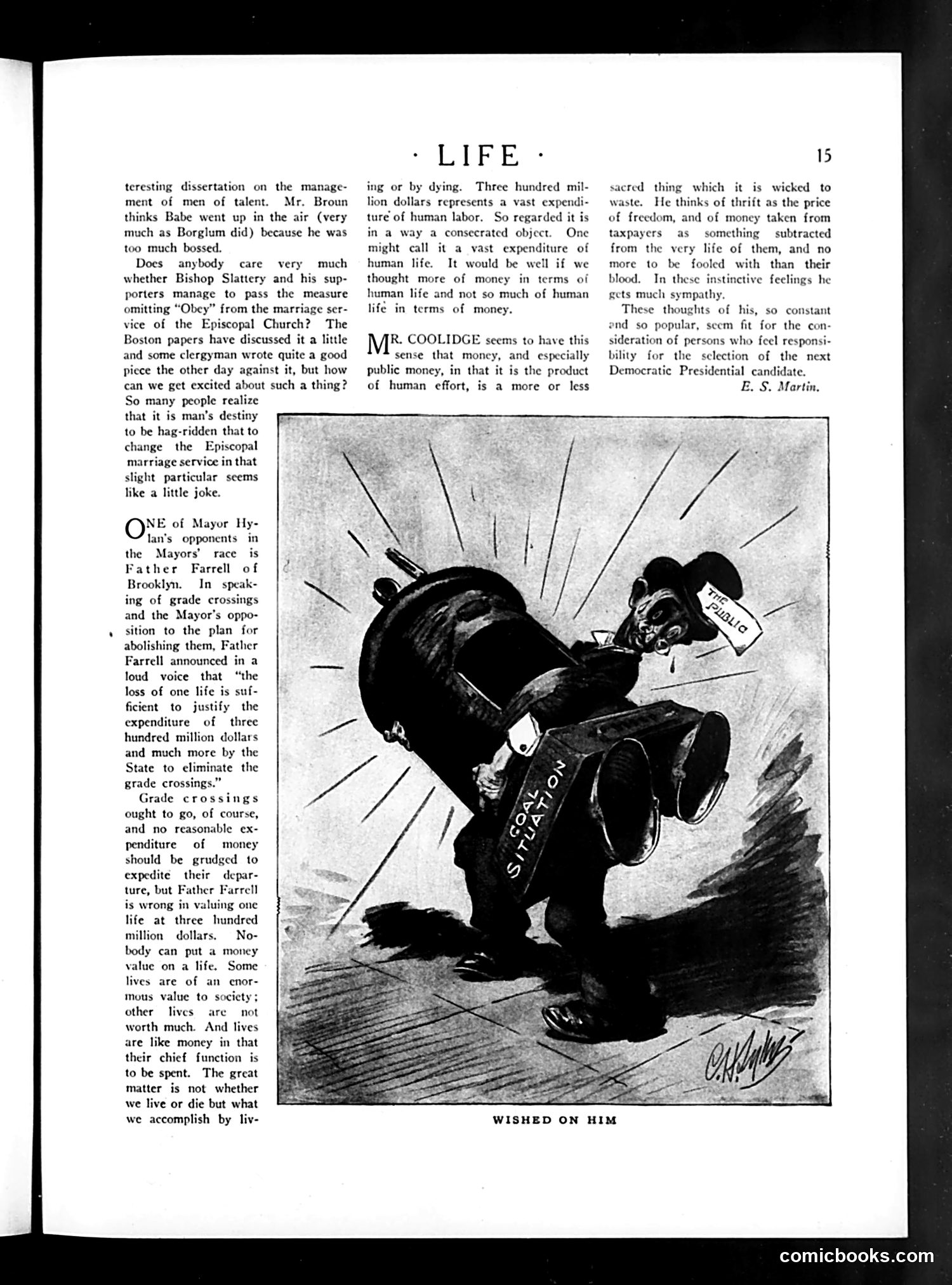
teresting dissertation on the manage- ment of men of talent. Mr. Broun thinks Babe went up in the air (very much as Borglum did) because he was too much bossed. Does anybody care very much whether Bishop Slattery and his sup- porters manage to pass the measure omitting “Obey” from the marriage ser- vice of the Episcopal Church? The Boston papers have discussed it a little and some clergyman wrote quite a good piece the other day against it, but how can we get excited about such a thing? So many people realize that it is man’s destiny to be hag-ridden that to change the Episcopal marriage service in that slight particular seems like a little joke. NE of Mayor Hy- lan’s opponents in the Mayors’ race is Father Farrell of Brooklyn. In speak- ing of grade crossings and the Mayor’s oppo- sition to the plan for abolishing them, Father Farrell announced in a loud voice that “the loss of one life is suf- ficient to justify the expenditure of three hundred million dollars and much more by the State to eliminate the grade crossings.” Grade crossings ought to go, of course, and no reasonable ex- penditure of money should be grudged to expedite their depar- ture, but Father Farrell is wrong in valuing one life at three hundred million dollars. No- body can put a money value on a life. Some lives are of an cnor- mous value to society other lives are not worth much. And lives are like money in that their chief function is to be spent. The great matter is not whether we live or die but what we accomplish by liv- ~ LIFE, - ing or by dying. Three hundred mil- lion dollars represents a vast expendi- ture of human labor. So regarded it is in a way a consecrated object. One might call it a vast expenditure of human life. It would be well if we thought more of money in terms of human life and not so much of human life in terms of money. R. COOLIDGE seems to have this sense that money, and especially public money, in that it is the product of human effort, is a more or less 15 sacred thing which it is wicked to waste. He thinks of thrift as the price of freedom, and of money taken from something subtracted from the very life of them, and no more to be fooled with than their blood. In these instinctive feelings he gets much sympathy, taxpayers as These thoughts of his, so constant and so popular, seem fit for the con- sideration of persons who feel responsi- bility for the selection of the next Democratic Presidential candidate. ~ S. Martin, WISHED ON HIM comicbooks.com