
Life, 1925-04-30 · page 25 of 42
Life — April 30, 1925 — page 25: what you’re looking at
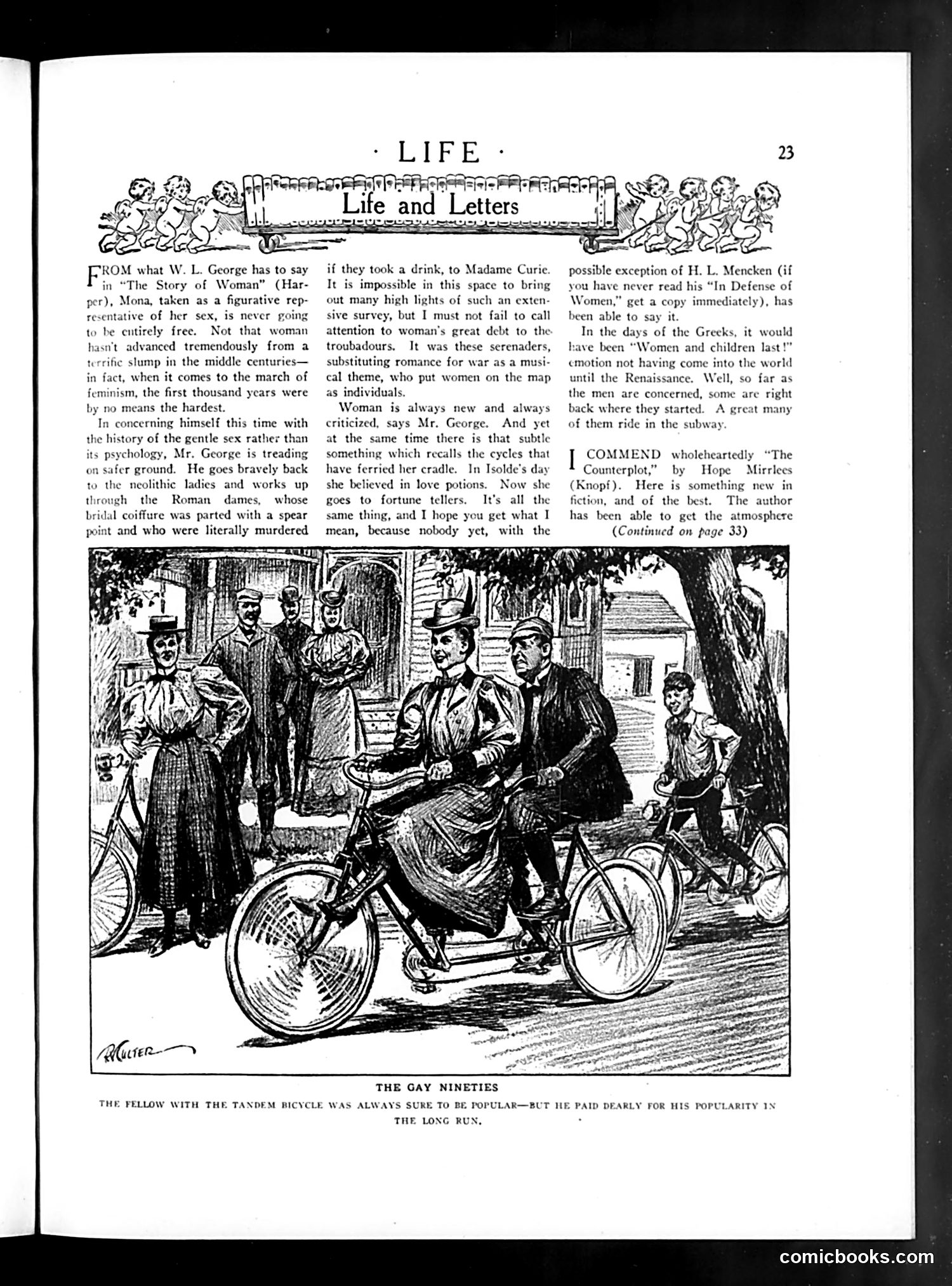
What you’re looking at
This illustration satirizes 1890s social dynamics through the figure of a man riding a tandem bicycle with a woman. The caption explains the joke: he's "always sure to be popular" because tandem bicycles required close physical proximity and cooperation between riders—making them a socially acceptable way for unmarried couples to interact. However, the satire is that he "paid dearly for his popularity in the long run." The cartoon likely mocks how men of that era traded personal comfort and effort (the physical exertion of pedaling a heavy tandem) for romantic opportunity and social approval. The onlookers suggest this was a notable spectacle. The illustration reflects the "Gay Nineties'" fascination with bicycles as symbols of modernity and courtship, while poking fun at the social performances and physical demands men endured to be desirable partners. The tandem bicycle serves as both literal vehicle and metaphor for romantic compromise.
📄 Transcribed text from this page (OCR, searchable)
Machine-transcribed from the original scan — historical spelling and the odd misread are preserved.
ROM what W. L. George has to say in “The Story of Woman” (Har- per), Mona, taken as a figurative rep- resentative of her sex, is never going to be entirely free. Not that woman hasn't advanced tremendously from a terrific slump in the middle centuries— in fact, when it comes to the march of feminism, the first thousand years were by no means the hardest. In concerning himself this time with the history of the gentle sex rather than its psychology, Mr. George is treading on safer ground. He goes bravely back to the neolithic ladies and works up through the Roman dames, whose bridal coiffure was parted with a spear point and who were literally murdered » LIFE = if they took a drink, to Madame Curie. It is impossible in this space to bring out many high lights of such an exten- sive survey, but I must not fail to call attention to woman's great debt to the troubadours, It was these serenaders, substituting romance for war as a musi- cal theme, who put women on the map as individuals Woman is always new and always criticized, says Mr. George. And yet at the same time there is that subtle something which recalls the cycles that have ferried her cradle. In Isolde’s day she believed in love potions. Now she goes to fortune tellers. It's all the same thing, and I hope you get what I mean, because nobody yet, with the THE GAY NINETIES possible exception of H. L. Mencken (if you have never read his “In Defense of Women,” get a copy immediately), has been able to say it. In the days of the Greeks, it would have been “Women and children last!" emotion not having come into the world until the Renaissance. Well, so far as the men are concerned, some are right back where they started. A great many of them ride in the subway. COMMEND Counterplot,” by (Knopf). Here is something new in fiction, and of the best. The author has been able to get the atmosphere (Continued on page 33) wholeheartedly “The Hope Mirrlees THE FELLOW WITH THE TANDEM BICYCLE WAS ALWAYS SURE TO BE POPULAR—BUT HE PAID DEARLY FOR HIS POPULARITY 1N THE LONG RUN, comicbooks.com