
Life, 1924-07-24 · page 6 of 36
Life — July 24, 1924 — page 6: what you’re looking at
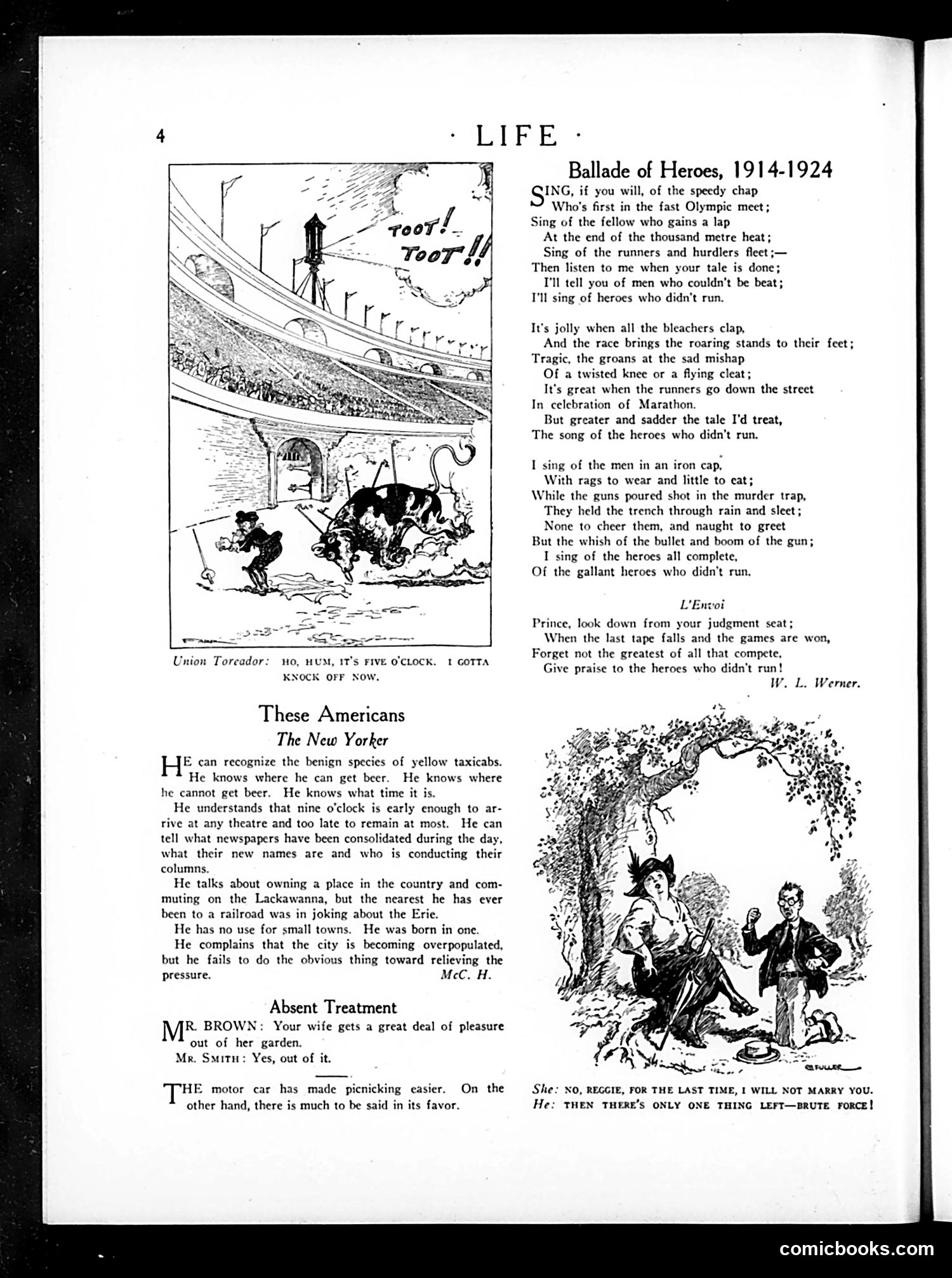
What you’re looking at
**Top Cartoon**: Depicts a horse racing scene at what appears to be an Olympic stadium. The caption "Union Toreadore: Ho, hum, it's five o'clock. I gotta knock off now" suggests satire about a bullfighter's casual attitude toward his work—treating it as just another job with regular hours, rather than a serious sporting or artistic endeavor. **Main Content**: The page features three literary pieces: a patriotic poem "Ballad of Heroes" honoring WWI soldiers who didn't flee combat, and two short prose pieces ("These Americans" and "Absent Treatment") satirizing everyday American life—taxi drivers, overpopulated cities, and motor cars. The bottom illustration appears unrelated, showing a romantic scene under a tree.
📄 Transcribed text from this page (OCR, searchable)
Machine-transcribed from the original scan — historical spelling and the odd misread are preserved.
Union Toreador: 0, HUM, IT's FIVE O'CLOCK. 1 GOTTA KNOCK OFF Now, These Americans The New Yorker E can recognize the benign species of yellow taxicabs. He knows where he can get beer. He knows where he cannot get beer. He knows what time it is. He understands that nine o'clock is early enough to ar- rive at any theatre and too late to remain at most. He can tell what newspapers have been consolidated during the day, what their new names are and who is conducting their columns. He talks about owning a place in the country and com- muting on the Lackawanna, but the nearest he has ever been to a railroad was in joking about the Erie. He has no use for small towns. He was born in one. He complains that the city is becoming overpopulated, but he fails to do the obvious thing toward relieving the pressure. McC. H. Absent Treatment R. BROWN: Your wife gets a great deal of pleasure out of her garden. Mr. Smitn: Yes, out of it. HE motor car has made picnicking easier. On the other hand, there is much to be said in its favor. Ballade of Heroes, 1914-1924 ING, if you will, of the speedy chap Who's first in the fast Olympic meet; Sing of the fellow who gains a lap At the end of the thousand metre heat; Sing of the runners and hurdlers fleet ;— Then listen to me when your tale is done; T'll tell you of men who couldn't be beat; I'll sing of heroes who didn’t run. It's jolly when all the bleachers clap, And the race brings the roaring stands to their feet; Tragic, the groans at the sad mishap Of a twisted knee or a flying cleat; It's great when the runners go down the street In celebration of Marathon. But greater and sadder the tale I'd treat, The song of the heroes who didn’t run. I sing of the men in an iron cap, With rags to wear and little to cat; While the guns poured shot in the murder trap, They held the trench through rain and sleet; None to cheer them, and naught to greet But the whish of the bullet and boom of the gun; I sing of the heroes all complete, Of the gallant heroes who didn’t run, LE Prince, look down from your judgment seat; When the last tape falls and the games are won, Forget not the greatest of all that compete, Give praise to the heroes who didn’t run! W. L. Werner. She: NO, REGGIE, FOR THE LAST TIME, I WILL NOT MARRY YOU. He: THEN THERE’S ONLY ONE THING LEFT—BRUTE FORCE! comicbooks.com