
Life, 1923-12-20 · page 10 of 36
Life — December 20, 1923 — page 10: what you’re looking at
What you’re looking at
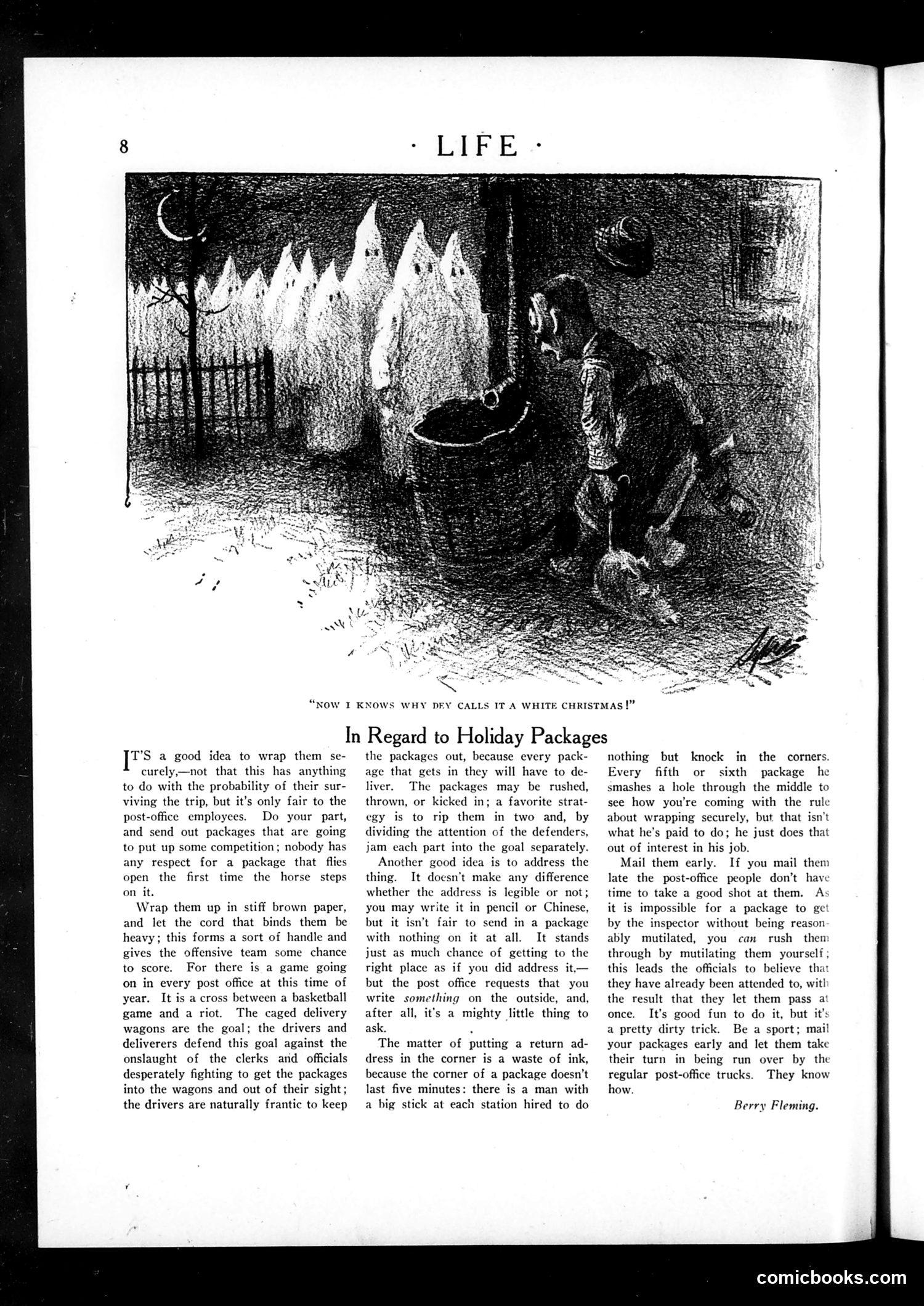
This page contains a cartoon and advice article about holiday mail packages. The cartoon depicts ghostly figures delivering packages at night, with the caption "NOW I KNOWS WHY DEY CALLS IT A WHITE CHRISTMAS!" The joke plays on racial dialect and the visual pun of white-sheeted figures—likely referencing the KKK, whose members wore such robes. The "white Christmas" reference creates dark humor by conflating holiday delivery with the intimidating presence of these figures. The accompanying article by Berry Fleming offers practical advice for wrapping and mailing holiday packages, suggesting use of sturdy brown paper, proper addressing, and early mailing to avoid damage. It addresses the competitive chaos of holiday mail delivery season, recommending tips to ensure packages arrive safely.
📄 Transcribed text from this page (OCR, searchable)
Machine-transcribed from the original scan — historical spelling and the odd misread are preserved.
“NOW I KNOWS WHY DEY CALLS IT A WHITE CHRISTMAS!” In Regard to Holiday Packages T’S a good idea to wrap them se- curely,—not that this has anything to do with the probability of their sur- viving the trip, but it’s only fair to the post-office employees. Do your part, and send out packages that are going to put up some competition ; nobody has any respect for a package that flies open the first time the horse steps on it. Wrap them up in stiff brown paper, and let the cord that binds them be heavy; this forms a sort of handle and gives the offensive team some chance to score. For there is a game going on in every post office at this time of year. It is a cross between a basketball game and a riot. The caged delivery wagons are the goal; the drivers and deliverers defend this goal against the onslaught of the clerks arid officials desperately fighting to get the packages into the wagons and out of their sight; the drivers are naturally frantic to keep the packages out, because every pack- age that gets in they will have to de- liver. The packages may be rushed, thrown, or kicked in; a favorite strat- egy is to rip them in two and, by dividing the attention of the defenders, jam each part into the goal separately. Another good idea is to address the thing. It doesn’t make any difference whether the address is legible or not; you may write it in pencil or Chinese, but it isn't fair to send in a package with nothing on it at all. It stands just as much chance of getting to the right place as if you did address it— but the post office requests that you write something on the outside, and, after all, it's a mighty little thing to ask. : The matter of putting a return ad- dress in the corner is a waste of ink, because the corner of a package doesn't last five minutes: there is a man with a big stick at each station hired to do nothing but knock in the corners. Every fifth or sixth package he smashes a hole through the middle to see how you're coming with the rule about wrapping securely, but that isn’t what he’s paid to do; he just does that out of interest in his job. Mail them early. If you mail them late the post-office people don’t have time to take a good shot at them. A it is impossible for a package to get by the inspector without being reason ably mutilated, you can rush then through by mutilating them yourself; this leads the officials to believe that they have already been attended to, wit! the result that they let them pass at once. It's good fun to do it, but it’s a pretty dirty trick. Be a sport; mail your packages early and let them take their turn in being run over by the regular post-office trucks. They know how. Berry Fleming. comicbooks.com