
Life, 1923-11-22 · page 22 of 34
Life — November 22, 1923 — page 22: what you’re looking at
What you’re looking at
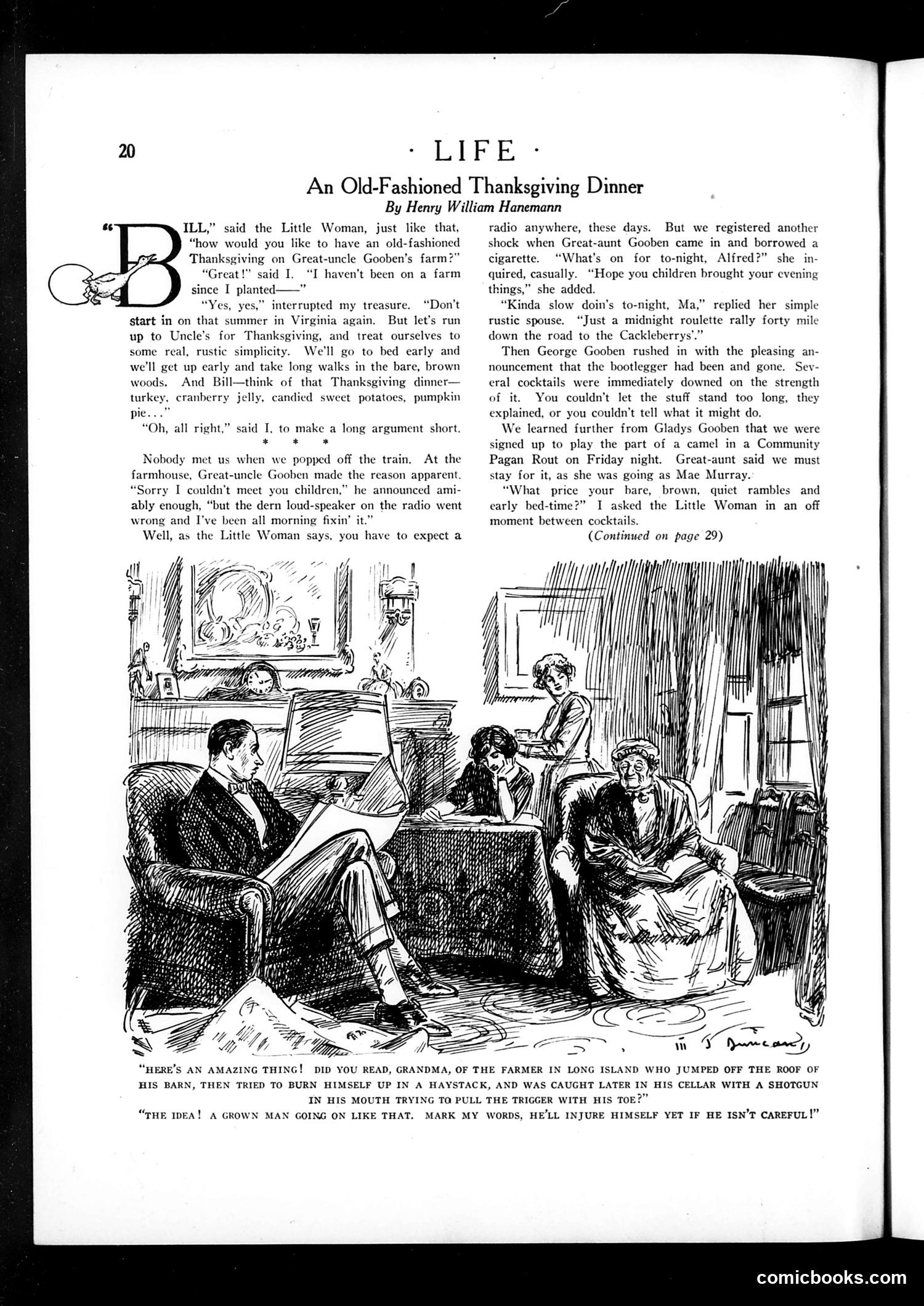
This story satirizes the romanticization of rural "simple living" during the Prohibition era (1920s-early 1930s). The narrator and his wife seek an authentic farmhouse Thanksgiving, expecting rustic simplicity and early bedtimes. Instead, they discover their supposedly old-fashioned relatives living modern, hedonistic lives: the "dern" radio constantly breaks down; Great-aunt Gooben casually borrows cigarettes; the farm hosts illegal "midnight roulette rallies"; a bootlegger regularly visits; and cocktails are consumed constantly (the joke being they can't store illegal alcohol safely). The secondary cartoon at bottom mocks rural self-harm stories in newspapers—grandma dismisses a farmer's multiple suicide attempts as mere carelessness rather than desperation, a darkly comic commentary on how sensationalized media reports desensitize readers. The satire targets both city dwellers' nostalgic fantasies about rural virtue and the reality that Depression-era farms participated fully in illegal drinking and modern vices.
📄 Transcribed text from this page (OCR, searchable)
Machine-transcribed from the original scan — historical spelling and the odd misread are preserved.
- LIFE - An Old-Fashioned Thanksgiving Dinner By Henry William Hanemann ILL,” said the Little Woman, just like that, “how would you like to have an old-fashioned Thanksgiving on Great-uncle Gooben’s farm?” “Great!” said I. “I haven't been on a farm since I planted——” “Yes, yes,” interrupted my treasure. “Don't start in on that summer in Virginia again. But let’s run up to Uncle’s for Thanksgiving, and treat ourselves to some real, rustic simplicity. We'll go to bed early and we'll get up early and take long walks in the bare, brown And Bill—think of that Thanksgiving dinner— cranberry jelly, candied sweet potatoes, pumpkin “Oh, all right,” said I, to make a long argument short. * + Nobody met us when we popped off the train, At the farmhouse, Great-uncle Gooben mad “Sorry I couldn't meet you children,” he announced ami- ably enough, “but the dern loud-speaker on the radio went wrong and I've been all morning fixin’ it.” Well, as the Little Woman says, you have to expect a he reason apparent. radio anywhere, these days. But we registered another shock when Great-aunt Gooben came in and borrowed a cigarette. “What's on for to-night, Alfred?” she in- quired, casually. “Hope you children brought your evening things,” she added. “Kinda slow doin's to-night, Ma,” replied her simple rustic spouse. “Just a midnight roulette rally forty mile down the road to the Cackleberrys’.” Then George Gooben rushed in with the pleasing an- nouncement that the bootlegger had been and gone. Sevy- eral cocktails were immediately downed on the strength of it. You couldn't let the stuff stand too long, they explained, or you couldn't tell what it might do. We learned further from Gladys Gooben that we were signed up to play the part of a camel in a Community Pagan Rout on Friday night. Great-aunt said we must stay for it, as she was going as Mae Murray. “What price your bare, brown, quiet rambles and early bed-time?” I asked the Little Woman in an off moment between cocktails. (Continued on page 29) “HERE'S AN AMAZING THING! DID YOU READ, GRANDMA, OF THE FARMER IN LONG ISLAND WHO JUMPED OFF THE ROOF OF HIS BARN, THEN TRIED TO BURN HIMSELF UP IN A HAYSTACK, AND WAS CAUGHT LATER IN HIS CELLAR WITH A SHOTGUN IN HIS MOUTH TRYING TO PULL THE TRIGGER WITH HIS TOE?” “THE IEA! A GROWN MAN GOING ON LIKE THAT. MARK MY WORDS, HE’LL INJURE HIMSELF YET IF HE ISN’T CAREFUL!” comicbooks.com