
Life, 1923-07-05 · page 39 of 40
Life — July 5, 1923 — page 39: what you’re looking at
What you’re looking at
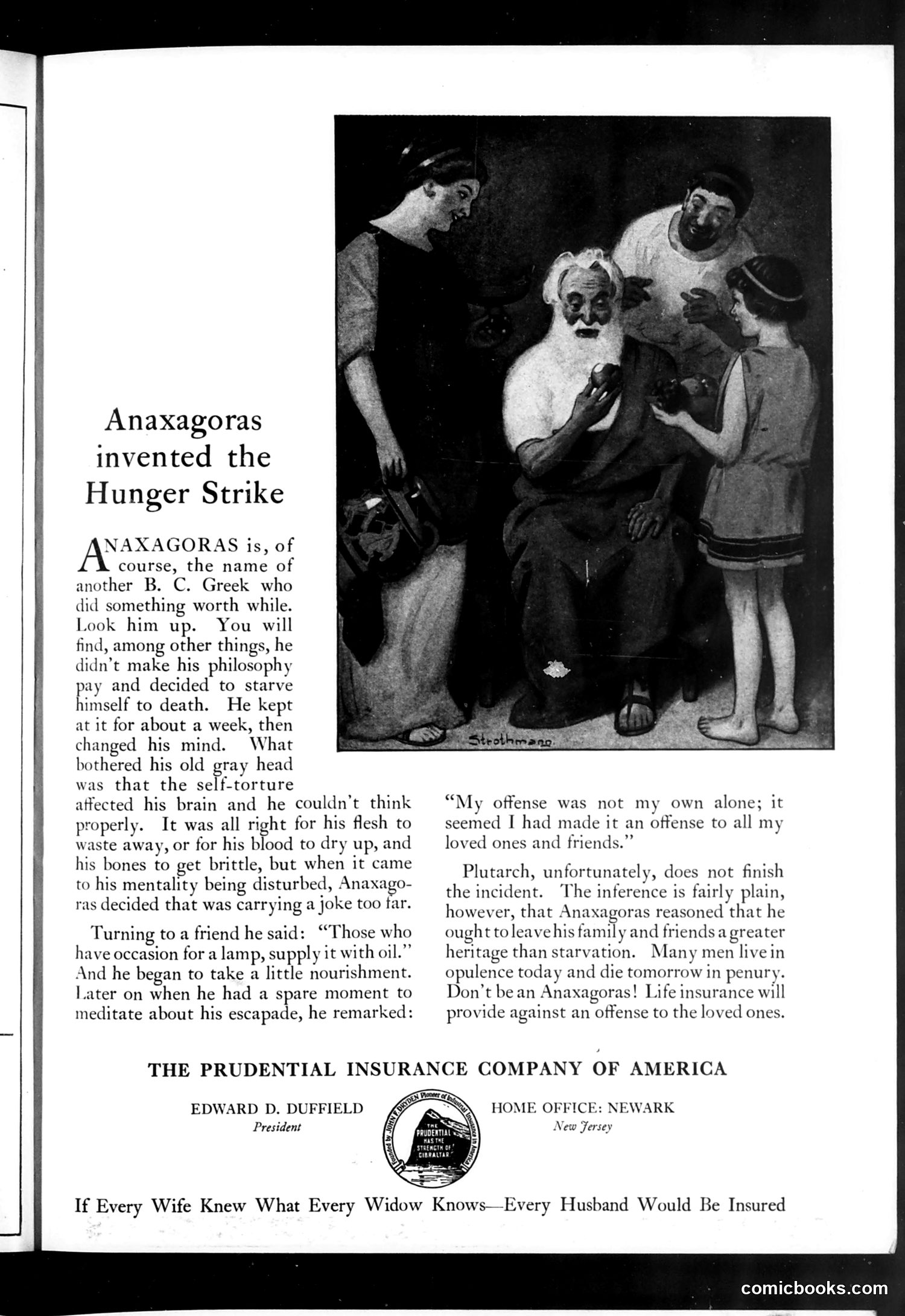
This is an insurance advertisement using classical history as moral persuasion. The piece references the ancient Greek philosopher Anaxagoras, who allegedly attempted suicide by starvation to protest his philosophy's lack of financial success, then abandoned it when the self-deprivation affected his thinking. The satire's point: the ad mocks ascetic self-denial while weaponizing guilt. It argues that starving oneself—or dying without life insurance—isn't noble sacrifice but selfish harm to loved ones. The closing image depicts a distressed woman and child, driving home the emotional manipulation: an uninsured man's death leaves his family in poverty. The tagline "If Every Wife Knew What Every Widow Knows—Every Husband Would Be Insured" uses fear of widowhood to shame men into purchasing Prudential policies. This represents early 20th-century insurance marketing that exploited family anxiety and gendered responsibility to sell protection products.
📄 Transcribed text from this page (OCR, searchable)
Machine-transcribed from the original scan — historical spelling and the odd misread are preserved.
Anaxagoras invented the Hunger Strike NAXAGORAS is, of course, the name of another B. C. Greek who did something worth while. Look him up. You will find, among other things, he didn’t make his philosophy pay and decided to starve himself to death. He kept at it for about a week, then changed his mind. What bothered his old gray head was that the self-torture atfected his brain and he couldn’t think properly. It was all right for his flesh to waste away, or for his blood to dry up, and his bones to get brittle, but when it came to his mentality being disturbed, Anaxago- ras decided that was carrying a joke too far. Turning to a friend he said: “Those who have occasion for a lamp, supply it with oil.” And he began to take a little nourishment. Later on when he had a spare moment to meditate about his escapade, he remarked: “My offense was not my own alone; it seemed I had made it an offense to all my loved ones and friends.” Plutarch, unfortunately, does not finish the incident. The inference is fairly plain, however, that Anaxagoras reasoned that he ought toleave his family and friends a greater heritage than starvation. Many men live in opulence today and die tomorrow in penury. Don’t bean Anaxagoras! Life insurance will provide against an offense to the loved ones. THE PRUDENTIAL INSURANCE COMPANY OF AMERICA EDWARD D. DUFFIELD President If Every Wife Knew What Every Widow Knows—Every Husband Would Be Insured comicbooks.com