
Life, 1923-03-22 · page 11 of 36
Life — March 22, 1923 — page 11: what you’re looking at
What you’re looking at
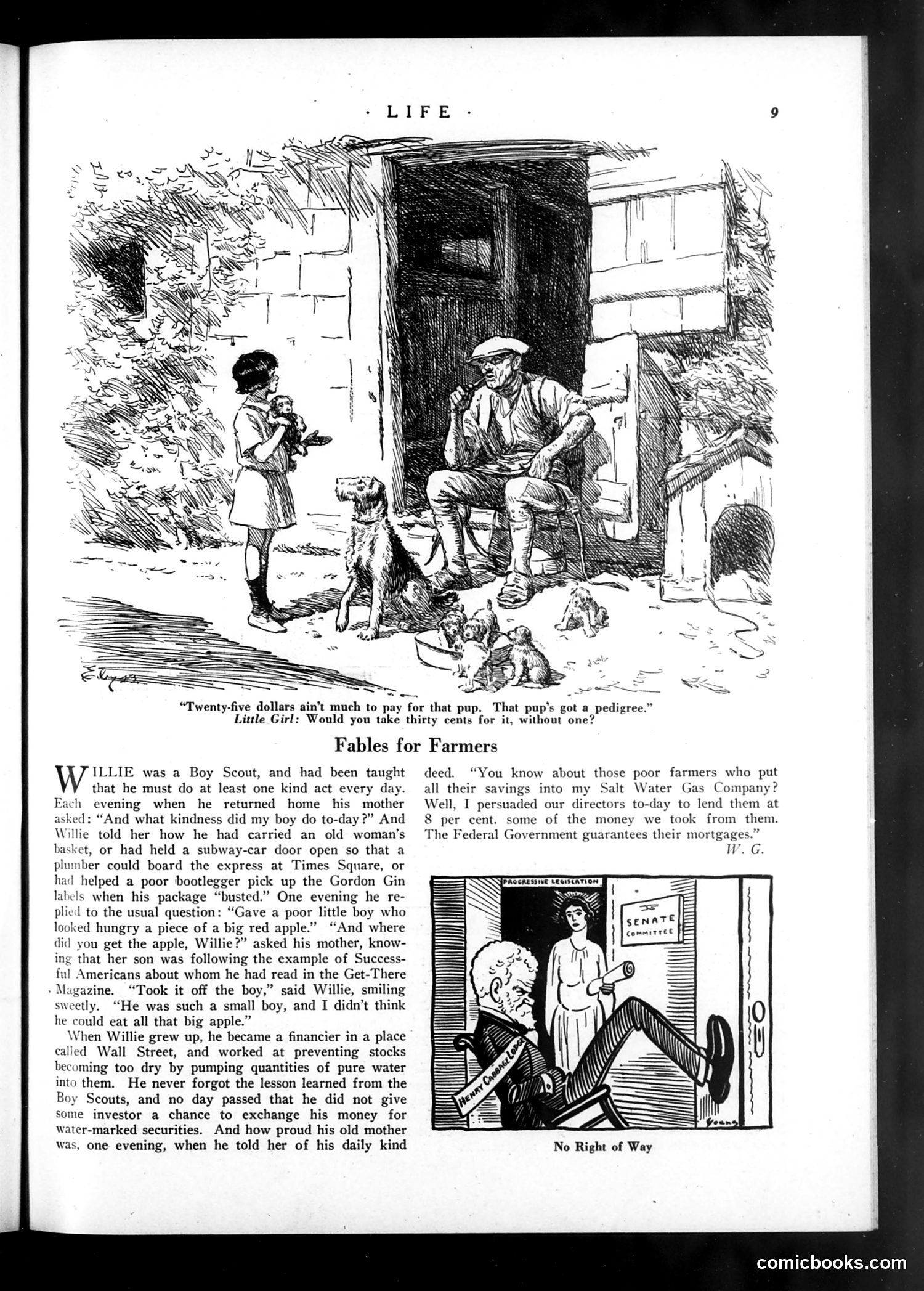
The page contains two pieces of satirical content: **Top Illustration - "Fables for Farmers":** A sketch showing a man (likely a financial advisor or con artist) with a dog, speaking to a young girl about purchasing a pedigree pup for $25. The humor lies in the girl's shrewd response: she'll pay only 30 cents "without one"—mocking how people overpay for pedigree claims. **Story Below:** Details Willie, a Boy Scout who practices daily kindness. The narrative follows him into adulthood as a Wall Street financier who "pumps quantities of pure water into them [stocks]" and manipulates water-marked securities. The satire targets financial fraud and stock manipulation during the Progressive Era, contrasting Willie's Boy Scout ethics with his later dishonest practices—suggesting capitalism corrupts youthful idealism. **Right Cartoon - "No Right of Way":** Appears to satirize regulatory or safety issues involving transportation or labor, though specific context is unclear from the visible image.
📄 Transcribed text from this page (OCR, searchable)
Machine-transcribed from the original scan — historical spelling and the odd misread are preserved.
“Twenty-five dollars ain’t much to pay for that pup. That pup’s got a pedigree.” Little Girl: Would you take thirty cents for it, without one? Fables for Farmers ILLIE was a Boy Scout, and had been taught deed. “You know about those poor farmers who put that he must do at least one kind act every day. all their savings into my Salt Water Gas Company? h evening when he returned home his mother Well, I persuaded our directors to-day to lend them at asked: “And what kindness did my boy do to-day?” And 8 per cent. some of the money we took from them. Willie told her how he had carried an old woman’s The Federal Government guarantees their mortgages.” basket, or had held a subway-car door open so that a W.G. plumber could board the express at Times Square, or had helped a poor bootlegger pick up the Gordon Gin labels when his package “busted.” One evening he re- plied to the usual question: “Gave a poor little boy who looked hungry a piece of a big red apple.” “And where did you get the apple, Willie?” asked his mother, know- ing that her son was following the example of Success- ful Americans about whom he had read in the Get-There - Magazine. “Took it off the boy,” said Willie, smiling sweetly. “He was such a small boy, and I didn’t think he could eat all that big apple.” When Willie grew up, he became a financier in a place called Wall Street, and worked at preventing stocks becoming too dry by pumping quantities of pure water into them. He never forgot the lesson learned from the Boy Scouts, and no day passed that he did not give some investor a chance to exchange his money for water-marked securities. And how proud his old mother was, one evening, when he told her of his daily kind No Right of Way comicbooks.com