
Life, 1922-12-21 · page 9 of 42
Life — December 21, 1922 — page 9: what you’re looking at
What you’re looking at
This 1922 *Life* cartoon satirizes the obsessive grooming habits of male athletes preparing for social events. The illustration shows three anthropomorphized dogs at a beauty salon—one getting its hair curled, another wearing a hat, a third waiting. The accompanying dialogue has the central dog explaining he's going to a party and needs his hair "curry-combed" (groomed). The satire mocks male vanity and the perceived excessive attention to appearance among young athletes of the era. The use of dogs emphasizes the absurdity. The accompanying text discusses famous athletes and spectators, suggesting this reflects broader cultural anxieties about masculinity and changing social standards around male self-care in the 1920s.
📄 Transcribed text from this page (OCR, searchable)
Machine-transcribed from the original scan — historical spelling and the odd misread are preserved.
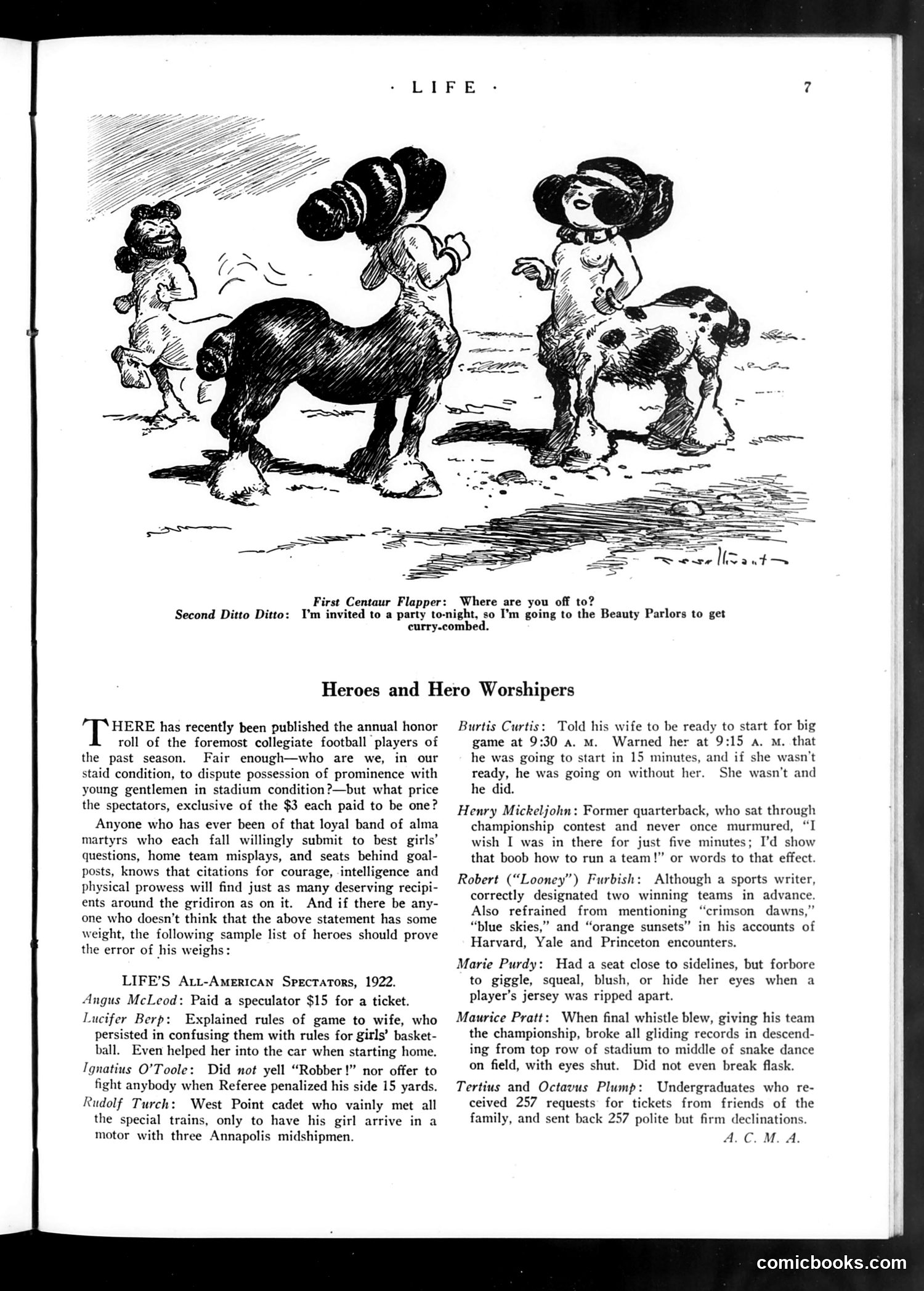
First Centaur Flapper: Second Ditto Ditto: Where are you off to? I'm invited to a party to-night, so I’m going to the Beauty Parlors to get curry-combed. Heroes and Hero Worshipers HERE has recently been published the annual honor roll of the foremost collegiate football players of the past season. Fair enough—who are we, in our staid condition, to dispute possession of prominence with young gentlemen in stadium condition?—but what price the spectators, exclusive of the $3 each paid to be one? Anyone who has ever been of that loyal band of alma martyrs who each fall willingly submit to best girls’ questions, home team misplays, and seats behind goal- posts, knows that citations for courage, -intelligence and physical prowess will find just as many deserving recipi- ents around the gridiron as on it. And if there be any- one who doesn’t think that the above statement has some weight, the following sample list of heroes should prove the error of his weighs: LIFE’S Art-American Spectators, 1922. Angus McLeod: Paid a speculator $15 for a ticket. Lucifer Berp: Explained rules of game to wife, who persisted in confusing them with rules for girls’ basket- ball. Even helped her into the car when starting home. Ignatius O’Toole: Did not yell “Robber!” nor offer to fight anybody when Referee penalized his side 15 yards. Rudolf Turch: West Point cadet who vainly met all the special trains, only to have his girl arrive in a motor with three Annapolis midshipmen. Burtis Curtis: Told his wife to be ready to start for big game at 9:30 a. M. Warned her at 9:15 a. M. that he was going to start in 15 minutes, and if she wasn’ ready, he was going on without her. She wasn’ he did. Henry Mickeljohn: Former quarterback, who sat through championship contest and never once murmured, “I wish I was in there for just five minutes; I’d show that boob how to run a team!” or words to that effect. Robert (“Looney”) Furbish: Although a sports writer, correctly designated two winning teams in advance. Also refrained from mentioning “crimson dawns,” “blue skies,” and “orange sunsets” in his accounts of Harvard, Yale and Princeton encounters. Marie Purdy: Had a seat close to sidelines, but forbore to giggle, squeal, blush, or hide her eyes when a player’s jersey was ripped apart. Maurice Pratt: When final whistle blew, giving his team the championship, broke all gliding records in descend- ing from top row of stadium to middle of snake dance on field, with eyes shut. Did not even break flask. Tertius and Octavus Plump: Undergraduates who re- ceived 257 requests for tickets from friends of the family, and sent back 257 polite but firm declinations. A. €..M..A. comicbooks.com